China Calls for Middle East Ceasefire, Warns Strait of Hormuz Stability at Risk
China’s foreign minister Wang Yi urges an immediate Middle East ceasefire, warning that instability could threaten safe navigation through the Strait of Hormuz. EU officials back de-escalation and UN humanitarian efforts.

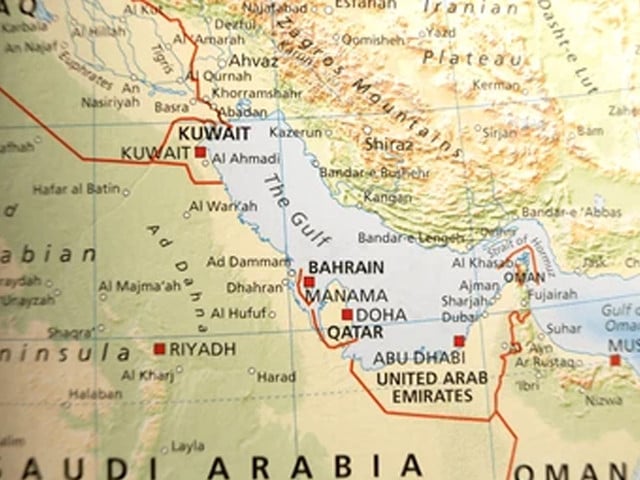
BEIJING: China's Minister for Foreign Affairs Wang Yi on Thursday underscored the urgent need for a ceasefire in the Middle East, stating that an end to hostilities is essential to ensure safe navigation through the strategically vital Strait of Hormuz.
Speaking during a phone conversation with Kaja Kallas, the High Representative for Foreign Affairs and Security Policy of the European Commission, Wang said that a cessation of conflict reflects the strong appeal of the international community and remains the only viable path toward regional stability.
Kallas, in turn, acknowledged China’s active diplomatic outreach, particularly the recent five-point peace initiative jointly proposed by China and Pakistan aimed at restoring stability in the Gulf and broader Middle East region.
Highlighting Europe’s position, Kallas noted that while the European Union is not directly involved in the conflict, it has been significantly impacted by its consequences. She stressed the need for immediate de-escalation, urging all parties to return to dialogue and negotiations.
She also reaffirmed the EU’s support for humanitarian efforts led by the United Nations to protect civilians and critical infrastructure while emphasising the importance of keeping key maritime routes—particularly the Strait of Hormuz—open and secure.
Wang reiterated that safeguarding global stability is a shared responsibility for China and the EU, calling for enhanced communication and coordination to uphold the international system anchored in the UN Charter and international law.
Elaborating on Beijing’s stance, he said the China-Pakistan five-point initiative reflects a broad international consensus, focusing on an immediate ceasefire, the launch of peace talks, protection of civilian and commercial assets, and ensuring the safety of vital shipping lanes.
He cautioned that actions by the United Nations Security Council should not legitimise unilateral military operations or further inflame tensions, stressing the need for restraint and adherence to international norms.
Beyond the Middle East crisis, the two leaders also discussed broader China-EU relations. Wang highlighted that China’s development offers opportunities rather than challenges for Europe, warning that protectionist policies and economic decoupling would ultimately be counterproductive.
“Decoupling from China means decoupling from opportunities,” he said, expressing hope that the EU would adopt a balanced and objective approach in managing bilateral ties.
Kallas responded by affirming that the EU considers China an important partner and does not seek economic decoupling, signalling Brussels’ willingness to maintain dialogue and strengthen cooperation despite global uncertainties.
The exchange reflects ongoing diplomatic efforts by major global actors to contain escalating tensions in the Middle East while preserving critical trade routes and reinforcing multilateral cooperation.
Comments
No comments yet. Be the first to join the discussion!