Court Steps In: KP CM ordered to explain 'Release Force' plan for Imran Khan
The Federal Constitutional Court has ordered Khyber Pakhtunkhwa's CM to respond to a petition challenging the legality of a proposed 'release force' for Imran Khan, raising constitutional concerns.

-- FCC seeks response within 10 days, raises alarm over legality of proposed force amid constitutional concerns
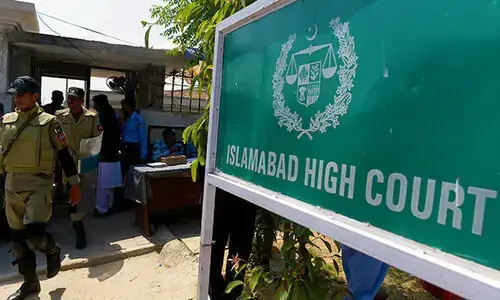
ISLAMABAD: The Federal Constitutional Court on Wednesday directed Sohail Afridi, Chief Minister of Khyber Pakhtunkhwa, to submit a response within 10 days to a petition challenging the proposed mobilisation of a “release force” aimed at securing the freedom of Imran Khan.
A three-member bench headed by Chief Justice Aminuddin Khan also issued notices to key respondents, including the KP government, Pakistan Tehreek-e-Insaf (PTI), the federal government, and the Election Commission of Pakistan.
The proposed force was announced in February by CM Afridi following a prolonged protest seeking access to Imran Khan, who has been incarcerated at Adiala Jail since August 5, 2023. The initiative was intended to sustain the party’s campaign for his release.
The petition, filed by Advocate Ali Nawaz Kharal in the public interest, urged the court to intervene and prevent the formation of any private militia, arguing that such a move would violate constitutional provisions. It also sought a stay on the creation of the force.
During the hearing, Justice Ali Baqar Najafi questioned whether the provincial cabinet had approved the formation of such a force. The petitioner’s counsel responded that no such approval had been granted.
The court directed the federal government to ensure adherence to the law and safeguard public order, reflecting concerns over the potential implications of such a move.
The proposal has sparked divisions within the Pakistan Tehreek-e-Insaf itself. Several party leaders expressed unease, drawing parallels with Al-Zulfikar, a militant group formed in 1979, and questioning the necessity of such a force. Others, however, have pushed for immediate protests rather than delaying action through organisational steps like membership drives.
In his petition, Kharal argued that the chief minister’s statement violated the oath of office and raised serious constitutional concerns. He warned that references to a “release force” could create fear and uncertainty among the public, potentially fostering unrest.
The petition cited Article 256 of the Constitution, which explicitly prohibits private militias, as well as relevant legal provisions under the Private Militias (Abolition and Prohibition) Act. It further emphasised that while Article 17 guarantees freedom of association, it is subject to restrictions in the interest of public order and national integrity.
According to the plea, any attempt to establish a force capable of organised physical action would fall outside constitutional limits and could be deemed unlawful. It also questioned how such a force would operate to “secure” Imran Khan’s release, raising concerns about its intended methods.
The court proceedings mark a significant legal challenge to the proposal, placing the issue of political mobilisation and constitutional boundaries under judicial scrutiny.
Comments
No comments yet. Be the first to join the discussion!