India-Afghanistan based accounts linked to disinformation campaign accusing Pakistan of Iran oil betrayal
A coordinated disinformation campaign by accounts in India and Afghanistan falsely accuses Pakistan of betraying Iran by transporting oil to the U.S., analysts reveal.

ISLAMABAD: A coordinated disinformation campaign traced to accounts in India and Afghanistan has falsely accused Pakistan of shipping Iranian oil to the United States through the Strait of Hormuz, analysts say, framing the narrative as a betrayal of Tehran.
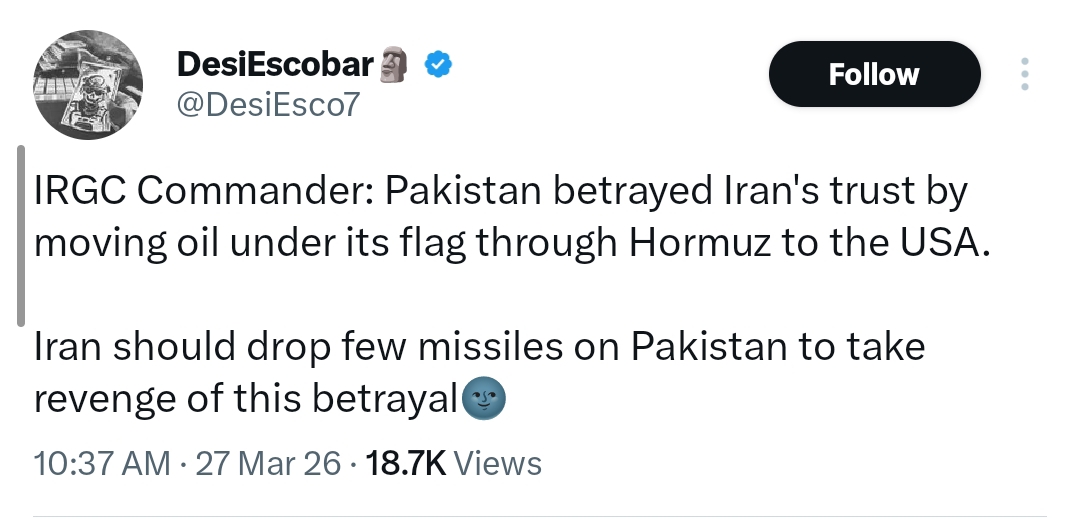
According to analysts, the campaign centred on a specific narrative that Pakistani-flagged vessels were facilitating oil shipments for the United States, a claim circulated widely on social media without any verified evidence. Posts reviewed include messages attributed to alleged Iranian military sources and framed as real-time “war updates,” with some calling for retaliation against Pakistan.
Analysts say the messaging was designed to construct the perception of a direct economic and strategic betrayal of Iran, despite no confirmation from official Iranian sources or independent verification of such oil movements.
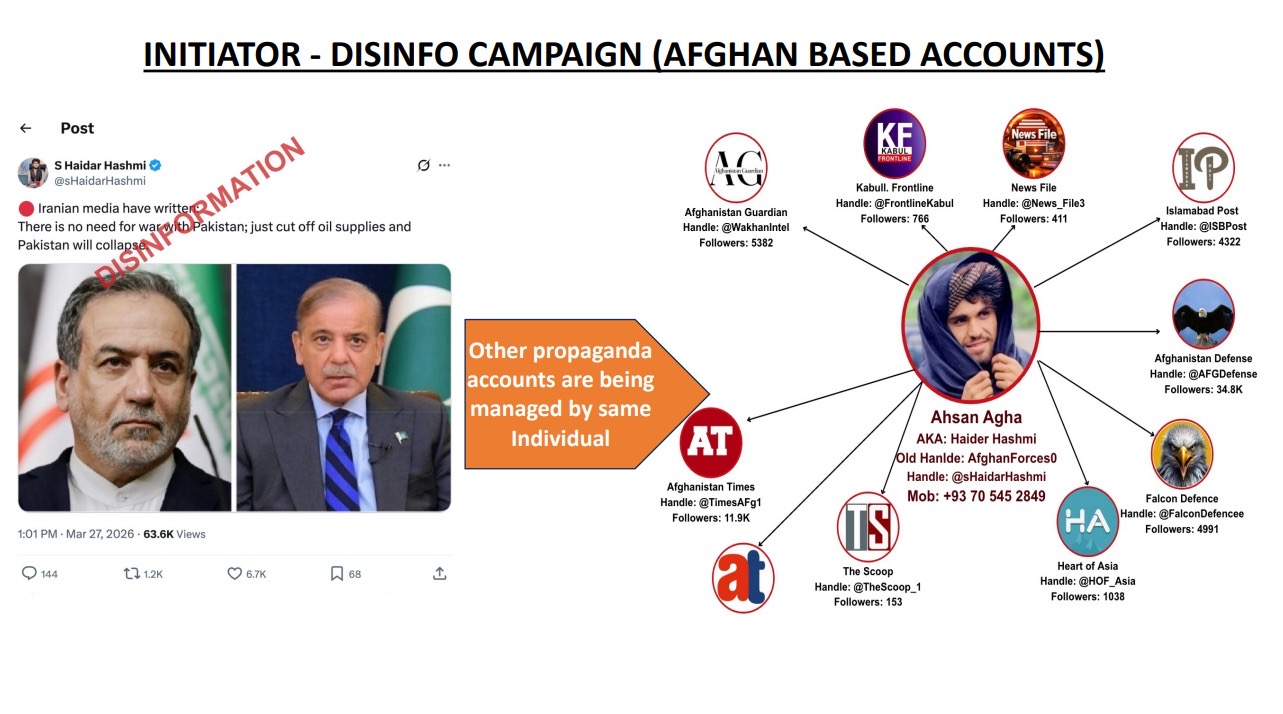
The campaign began with accounts posing as Iranian media outlets or officials, including pages branding themselves as news platforms to create the impression of authenticity. These accounts published initial claims linking Pakistan to oil transfers through Hormuz, forming the foundation of the narrative.
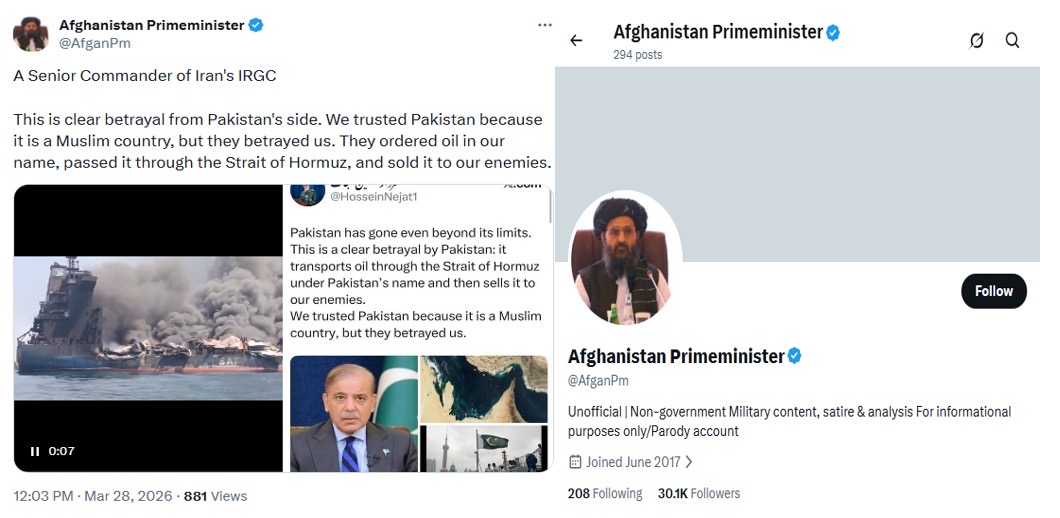
These “initiator” accounts were followed by a second layer of accounts based in Afghanistan, which analysts identify as “proliferators.” These accounts rapidly shared and reshaped the same claims, often translating or reframing them to increase reach and engagement across different audiences.
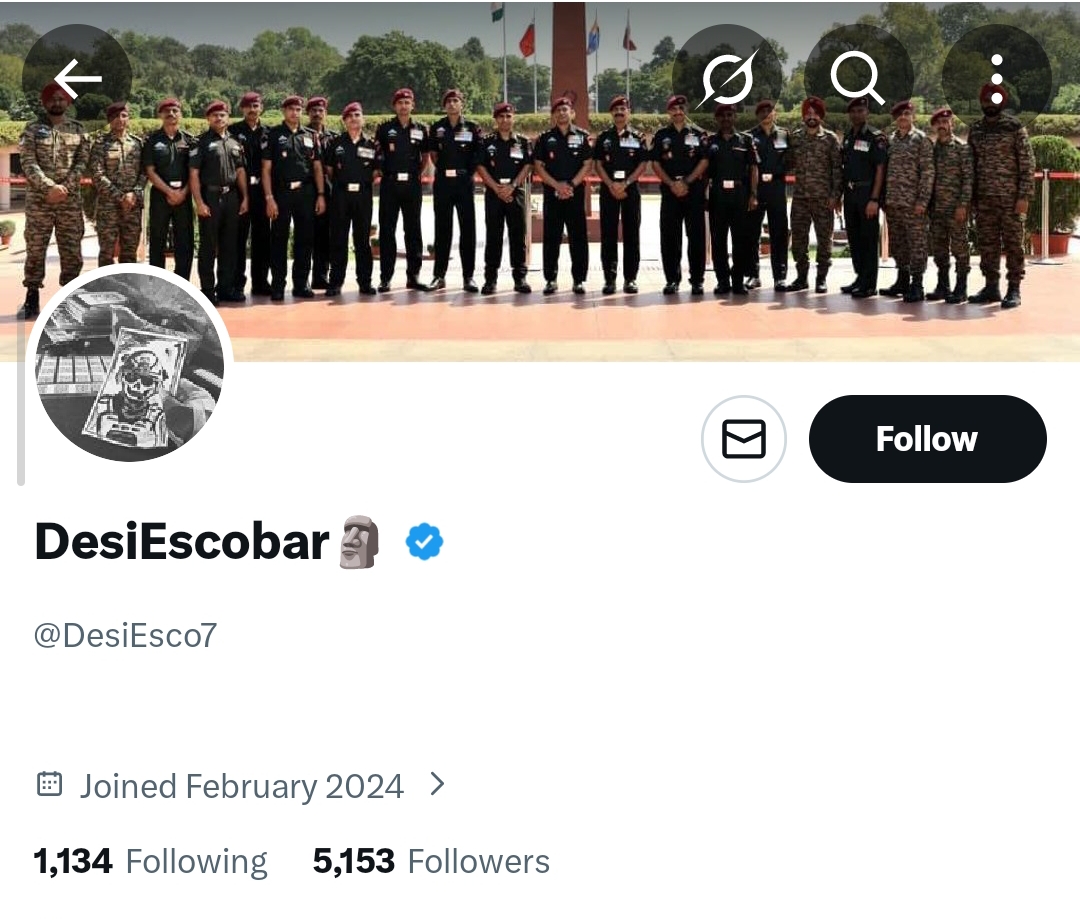
Analysts highlight that several of these accounts displayed patterns consistent with coordinated activity, including recent creation dates, minimal historical content, and repeated username changes. In one case, an account linked to Afghanistan showed more than ten handle changes while continuing to push identical narratives related to Pakistan and Iran.
Metadata indicators cited by analysts include location tags tied to Afghanistan, Android-based access, and synchronised posting patterns, suggesting centralised control rather than independent activity.
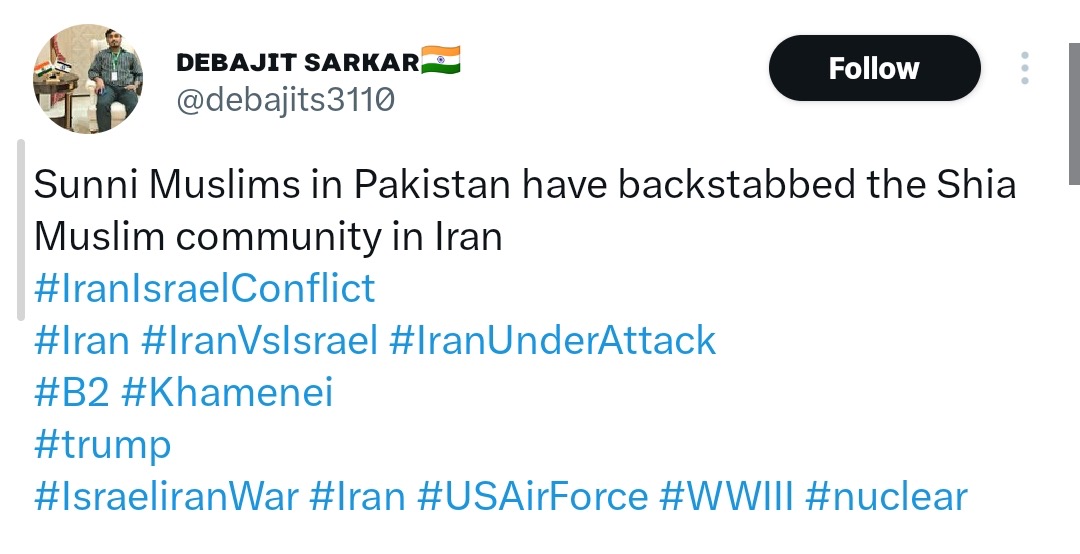
The narrative was further intensified by linking it to sectarian themes, with posts attempting to portray divisions between Sunni-majority Pakistan and Shia-majority Iran. Analysts say this layer was aimed at amplifying emotional response and deepening the perceived severity of the alleged “betrayal.”
At the final stage, accounts based in India acted as “amplifiers,” taking the same unverified claims and repackaging them into structured, news-style content. Platforms such as “Times of Iran News” were identified by analysts as key nodes that presented the narrative as credible international reporting.
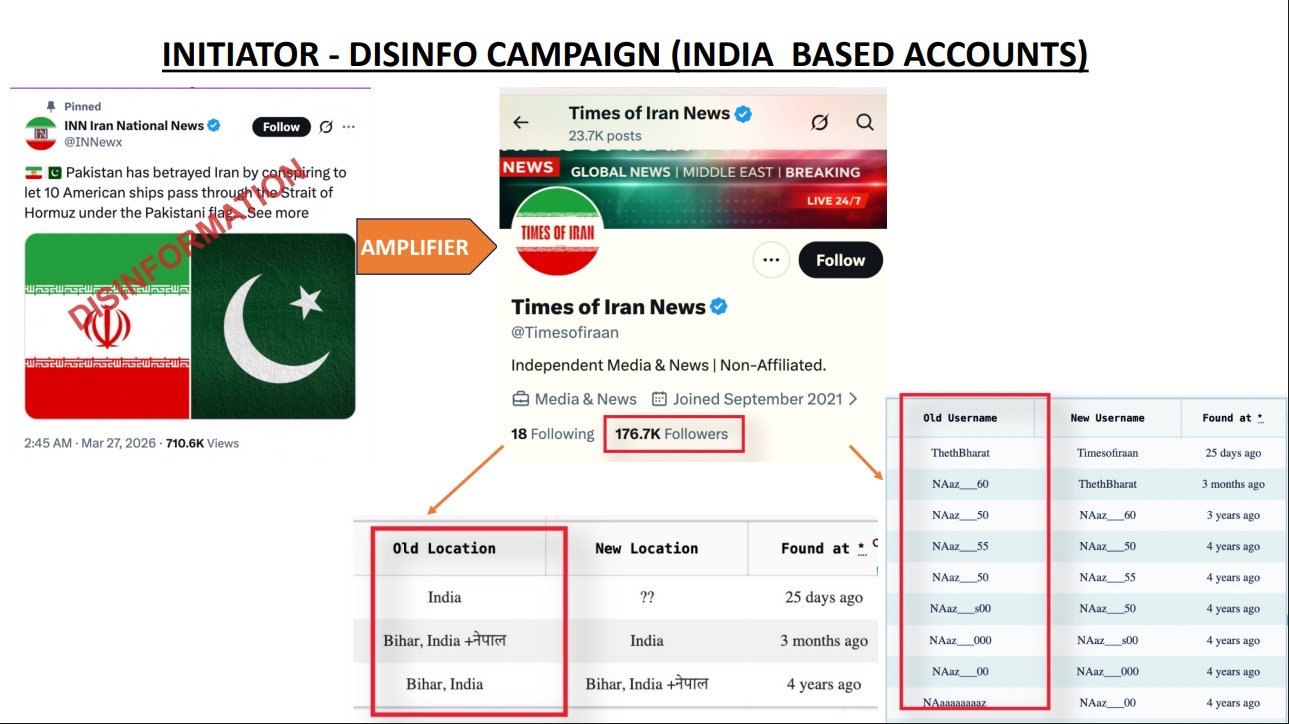
These accounts often portrayed themselves as independent or global media outlets, using formatting, language and branding associated with professional journalism to enhance legitimacy and extend the narrative’s reach.
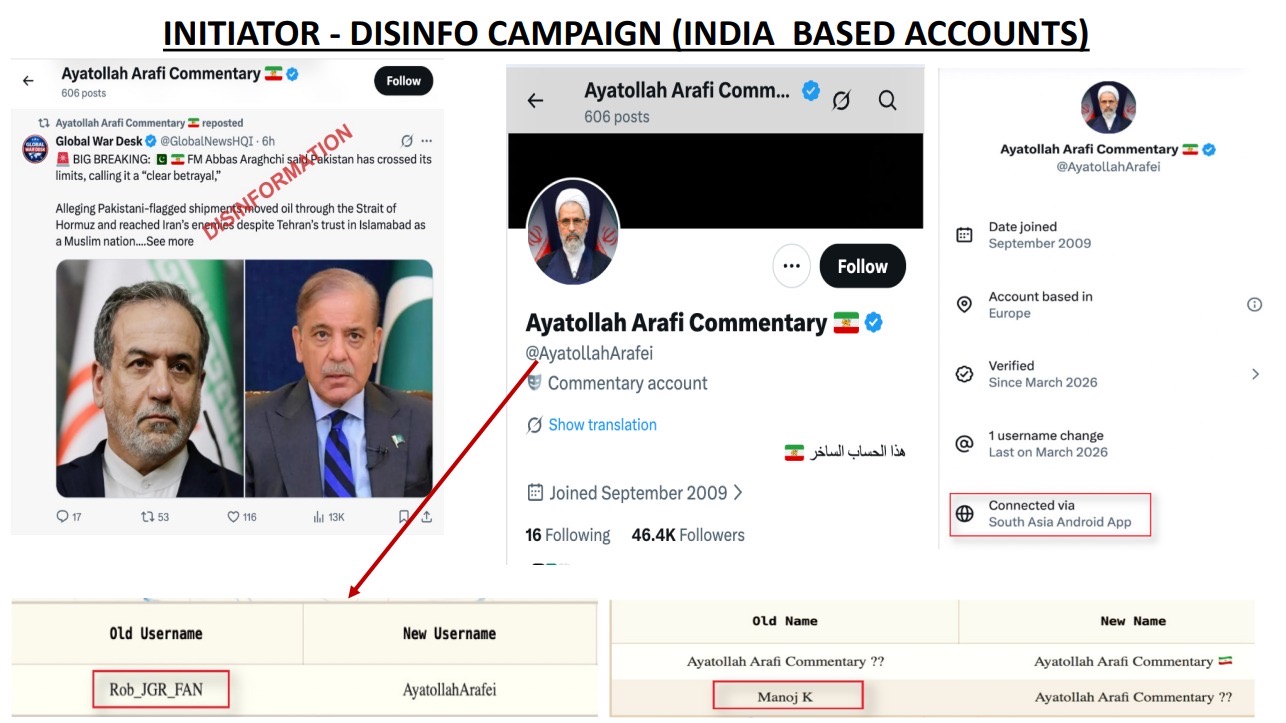
Analysts describe the overall operation as a coordinated three-tier model—initiators, proliferators and amplifiers—where fake Iranian identities created the narrative, Afghan-based networks spread it regionally, and India-based accounts projected it globally as credible information.
They add that the consistency of messaging, timing of posts and reuse of identical claims across multiple accounts indicate an organised effort to shape perception rather than spontaneous online discourse.
The narrative’s emergence coincides with Pakistan’s diplomatic engagement between the United States and Iran, including efforts to facilitate dialogue and reduce tensions. Analysts say such a role can attract opposition in a sensitive geopolitical environment, particularly where regional influence and strategic positioning are involved.
In this context, analysts note that portraying Pakistan as acting against Iranian interests through fabricated oil shipment claims serves to undermine its diplomatic position and create mistrust at a time of heightened regional tensions.
No official response has been issued by authorities in India or Afghanistan regarding the allegations, and no independent forensic audit has been publicly released confirming attribution.
Analysts warn that coordinated campaigns built around sensitive issues such as oil routes, military tensions and sectarian narratives can spread rapidly and influence public perception, even in the absence of verified evidence.
1 Comment
No comments yet. Be the first to join the discussion!