

War in Middle East threatens Persian Gulf's dugongs, turtles and birds, experts warn
The war in the Middle East threatens the Persian Gulf's marine life, including dugongs, sea turtles and birds, with over 300 environmental risk incidents recorded since the conflict began.

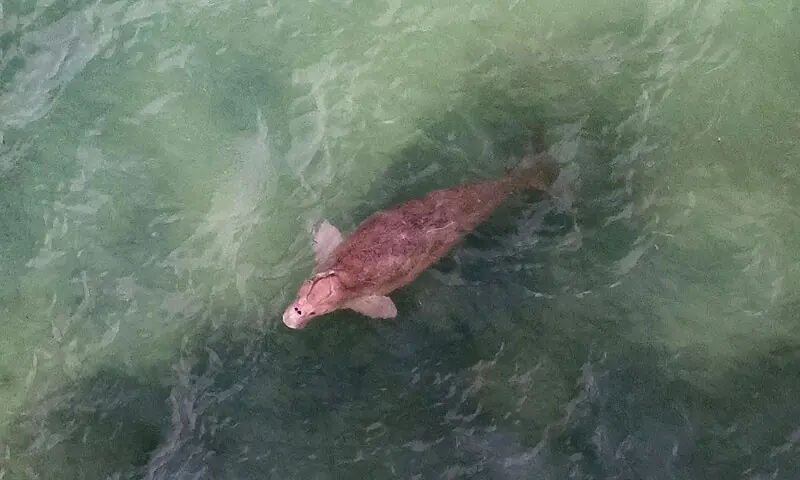
TEHRAN: The ongoing war in the Middle East poses a serious threat to the Persian Gulf's diverse but fragile marine life, including sea turtles, birds and the gentle dugong, as bombs and oil spills endanger an ecosystem already under significant stress.
The Gulf's ecosystem was already facing pressure from climate change and maritime traffic before the United States and Israel launched their war on Iran at the end of February. Since the conflict broke out, more than 300 incidents involving environmental risks — including attacks on oil tankers — have been recorded in the region, according to a March 10 report by the Conflict and Environment Observatory, a UK-based non-governmental organisation.
Geography makes Gulf particularly vulnerable
The geography of the Persian Gulf makes its ecosystem particularly vulnerable to the impacts of conflict. The Gulf is a semi-enclosed and shallow sea, averaging about 50 metres in depth, and is connected to the Indian Ocean through the Strait of Hormuz. Its slow water renewal cycle — occurring only once every two to five years — severely limits the dispersion of oil or other pollutants that enter its waters.
This means that any oil spills or chemical contamination resulting from the conflict could linger in the Gulf's waters for years, compounding the damage to marine habitats and the species that depend on them.
Home to world's second-largest dugong population
The region is home to the world's second-largest population of dugongs, herbivorous marine mammals that are among the most vulnerable species in the Gulf. These slow-moving creatures, along with sea turtles and various bird species, face heightened risks from the environmental fallout of the conflict.
The combination of direct military activity, oil tanker attacks and the broader disruption to the marine environment has created what experts describe as an unprecedented threat to the Gulf's biodiversity. The more than 300 recorded environmental risk incidents since the war began underscore the scale of the danger facing the region's wildlife.
The Persian Gulf's marine ecosystem, already strained by rising sea temperatures linked to climate change and the heavy volume of commercial shipping traffic through its waters, now faces the additional burden of wartime environmental degradation. The shallow, enclosed nature of the waterway means that recovery from any significant pollution event could take years, if not decades.
Environmental observers continue to monitor the situation closely, with the Conflict and Environment Observatory's report highlighting the rapid accumulation of environmental risks in just the opening weeks of the conflict.
Comments
No comments yet. Be the first to join the discussion!


