Pakistan vows support for Saudi Arabia, pushes diplomacy to ease Middle East tensions
Pakistan has pledged unwavering support for Saudi Arabia while actively pursuing diplomatic efforts to de-escalate rising tensions in the Middle East. The government prioritizes regional stability and energy security.
-- Islamabad reiterates commitment to stand by Riyadh if required
-- Government says priority is preventing wider regional conflict
-- Pakistan maintaining dialogue with Iran, Gulf states and the US
-- Officials say energy supplies remain stable despite crisis
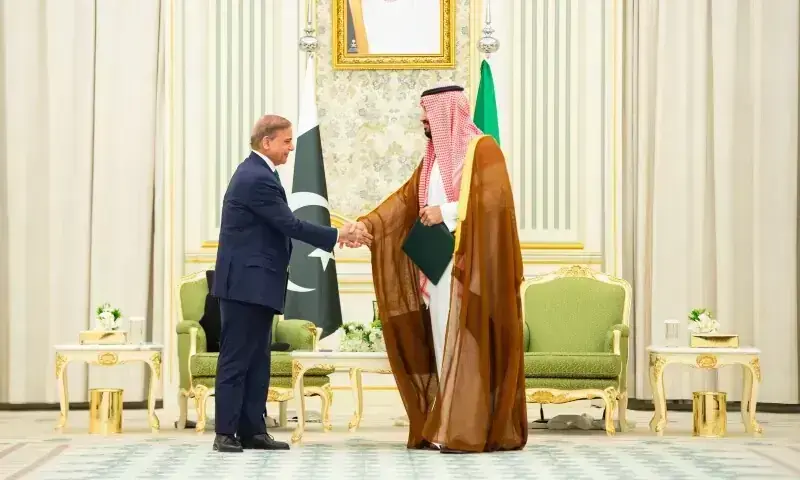
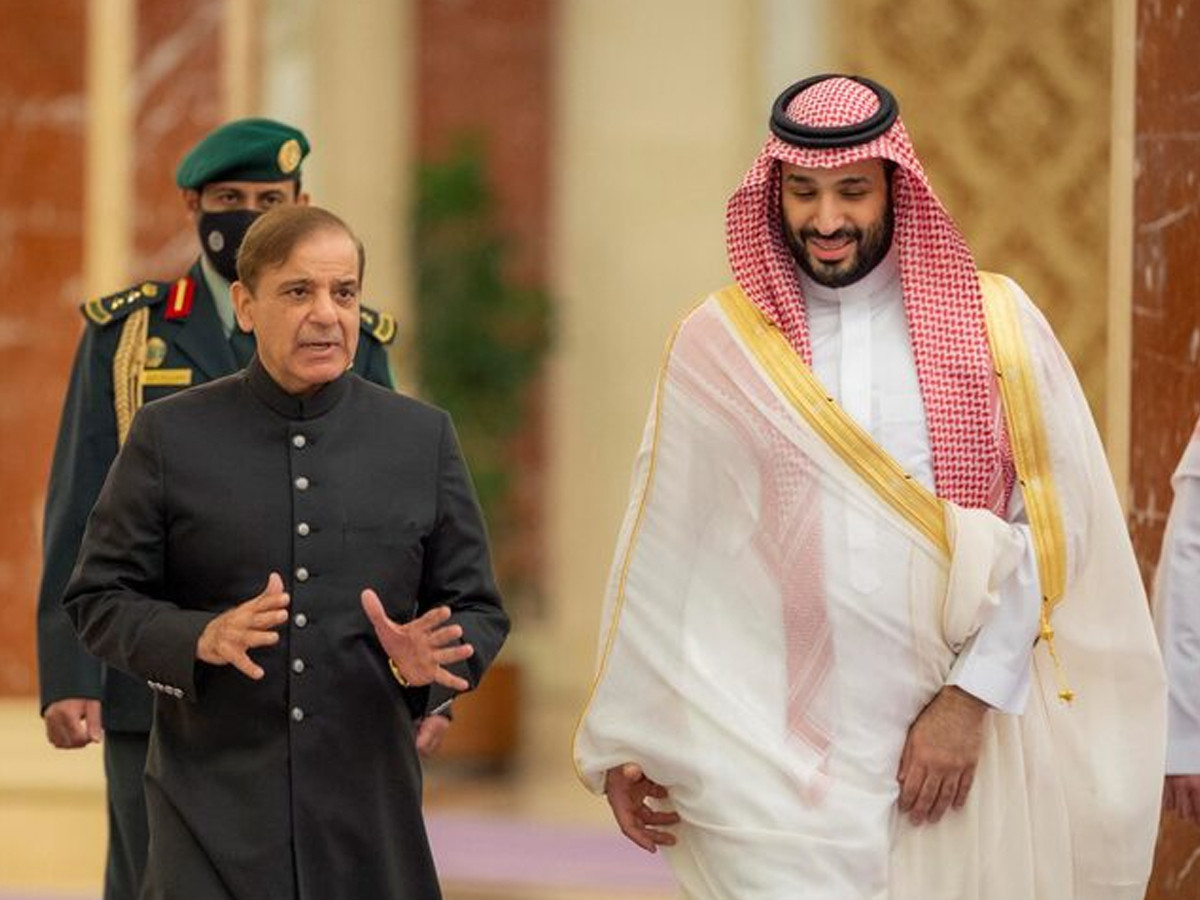
ISLAMABAD: Pakistan on Wednesday reaffirmed its commitment to support Saudi Arabia whenever required, while stressing that Islamabad was simultaneously working through diplomatic channels to prevent further escalation of tensions in the Middle East.
Speaking in an interview with Bloomberg TV, Prime Minister Shehbaz Sharif’s spokesperson Mosharraf Zaidi highlighted the longstanding relationship between Pakistan and Saudi Arabia, saying it had always been based on mutual support and strategic cooperation.
Zaidi said the partnership between the two countries meant that Pakistan would stand by Saudi Arabia whenever needed.
“One thing to be very clear about is that the question is not whether Pakistan might come to Saudi Arabia’s aid. Both countries have always operated on the principle of being there for each other before the need even arises,” he said.
Tensions in the region have sharply escalated following air strikes carried out by the United States and Israel that reportedly killed Iran’s Supreme Leader Ayatollah Ali Khamenei and several senior officials, prompting retaliatory attacks by Iran on US military bases in Gulf countries.
The widening confrontation has raised concerns about a broader regional conflict that could destabilise the Middle East and affect global energy markets.
Zaidi said Pakistan’s immediate focus was on preventing the crisis from escalating further and ensuring that key regional partners were not drawn deeper into the conflict.
“The real question is what Pakistan is doing to make sure that things do not reach a point where our closest partners are further embroiled in a conflict that could undermine stability and prosperity for the entire region and for the Pakistani people,” he said.
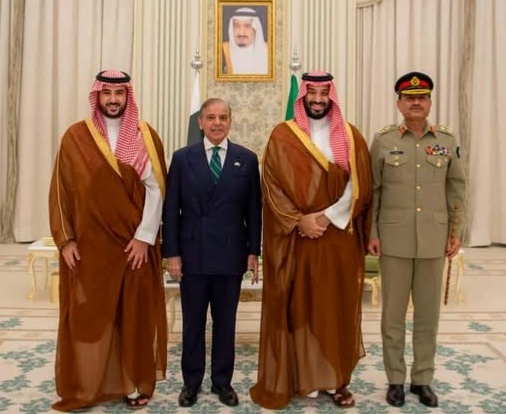
Pakistan has intensified diplomatic engagement with regional and international partners in recent days. Chief of Defence Staff and Chief of the Army Staff Asim Munir recently visited Saudi Arabia, while Pakistani leaders have remained in contact with Iranian officials and maintained dialogue with the United States.
Zaidi noted that Gulf states had so far shown restraint despite pressure from some quarters in Washington to become more directly involved in the conflict.
“We have seen calls from some voices in the United States for Saudi Arabia and other Gulf countries to get more actively involved, but they have resisted. That restraint is something Pakistan welcomes,” he said.
When asked whether Pakistan could provide military assistance to Saudi Arabia if the situation worsened, Zaidi said it would be inappropriate to speculate on such matters.
However, he reiterated that Pakistan’s longstanding partnership with Saudi Arabia meant Islamabad would stand by Riyadh if required.
Both countries share deep economic and strategic ties, including cooperation in energy security, defence and regional stability.
Zaidi also stressed that Pakistan was maintaining communication with all key regional players to promote de-escalation, including ongoing contacts with Iranian leadership.
He said Deputy Prime Minister and Foreign Minister Ishaq Dar had been in regular contact with Iran’s foreign minister over the past two weeks.
“These conversations are part of the reason you have seen conciliatory gestures from Iran towards some Gulf states,” Zaidi said, adding that Pakistan recognised its responsibility as a close partner of multiple countries in the region.
Pakistan’s diplomatic position, he said, was centred on dialogue rather than confrontation.
“Pakistan does not want to see its friends fighting each other. Disputes should be resolved through dialogue,” he said.
He also criticised the ongoing bombing campaign in Iran and warned that further escalation would harm both regional stability and ordinary civilians.
On the maritime front, Zaidi said the Pakistan Navy had been actively working to ensure the safety of Pakistan’s waters in recent days, particularly in light of disruptions caused by tensions around the Strait of Hormuz.
However, he clarified that Pakistan’s naval responsibilities were currently limited to safeguarding its own maritime territory and that any expansion of such operations would likely require a multilateral framework.
“Pakistan is ensuring that our waters remain safe, and our naval personnel are performing these duties with professionalism and courage,” he said.
Addressing developments along Pakistan’s western border, Zaidi said the country was not in conflict with Afghanistan itself but with militant groups operating from Afghan territory under the protection of the Afghan Taliban regime.
He accused the Afghan Taliban of providing sanctuary to militants involved in attacks on Pakistani civilians and security personnel.
Pakistan, he said, had attempted dialogue with the Afghan authorities for years but would continue counterterrorism operations until militant groups were no longer sheltered across the border.
On the economic front, Zaidi said Pakistan’s oil reserves and incoming shipments suggested that the country’s energy supply situation remained stable despite regional tensions.
“Current stocks and shipments that are already on their way indicate that the situation is stable to good,” he said.
However, he acknowledged that recent increases in petroleum prices had placed pressure on consumers.
Zaidi said the government had taken early steps to prepare for potential disruptions, including adjustments in fuel prices and energy conservation measures.
The closure of the Strait of Hormuz has forced Pakistan to explore alternative supply routes for oil imports, significantly increasing delivery times.
“Normally fuel shipments take around five to six days to reach Pakistan due to our proximity to the region. But with the Strait of Hormuz closed, alternative routes now take up to 18 to 20 days,” he explained.
To manage fuel consumption, the government has introduced measures such as a four-day work week in some sectors, expanded remote working and reduced use of official vehicles.
Zaidi said the current crisis could also accelerate Pakistan’s transition toward electric vehicles and broader energy reforms.
“Every crisis presents an opportunity for change. The government is looking at how this moment can help prepare Pakistan for a changing global energy landscape,” he added.
Comments
No comments yet. Be the first to join the discussion!