Sindh Unveils Austerity Drive: Schools get spring break, govt offices to work from home on Fridays
The Sindh government has introduced austerity measures, including spring breaks for schools and a new work-from-home policy for government offices on Fridays to curb fuel consumption.

KARACHI: The government of Sindh on Tuesday unveiled a series of austerity measures aimed at reducing fuel consumption and limiting the economic impact of the ongoing regional crisis, announcing spring vacations for schools and a work-from-home policy for government offices on Fridays.
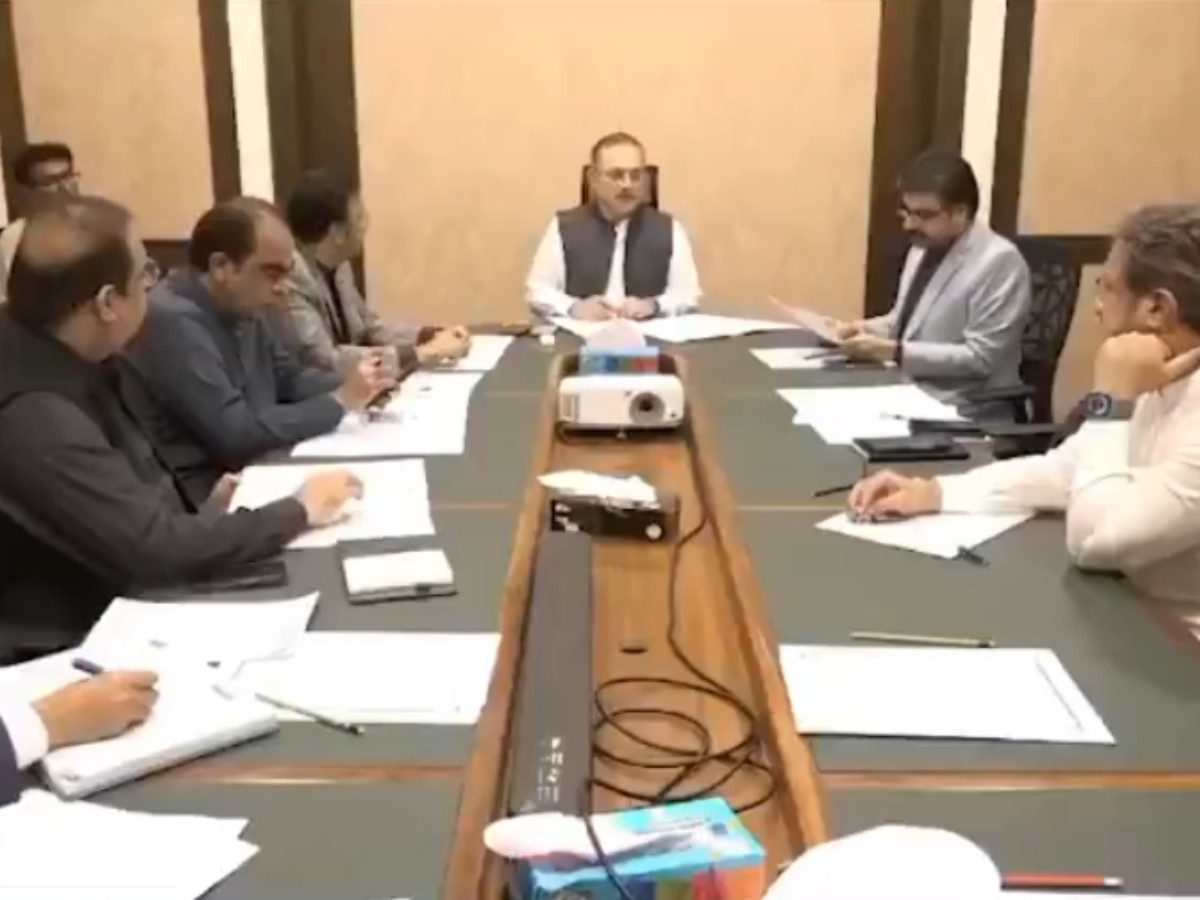
Addressing a press conference, Sindh Senior Minister Sharjeel Inam Memon said that all schools across the province would observe spring vacations from March 16 to March 31, while colleges and universities would shift to online classes during the period.
He clarified that ongoing examinations would continue as scheduled and would not be postponed despite the temporary academic adjustments.
The minister also addressed reports suggesting that government offices would remain closed on Fridays, stating that this was incorrect. Instead, officials would work remotely on that day as part of the energy-saving strategy.
“Monday, Tuesday, Wednesday, Thursday—you have to work. On Friday, you have to work from home,” Memon explained.
He said the provincial government had fully endorsed the austerity measures announced earlier by Prime Minister Shehbaz Sharif and had launched its own campaign to reduce expenditures.
According to Memon, the Sindh government would cut fuel allocation for official vehicles by 50 percent, a move expected to save approximately Rs960 million.
In another symbolic step, provincial ministers have decided to forgo their salaries for three months from April to June. The government also plans to send a reference to the speaker of the Sindh Assembly, leaving it to lawmakers to decide whether members of the provincial assembly should adopt similar measures.
The austerity campaign will also target routine government expenditures. Memon said spending on items such as furniture and stationery would be reduced by 20 percent, which could generate savings of around Rs12 billion.
Additionally, the provincial government has imposed a complete ban on the purchase of new vehicles and other non-essential items, except in cases where such purchases are necessary for operational purposes, such as ambulances or law enforcement vehicles.
The minister further announced restrictions on official travel, saying that unnecessary foreign visits by government officials would be barred. If travel was unavoidable, officials would be required to use economy class, with business class travel strictly prohibited.
Memon also revealed that several ministers, including the chief minister, had expressed willingness to reduce or withdraw their security protocols so that police vehicles could be redeployed for public use and unnecessary expenditures avoided.
The provincial cabinet has directed the law minister to withdraw security arrangements from individuals who were receiving government or police protection without genuine security concerns, including some former caretaker ministers and committee members.
“Security is not being withdrawn from those who have genuine cases,” Memon clarified, adding that the cabinet had ordered an immediate halt to all forms of unnecessary government spending.
As part of the cost-cutting drive, the minister said the government would not host Iftar parties at public expense, and any official events would be held in government buildings rather than luxury venues.
“Chief Minister Sahib and we have decided together that from now on, no minister will attend any Iftari […] Charity begins from home,” he remarked.
He added that refreshments funded by government money would remain banned in all offices for two months after Ramazan as part of the broader austerity campaign.
The minister also expressed solidarity with the armed forces, referencing Operation Ghazab lil-Haq being carried out along the Pakistan–Afghanistan border against militant elements.
“When we speak about challenges, it is not your or mine, it is our challenge,” he said.
Responding to a question, Memon confirmed that the chief minister’s official aircraft would remain grounded during the austerity period. He also clarified that the plane had been purchased by the previous provincial administration.
He emphasised that the funds saved through these measures would be redirected toward public welfare and that the government was determined to shield citizens from the aftereffects of the recent fuel price hikes.
The Sindh government’s announcement follows austerity steps taken by the federal government in response to the global fuel crisis triggered by the war involving the United States, Israel, and Iran.
Under the federal measures, fuel allowances for official vehicles were reduced by 50 percent for two months, while members of the federal cabinet agreed to give up their salaries and allowances for the same period.
Meanwhile, the government of Khyber Pakhtunkhwa has ordered all public and private universities, degree-awarding institutions and colleges to remain closed on Fridays and Saturdays.
A notification issued by the provincial higher education department said institutions should adopt hybrid or online teaching modes on other working days to reduce fuel consumption during the ongoing crisis.
The arrangement will remain in effect for two months or until further notice.
The KP government had earlier announced additional fuel-saving steps, including a 50 percent work-from-home policy for government offices and cuts in fuel allowances for official vehicles.
Similarly, the governments of Punjab and Balochistan have also introduced measures such as closing colleges on selected days and encouraging remote work in government offices to conserve fuel amid the ongoing energy crisis.
Comments
No comments yet. Be the first to join the discussion!