IMF chief says global economic resilience faces new test amid Middle East conflict
IMF Managing Director Kristalina Georgieva said the global economy is facing a new test of resilience due to the Middle East conflict, ahead of the IMF-World Bank fall meetings.


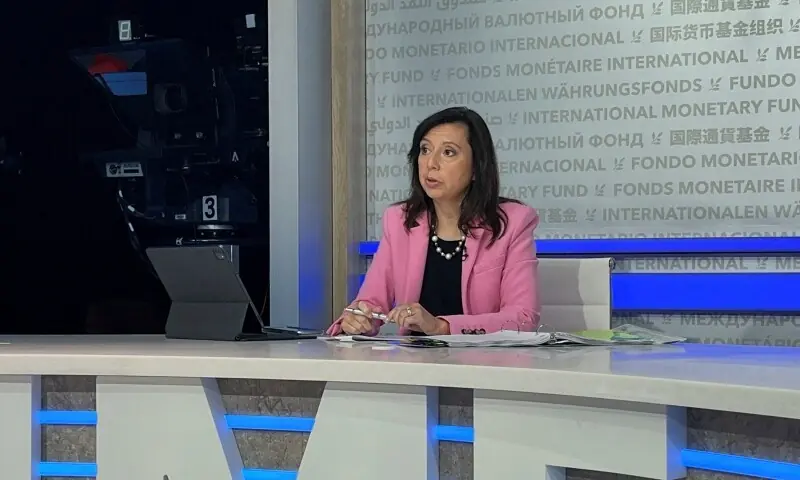
International Monetary Fund (IMF) Managing Director Kristalina Georgieva has stated that the resilience of the global economy is being challenged once again due to the ongoing conflict in the Middle East. Georgieva made these remarks ahead of the annual IMF-World Bank fall meetings, speaking at the Milken Institute in Washington, D.C. on October 8, 2025.
Georgieva highlighted that the global economy, which has already faced several shocks in recent years, is now confronted with additional uncertainty as a result of the war in the Middle East. She emphasized that these developments are testing the ability of economies worldwide to withstand further disruptions.
According to reports, Georgieva did not provide specific details about the potential economic impacts or outline particular countries or sectors that may be most affected. However, her comments underscored concerns about the broader implications of geopolitical tensions for international financial stability.
The IMF chief's statement comes as policymakers and financial leaders prepare to gather for the upcoming IMF-World Bank meetings, where global economic challenges are expected to be a central topic of discussion. Georgieva's remarks reflect growing apprehension among international institutions regarding the effects of ongoing conflicts on economic growth and stability.
Sources indicate that the IMF is closely monitoring the situation and will continue to assess the risks posed by the Middle East conflict to the global economy. The organization has previously warned that geopolitical tensions can have far-reaching consequences, particularly in a world still recovering from previous economic shocks.
Georgieva's comments serve as a reminder of the interconnected nature of the global economy and the importance of resilience in the face of recurring challenges. As the situation develops, international financial institutions are expected to provide further analysis and guidance on managing the risks associated with the conflict.
Comments
No comments yet. Be the first to join the discussion!