Pakistan’s strategic resolve
A senior Pakistani official outlines the strategic framework of Operation Ghazab lil Haq, emphasizing the need for Afghan Taliban compliance in counterterrorism efforts.

The Imperative of Counterterrorism Compliance
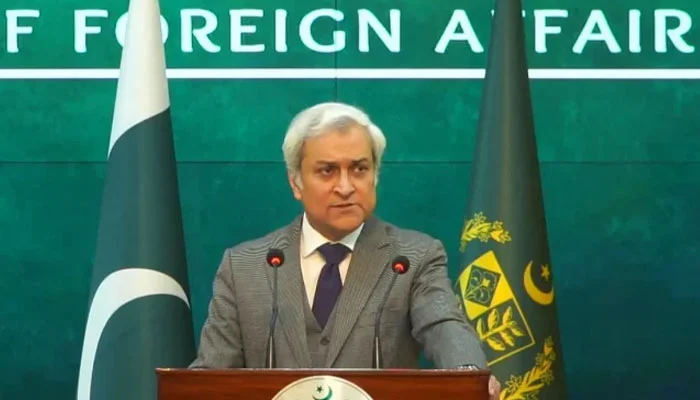
On 2 March, a senior Pakistani security official delivered a comprehensive and unambiguous briefing to media representatives outlining the doctrinal, operational, and strategic contours of Operation Ghazab lil Haq. The address articulated Pakistan’s calibrated yet resolute posture toward cross-border militancy emanating from Afghan territory and underscored the non-negotiable imperative of verifiable counterterrorism compliance by the Afghan Taliban regime.
At the heart of the briefing was a stark proposition: The Afghan Taliban must choose between Pakistan and the constellation of terrorist groups operating from their soil. Islamabad’s position, as articulated, is no longer framed in diplomatic euphemisms but in strategic clarity. The continuation or cessation of Pakistan’s operations inside Afghanistan hinges exclusively on tangible, verifiable assurances that Kabul will cease the facilitation, harbouring, and logistical enablement of entities such as Fitna al Khawarij and Fitna al Hindustan— groups responsible for orchestrating terror attacks against Pakistani civilians, security personnel, mosques, and children.
The official emphasized that Pakistan is “in no hurry.” This phrase, repeated with deliberation, signals a long-haul strategic commitment rather than a short-term punitive expedition. The duration of Operation Ghazab lil Haq is conditional, not chronological. It depends entirely on ground actions undertaken by the Afghan Taliban regime. In essence, the burden of de-escalation lies in Kabul’s court.
A particularly forceful element of the briefing was the characterization of the Afghan Taliban regime as a “proxy master” harbouring multiple terrorist outfits with the explicit objective of destabilizing regional peace. The official accused the regime of sustaining itself through a war economy cloaked in a perverted religious ideology. According to this assessment, the leadership’s operative creed is not faith but financial opportunism, leveraging militancy and instability as instruments of revenue and influence.
Despite the gravity of the situation, Pakistan has sought to maintain transparency. The Ministry of Information and Broadcasting, the official noted, has been consistently disseminating updates regarding the progress and scope of Operation Ghazab lil Haq. This openness is intended to counter misinformation and reinforce public confidence in the state’s counterterrorism doctrine.
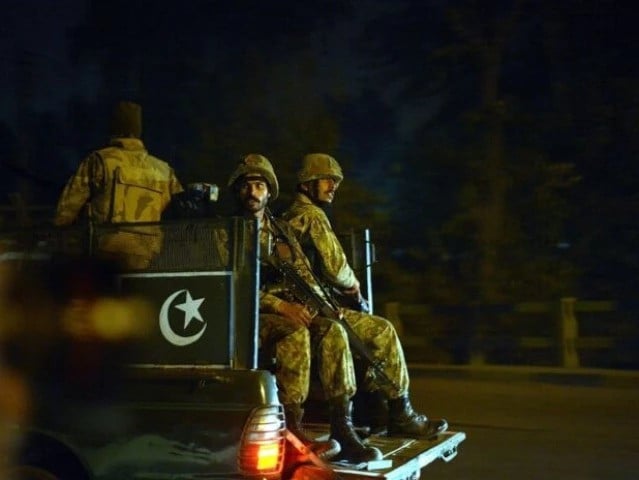
Operationally, Pakistan maintains that its actions are precise, intelligence-driven, and legally grounded in the right of self-defence under international law. The targets are not random or indiscriminate; they are specific sanctuaries, infrastructure nodes, and facilitation networks used as launch pads for terrorist incursions into Pakistan. To date, more than 180 posts have been destroyed and over 30 captured— those deemed to hold tactical relevance. Each of these installations, according to the briefing, functioned as conduits for cross-border terrorism.
Ultimately, Operation Ghazab lil Haq represents more than a military campaign; it is a doctrinal assertion that Pakistan will not tolerate cross-border sanctuaries that imperil its citizens. The senior official’s briefing crystallized this resolve with clarity and candour. The pathway to de-escalation is neither obscure nor unattainable: verifiable action against terrorist facilitation. Until then, Pakistan’s strategic patience appears matched by operational persistence.
The official also issued a cautionary note regarding information warfare. Afghan Taliban official accounts, alongside what were described as their “Indian masters,” have allegedly engaged in concocted propaganda and disinformation campaigns. The media and public were urged to rigorously fact-check claims emanating from these sources, whose credibility was categorically dismissed. This dimension underscores the hybrid nature of the conflict, wherein kinetic operations are paralleled by narrative battles in the digital domain.
Importantly, the briefing differentiated between the Afghan regime and the Afghan people. Pakistan, it was stressed, harbours no animus toward Afghan civilians. On the contrary, the operations have reportedly received a positive response from oppressed Afghan communities and minorities who view the targeting of militant strongholds as a challenge to entrenched warlords. Islamabad has no interest in regime change in Afghanistan; that prerogative belongs exclusively to the Afghan populace. The objective is counterterrorism, not political engineering.
The official’s remarks also addressed domestic dimensions of security governance. The Pakistan Army’s involvement in internal security, he asserted, is not by design but by default. Governance gaps, incomplete implementation of the National Action Plan (NAP), and the politicization of civilian institutions have necessitated military intervention in domains ideally managed by civilian authorities. The appeal to political parties and governments was unequivocal: improve governance, depoliticize security institutions, and implement NAP in totality. The military, he maintained, has no interest in politics and seeks only the restoration of functional institutional equilibrium.
Strategically, Operation Ghazab lil Haq is framed as a defensive war imposed upon Pakistan. The narrative positions the state as a victim of externally facilitated terrorism, compelled to act to safeguard its sovereignty and citizens. The destruction of terrorist infrastructure across the border is thus portrayed as a legitimate extension of self-defence, calibrated to neutralize imminent threats rather than to project expansionist ambitions.
The declaration that “it’s time for the terror supporters and abettors to bleed and suffer” encapsulates the hardened tone of the current phase. It reflects accumulated frustration over unfulfilled commitments and escalating attacks attributed to sanctuaries in Afghanistan. Yet, even within this stern rhetoric, the conditionality remains clear: verifiable cessation of facilitation will bring operations to an end.
In geopolitical terms, the briefing signals a recalibration of Pakistan-Afghanistan relations from uneasy coexistence to conditional engagement. Counterterrorism compliance has become the litmus test of bilateral interaction. The strategic patience professed by Islamabad suggests preparedness for protracted engagement should compliance not materialize.
For policymakers and analysts, the implications are manifold. The operational metrics— 180 posts destroyed, 30 captured— indicate a sustained campaign rather than symbolic strikes. The emphasis on transparency and fact-checking reflects awareness of the reputational stakes in an era of instantaneous global scrutiny. The invocation of governance reform and NAP implementation signals recognition that external operations must be complemented by internal resilience.
Ultimately, Operation Ghazab lil Haq represents more than a military campaign; it is a doctrinal assertion that Pakistan will not tolerate cross-border sanctuaries that imperil its citizens. The senior official’s briefing crystallized this resolve with clarity and candour. The pathway to de-escalation is neither obscure nor unattainable: verifiable action against terrorist facilitation. Until then, Pakistan’s strategic patience appears matched by operational persistence.
Comments
No comments yet. Be the first to join the discussion!