Telegraph Questions ICC’s “Fair Play” Claims Amid T20 World Cup 2026 Scheduling Controversy
The Telegraph questions the ICC's commitment to fairness in the T20 World Cup 2026, highlighting scheduling issues and political influences affecting competition.

The International Cricket Council (ICC) maintains that its global tournaments are founded on “sporting integrity, competitiveness, consistency and fairness.” However, a sharp critique published by The Telegraph argues that the structure and scheduling of the ongoing T20 World Cup 2026 tell a very different story.
According to the report, international cricket continues to be shaped as much by political realities and commercial interests as by on-field merit. One of the clearest examples, it notes, is India’s ongoing refusal to play matches in Pakistan — even during ICC events hosted there.
The publication points out that in most global sports tournaments, teams are not permitted to avoid fixtures in a designated host nation. Yet during last year’s Champions Trophy, India remained stationed in Dubai for the duration of the event, while other teams shuttled between Pakistan and Dubai. South Africa, for instance, reportedly undertook two five-hour flights within 18 hours in anticipation of a semi-final that ultimately was not staged there.
In the current T20 World Cup, Pakistan were informed in advance that all of their matches would take place in Sri Lanka — a move the report links to broader geopolitical considerations.
The criticism extends to the tournament’s competitive format. Unlike many major sports competitions where topping a group offers a tangible advantage, ICC events rely on pre-seeding for the Super Eight stage. As a result, finishing first in the initial group phase provides no meaningful edge.
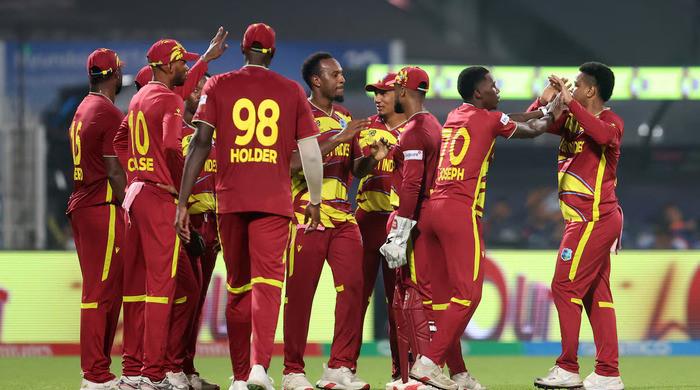
The report highlights that England’s loss to West Indies had no bearing on their Super Eight placement. Meanwhile, West Indies were drawn into a group featuring three other group winners, while the parallel Super Eight group comprised exclusively second-placed teams. According to the newspaper, such structuring appears geared more toward maximizing television audiences — particularly for India fixtures — than rewarding performance.
Scheduling has also come under scrutiny. Final group-stage matches are not played simultaneously, allowing teams competing later to calculate precisely what is required for qualification.
As the Super Eight stage nears its conclusion, Pakistan could potentially know the exact victory margin needed against Sri Lanka to progress, depending on earlier outcomes — a scenario the report describes as inherently uneven.
India, notably, has frequently featured in the final group-stage fixture. In five of the last six men’s ICC tournaments since 2021, India played last in the group phase — a pattern set to continue in 2026, where they are scheduled to close both group stages. The report further observes that India’s recent final group opponents have included comparatively lower-ranked sides such as Namibia, Zimbabwe, and the Netherlands.
Venue allocation is another focal point. Tournament regulations guarantee India a semi-final in Mumbai on March 5, regardless of their Super Eight standing — an assurance not extended to other teams. A similar arrangement occurred at the 2024 T20 World Cup, when India were pre-assigned a semi-final in Guyana, enabling them to tailor preparations to specific local conditions.
In its concluding remarks, The Telegraph contends that while fairness may prevail within the boundary ropes, the broader organization and commercial framing of ICC tournaments risk undermining the governing body’s professed principles — with broadcast value seemingly prioritized over competitive balance.
Comments
No comments yet. Be the first to join the discussion!