PM underscores ‘whole-of-government approach to boost exports, address pending economic challenges
PM Shehbaz Sharif emphasizes a whole-of-government approach to enhance exports and tackle economic challenges at the Pakistan Governance Forum 2026, citing significant progress in inflation reduction and power sector reforms.

Premier Shehbaz inaugurates Pakistan Governance Forum 2026, launches PSDP Data Portal aim at promoting transparent governance
Calls for unified national effort to move forward on path of sustainable economic growth
Recalls 2023 default threat and subsequent economic stabilization within two years, saying inflation cut from 35% to under 7% while policy rate brought down to 10.5%
Flags Rs200b power theft, stressing a coordinated whole-of-government approach to address issue
Defends closure of Utility Stores, PWD, terming them ‘a den of corruption and theft’ and corruption-tainted entity’
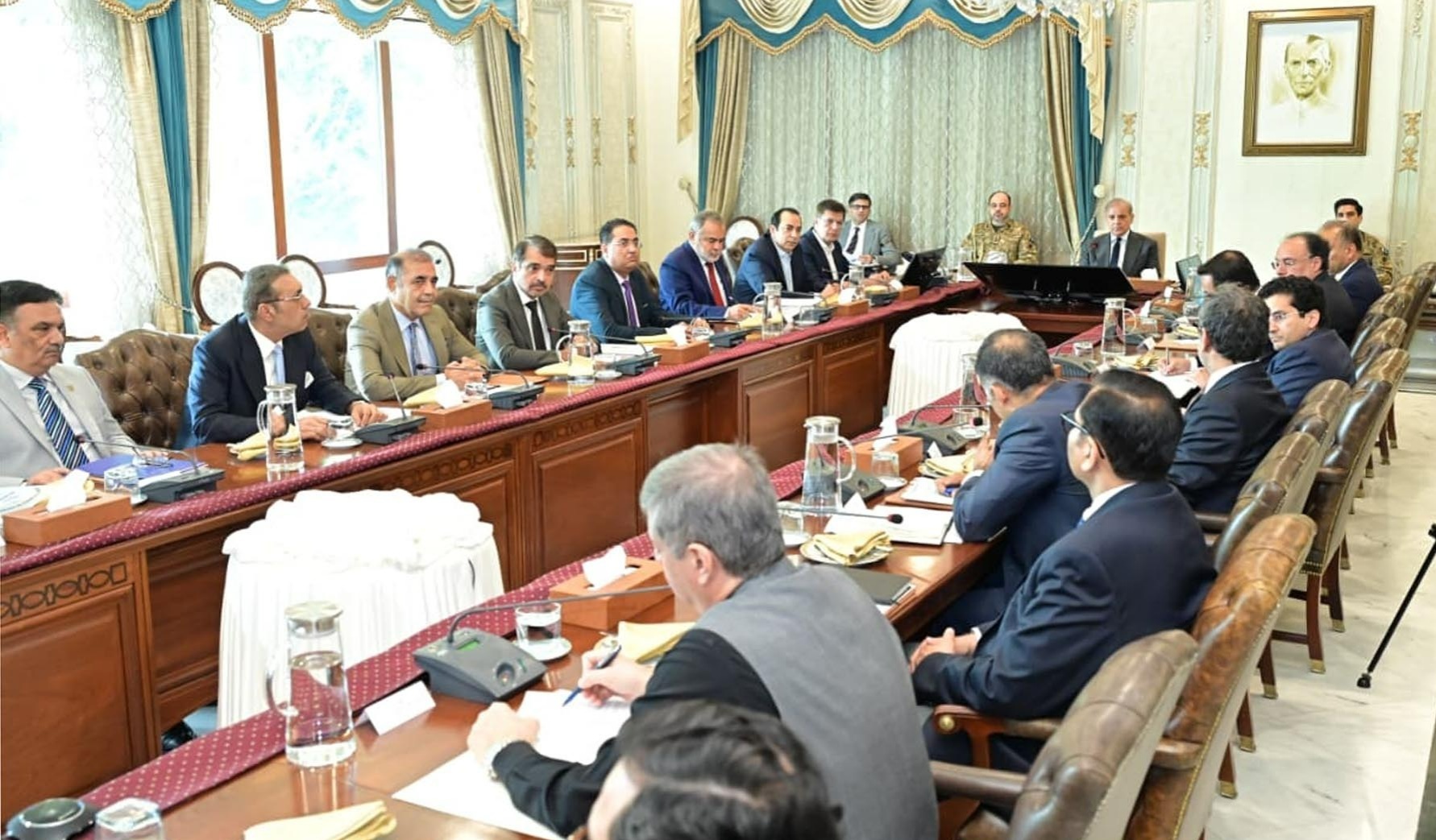
ISLAMABAD: Prime Minister Shehbaz Sharif on Wednesday stressed the need for adopting a whole-of-government approach to boost exports and address pending economic challenges, urging all stakeholders to move forward on the path of sustainable economic growth through collective efforts.
“In June 2023, Pakistan was on the verge of default, but with the grace of Allah Almighty and through collective efforts, the government pulled the country back from the brink. Within two years, the macroeconomic situation was stabilised due to strong teamwork among the federal and provincial governments and the military hierarchy,” the prime minister said.
جون 2023 میں پاکستان، اللہ تعالیٰ کے بے پایاں فضل و کرم اور مشترکہ کاوشوں سے، ڈیفالٹ سے بچ گیا۔ اس کے بعد ان دو سالوں میں ہماری میکرو اکنامک صورتحال الحمدللہ آپ سب کے بہترین ٹیم ورک کے نتیجے میں مستحکم ہو گئی۔ اس میں وفاقی حکومت، صوبائی حکومتیں، سیاسی و عسکری قیادت اور ہر شعبے کا… pic.twitter.com/yYB643TE5f
— Government of Pakistan (@GovtofPakistan) February 25, 2026
He was addressing the inaugural session of the Pakistan Governance Forum 2026 and the launch of the PSDP Data Portal aimed at promoting transparent governance.
Prime Minister Muhammad Shehbaz Sharif addresses the inaugural session of the Pakistan Governance Forum 2026 in Islamabad. pic.twitter.com/j8McLOAuec
— Government of Pakistan (@GovtofPakistan) February 25, 2026
Referring to key economic indicators, PM Shehbaz said inflation, which had surged to around 35 percent at the time, had been brought down to below 7 percent, while the policy rate had been reduced to 10.5 percent. He underlined the need to steadily increase exports, noting that the country had immense untapped potential in this area.
The prime minister said several reforms introduced by the government were home-grown and not dictated by the IMF, adding that these measures were undertaken as a national necessity to avert the boom-and-bust cycle.
Prime Minister Muhammad Shehbaz Sharif digitally launches the PSDP Data Portal of Ministry of Planning and Development at the Pakistan Governance Forum 2026 in Islamabad. pic.twitter.com/qZudd77n3l
— Government of Pakistan (@GovtofPakistan) February 25, 2026
Highlighting progress in the power sector, he said the price of electricity per unit had been reduced by Rs9, while investments in solar energy were protected. He commended the minister for power and his team for their efforts in this regard.
Expressing concern over power theft amounting to Rs200 billion, the prime minister said the issue could only be addressed through a coordinated whole-of-government approach. He also reiterated the need to close Utility Stores, terming them “a den of corruption and theft,” and cited the Pakistan Works Department (PWD) as another corruption-tainted entity whose closure had saved billions of rupees for the national exchequer.
" پاور سیکٹر میں شامل اضافی ٹیکسز اور کراس سبسڈی کو ختم کیا گیا، ان دو سالوں میں بجلی کی قیمت تقریباً 8.5 سے 9 روپے فی یونٹ کم ہوئی۔ بجلی چوری تقریباً 200 ارب روپے تک پہنچ چکی ہے، جو ایک سنگین مسئلہ ہے اور اس پر مزید سنجیدہ توجہ درکار ہے۔
یوٹیلٹی اسٹورز کارپوریشن کرپشن کا گڑھ… pic.twitter.com/F8sDvThF2U— Government of Pakistan (@GovtofPakistan) February 25, 2026
Referring to social protection measures, PM Shehbaz said that under the Ramazan Package, Rs38 billion was being distributed to deserving beneficiaries through digital wallets in a dignified and transparent manner.
The ceremony was attended by chief ministers, federal and provincial ministers, experts, diplomats, investors, businessmen, traders and senior officials.
Emphasising collective efforts in economic revival, the prime minister said: “Though the journey may be long, arduous and thorny, we have accepted the challenge. Pakistan will soon carve out its due place.”
He reiterated that it was not the government’s role to run businesses, but to facilitate the private sector, exporters and investors, and support them in enhancing productivity and growth. He said the government was encouraging exporters, investors and businessmen through a range of incentives.
The prime minister said Pakistan was blessed with immense natural and human resources and expressed confidence that with joint efforts and strong political will, the country would surpass many others in terms of economic strength within a few years.
He also stressed the need to expand the tax net, noting that due to various initiatives, the tax-to-GDP ratio had reached 10.5 percent. He highlighted the importance of growth, production, exports, investment, foreign direct investment (FDI) and across-the-board reduction in indirect taxes in the upcoming fiscal budget.
Regretting leakages in tax collection, PM Shehbaz said indirect taxes collected from consumers and end users were not being fully deposited into the national treasury, calling it a grave injustice. He added that tax revenues had also increased in the sugar, cement and tobacco sectors.
Highlighting the potential of the IT sector, he said it had recorded 34 percent growth but still held vast room for expansion. He stressed the need to harness the youth bulge by imparting technical and vocational training, saying IT- and AI-led initiatives would transform all sectors of the economy.
The prime minister also appreciated the planning minister for the Uraan Pakistan initiative and the whole-of-government framework, expressing confidence in its success.
Pakistan’s Economic Transformation as a Case Study
Addressing the forum, Minister for Planning Ahsan Iqbal said international financial institutions and rating agencies were now citing Pakistan’s economic transformation as a successful case study. He credited the current government with averting national bankruptcy through improved governance and structural reforms.
He described governance as the central pillar of the government’s “Uraan Pakistan” transformational agenda and said Pakistan could become a one-trillion-dollar economy by 2035 if it fully utilised its potential. He urged all segments of society to focus on an “economic long march” instead of political marches.
Explaining the significance of the PSDP Data Portal, Ahsan Iqbal said it would serve as an open and transparent platform, enabling citizens to monitor progress in the national development sector and ensuring accountability.
Addressing the forum, Samuel Rizk, Resident Representative of UNDP, said governance was not merely a technical issue but a strategic choice about the future. He said sustaining livelihoods, managing the cost of living, building resilience against floods, droughts and heatwaves, creating opportunities for youth and strengthening public trust all hinged on good governance. Inclusive and transparent governance, he added, was now universally recognised as essential for sustainable development.
British High Commissioner to Pakistan Jane Marriott commended Pakistan’s focus on sustaining economic reforms, particularly in developing a coherent export strategy. She said good governance lowered costs, built confidence and created opportunities for citizens and investors alike.
Digital governance emerging as a transformative reform in GB
Gilgit-Baltistan Chief Minister Yar Mohammad said digital governance was emerging as a transformative reform in Gilgit-Baltistan. He said the GB civil secretariat was fully operational with integrated systems for case management, asset tracking, biometric attendance and district monitoring, enhancing transparency, accountability and evidence-based decision-making. He added that the region was poised to become a model for climate resilience, growth, digital governance and sustainable tourism.
KP completed five-year digitalisation plan in less than one year: Aslam
Advisor to the Khyber Pakhtunkhwa chief minister Muzammil Aslam said the province had completed a five-year digitalisation plan in less than one year. He said 170 government services had been identified for digitalisation, with 56 already fully digitalised and 73 now offering electronic payment options.
‘Uraan Pakistan’ provided a clear direction for national reform
Law Minister Azam Nazeer Tarar said “Uraan Pakistan” provided a clear direction for national reform and reaffirmed the government’s commitment to improving governance in a practical and coordinated manner. He said sustainable economic growth required investor confidence, clear laws, protection of rights and their effective enforcement.
He added that energy reforms required robust regulatory frameworks, environmental protection needed strong legal enforcement, and Digital Pakistan depended on secure and transparent systems—making legal reform an integral part of governance reform.
Highlighting progress in legal reforms, Azam Nazeer Tarar said over 900 updated and consolidated federal laws were now available online free of cost through the Pakistan Code. He added that 176 years of legislative history had been digitised through a document retrieval system, while case assignment and management systems introduced by his ministry were now handling thousands of federal cases efficiently.
Comments
No comments yet. Be the first to join the discussion!