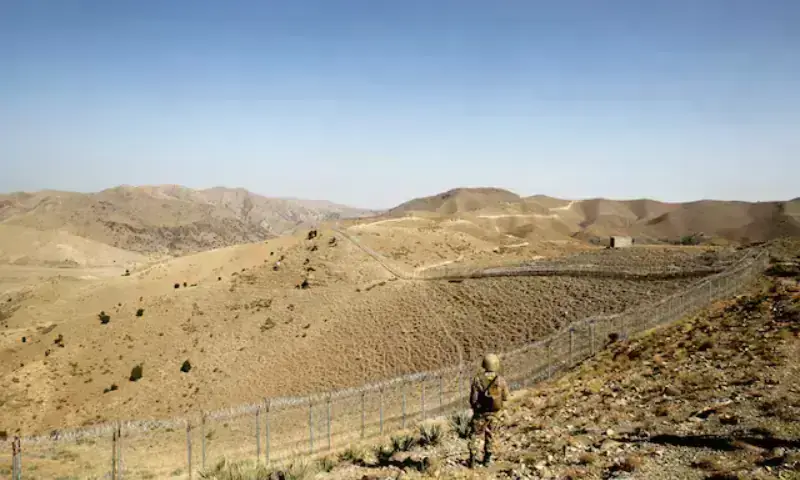
Over 80 terrorists killed in retaliatory airstrikes on 7 camps along Pak-Afghanistan border
In a decisive retaliatory operation, Pakistani airstrikes killed over 80 terrorists linked to the TTP and ISKP, targeting camps along the Pak-Afghanistan border. The strikes follow recent attacks in Islamabad, Bajaur, and Bannu, emphasizing Pakistan's commitment to national security.

Operation targets Fitna al-Khawarij (TTP) and ISKP terrorists behind recent attacks in Islamabad, Bajaur, and Bannu
Security sources say over 80 terrorists confirmed killed, more expected and describe strikes as intelligence-led, proportionate retribution
Pakistan calls on Afghan Taliban and international community to prevent use of Afghan soil for attacks
Kabul claims civilian casualties; Pakistan calls it ‘false and malicious’ narrative
ISLAMABAD: Pakistani airstrikes killed “more than 80 terrorists” and destroyed “seven seven terrorist camps and hideouts at the border region of Pakistan-Afghan border, in a retaliatory operation against groups responsible for recent suicide bombings inside Pakistan, according to security sources on Sunday.
The Ministry of Information and Broadcasting of Pakistan confirmed via X (formerly Twitter) that the strikes targeted seven terrorist hideouts and training centres belonging to [Fitna al-Khawarij,] a term used by the state for the banned Tehreek-i-Taliban Pakistan (TTP), and its affiliates, including the [Islamic State Khorasan Province] (ISKP).
Press Release
21 February, 2026
In the aftermath of recent suicide bombing incidents in Pakistan, including Imam Bargah at Islamabad, one each in Bajaur and Bannu followed by another incident today in Bannu during the holy month of Ramzan, Pakistan has conclusive evidence that…— Ministry of Information & Broadcasting (@MoIB_Official) February 21, 2026
The airstrikes followed a spate of recent attacks: the Imam Bargah bombing in Islamabad, assaults in Bajaur and Bannu, and another attack in Bannu on Saturday during the holy month of Ramazan, according to the statement.
According to the security forces’ statement, released Sunday evening, “Last night, Pakistan’s intelligence-based airstrikes destroyed seven centres of Fitna al-Khawarij (TTP) in three provinces of Nangarhar, Paktika and Khost, in which more than 80 Khawarij have been confirmed killed, while more are expected.”
Security forces identified the targeted centres as: New Centre No. 1 and No. 2, Nangarhar; Khwariji Maulvi Abbas Centre, Khost; Khwariji Islam Centre, Nangarhar; Khwariji Ibrahim Centre, Nangarhar and Khwariji Mullah Rahbar and Khwariji Mukhlis Yar, Paktika
“Pakistan has conclusive evidence that these acts of terrorism were orchestrated by Afghan-based handlers of Fitna al-Khawarij and ISKP,” the ministry said. “The action was a retributive response, based on intelligence-led selective targeting, prioritizing the safety of our citizens.”
The action was taken, “in the aftermath of recent suicide bombing incidents in Pakistan, including Imam Bargah at Islamabad, one each in Bajaur and Bannu, followed by another incident today in Bannu during the holy month of Ramazan,” the information ministry’s statement said.
“Pakistan has conclusive evidence that these acts of terrorism were perpetrated by Khwarij on the behest of their Afghanistan-based leadership and handlers. Responsibilities for these attacks were also claimed by Afghanistan-based Pakistani Taliban belonging to Fitna al Khwarij (FAK) and their affiliates, and Islamic State of Khorasan Province (ISKP),” the statement said.
The statement asserted that “Pakistan has always strived for maintaining peace and stability in the region, but at the same time, the safety and security of our citizens remains our top priority”, adding that the action against the seven camps and hideouts was “a retributive response”, carried out based on “intelligence-based selective targeting”.
“Despite repeated efforts by Pakistan to urge the Afghan Taliban Regime to take verifiable measures to deny use of Afghan territory by terrorist groups and foreign proxies to carry out terrorist activities in Pakistan, the Afghan Taliban Regime failed to undertake any substantive action against them,” the statement noted.
“Pakistan expects and reiterates [that the] Interim Afghan Government […] fulfil its obligations and deny use of its soil by Khwarij and terrorists against Pakistan, as the safety and security of people of Pakistan comes first and foremost. Pakistan also expects the international community to play a positive and constructive role by urging the Taliban regime to stand by its commitments as part of [the] Doha Agreement to deny use of its soil against other countries; an act vital for regional and global peace and security,” the statement added.
Parliamentary Affairs Minister Tariq Fazal Chaudhry, in a post on X, stated that the strikes by the “Pakistan Air Force were retribution for the innocent lives lost to terrorism”.
He maintained that the strikes were an “answer to the tears of every mother who has sacrificed her son for the homeland”.
Chaudhry issued a stern warning, stating that while “Pakistan desired peace, it would not make compromises on its safety, land, and people”.
“Whoever looks at us with evil intent, we will destroy them, and no one will be spared,” the minister said.
‘Broader campaign to curb cross-border militancy’
Earlier in the day, Minister of State for Interior Talal Chaudhry said that nearly 70 militants were killed after Pakistan carried out intelligence-based strikes on terrorist targets along the Pakistan-Afghanistan border, as part of a broader campaign to curb cross-border militancy.
The minister said that the operations targeted seven militant camps and hideouts across three different areas inside Afghanistan.
Talal Ch said that the cross-border action was carried out in the same context as Pakistan’s ongoing internal counterterrorism operations.
He noted that security forces have conducted nearly 70,000 intelligence-based operations (IBOs) across the country, leading to numerous arrests and the elimination of militants.
“Afghanistan has long been exporting terrorism. Pakistan is taking all actions to secure the life and property of its citizens,” the minister said, stressing that the state would continue to act decisively against threats to national security.
He reiterated that Pakistan remains a responsible state that has consistently sought cordial relations with its neighbours.
He pointed out that Islamabad has hosted millions of Afghan refugees over the decades and extended economic assistance to Afghanistan, despite facing its own security and economic challenges.
However, Chaudhry accused Afghanistan’s interim government of failing to meet its commitments under the Doha Agreement, signed in 2020.
Under the accord, the Afghan Taliban had assured the international community that Afghan soil would not be used for terrorism against any country.
“Afghanistan and its interim government have failed to live up to their promise and have not stopped terrorism,” he said.
The minister added that Pakistan had made extensive diplomatic efforts in the past, including military-to-military engagements, to address security concerns with Kabul.
He also noted that concerns about militant sanctuaries in Afghanistan were not limited to Pakistan, claiming that the United Nations has reported the presence of more than two dozen militant outfits operating there.
The latest escalation comes amid heightened tensions between Islamabad and Kabul following a series of deadly attacks in Khyber Pakhtunkhwa and Balochistan.
Kabul protests strikes as violation of its sovereignty
Meanwhile, the Taliban regime in Kabul called the strikes a violation of its sovereignty, saying “an appropriate and measured response will be taken at a suitable time”, Reuters reported.
The news agency quoted the Afghan foreign ministry as saying that it had summoned Pakistan’s ambassador over what it described as violations of Afghan airspace and the bombing of civilians, calling the strikes “a provocative act”.
A Taliban spokesperson also claimed the attacks had killed and injured dozens of people, but Pakistani authorities termed such claims a “false and malicious narrative designed to create cover for terrorist sanctuaries”.
They maintained that TTP terrorists routinely blended into civilian areas and used non-combatants as human shields, adding that Pakistan’s operational planning accounted for this, and forces took measures to reduce or eliminate any collateral damage.
They described the actions as a “limited, proportionate response to an ongoing terror wave”, which saw mass casualty attacks inflicted on Pakistani civilians and security forces.
Photos from Nangarhar’s Bihsud district – one of the locations Afghan authorities claim were targeted by Pakistan – showed people using a bulldozer to search to clear the rubble of a destroyed building, which was being guarded by Taliban fighters.
Resurgence of Cross-Border Terrorism and Relentless Retaliation
Since the return of the Afghan Taliban to power in Kabul in 2021, Pakistan has witnessed a resurgence in terrorism, with militants repeatedly using Afghan soil to target civilians and security forces. Islamabad has persistently urged the Taliban administration to dismantle terrorist sanctuaries, particularly those linked to the Tehreek-i-Taliban Pakistan (TTP), but officials say these appeals have gone largely unheeded.
Tensions escalated sharply following the Feb 16 vehicle-borne suicide attack on the joint security forces post at Malangi in Bajaur district near the Afghan border. TTP militants rammed an explosives-laden vehicle into the perimeter wall after an exchange of fire, claiming the lives of 11 Pakistani soldiers. A young girl was also killed, and seven others, including women and children, sustained injuries when a nearby residential building was damaged.
Investigators identified the suicide bomber as Amad, alias Qari Abdullah or Abu Zar, reportedly a member of the Afghan Taliban’s special forces from Balkh province. The TTP claimed responsibility for the assault.
The violence continued on Feb 21, when a lieutenant colonel and a sepoy were martyred in a suicide attack during an intelligence-based operation in Bannu, Khyber Pakhtunkhwa.
In a statement, the military reiterated that terrorists were “using Afghan soil to carry out attacks inside Pakistan, violating the sanctity of the holy month of Ramazan.” The Inter-Services Public Relations (ISPR) added, “Pakistan will not exercise any restraint, and operations will continue against the perpetrators of this heinous and cowardly act for justified retribution against Khwarij, irrespective of their location.”
Defence Minister Khawaja Asif had earlier, on Feb 19, warned that Pakistan would not hesitate to conduct strikes inside Afghanistan if cross-border attacks continued, emphasizing that military options remain viable.
The recent strikes follow a series of earlier incidents. In November 2025, Zabiullah Mujahid, spokesman for the Afghan Taliban, claimed that Pakistan had bombed Khost, Kunar, and Paktika provinces. Pakistan had neither confirmed nor denied the strikes, which coincided with a deadly suicide attack on the Federal Constabulary headquarters, killing three personnel and injuring twelve.
These developments came almost a month after deadly border clashes on Oct 11–12, 2025, which claimed 23 Pakistani soldiers and over 200 Taliban and affiliated terrorists, according to the ISPR. The clashes erupted after Afghan Taliban and India-sponsored Fitna-al-Khawarij militants launched an unprovoked attack along the Pak-Afghan border.
Pakistan continues to emphasize that its security operations are defensive and retaliatory, aimed at safeguarding the lives and property of its citizens while urging the Afghan Taliban and the international community to honor their commitments to prevent cross-border terrorism.
Comments
No comments yet. Be the first to join the discussion!