
















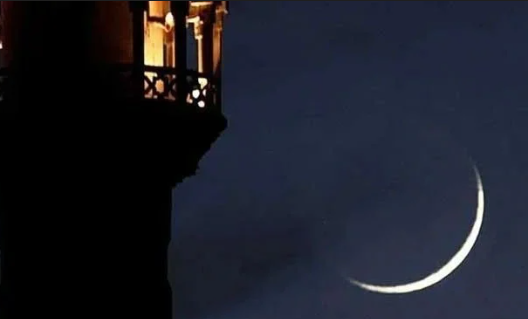
ISLAMABAD: The Space and Upper Atmosphere Research Commission (SUPARCO) has projected a strong probability that the Ramazan 1447 AH crescent will be sighted across Pakistan on the evening of Wednesday, February 18, making Thursday, February 19, the likely first day of fasting, subject to formal confirmation by the Central Ruet-e-Hilal Committee.
SUPARCO stated that the new moon will be born on February 17 at 5:01pm Pakistan Standard Time. By sunset the following day, the moon’s age will be approximately 25 hours and 48 minutes, a threshold widely regarded by astronomers as highly favourable for naked-eye visibility.
The agency highlighted that the interval between sunset and moonset along Pakistan’s coastal areas is expected to be around 59 minutes, providing an ample window for observation. On the basis of these key astronomical parameters, SUPARCO assessed the chances of sighting as “very bright”.
The Pakistan Meteorological Department independently supported this assessment, forecasting clear to partly cloudy skies in most parts of the country on February 18.
The department’s Climate Data Processing Centre noted a fair chance of visibility nationwide and shared region-wise final observation timings, indicating that sighting opportunities will remain open until 6:53pm in Gilgit-Baltistan, 6:58pm in Azad Jammu and Kashmir, 7:08pm in Punjab, 7:13pm in Khyber Pakhtunkhwa, 7:24pm in Sindh, and 7:47pm in Balochistan.
An important meeting of the Ruet-e-Hilal Committee has been convened in Peshawar on February 18, to be chaired by Syed Muhammad Abdul Khabir Azad. Members of the central and zonal committees will review moon sighting testimonies received from across the country before announcing the official commencement of the holy month. The chairman said special arrangements had been made for moon sighting on this occasion.
Earlier, on January 5, the Ruet-e-Hilal Research Council had also projected February 19 as the likely first of Ramazan, based on lunar birth and visibility calculations. Its secretary general, Khalid Ijaz Mufti, emphasised at the time that such forecasts remain advisory and that only the official committee is authorised to declare the start of Islamic months.
The council had previously noted on January 18 that the Shaban crescent would not be visible on January 19, leading to Shaban beginning on January 21.
Ramazan holds deep spiritual significance for Muslims, marked by fasting from dawn to sunset, increased prayers, charity and reflection. The month concludes with Eidul Fitr, following the sighting of the next crescent.