

How Russia is recasting its foreign policy
As the Ukraine war continues, Russia is recalibrating its foreign policy through strategic diplomacy and economic ties, particularly in the Global South. This approach reflects its desire to maintain global relevance despite ongoing conflicts.

As the war in Ukraine grinds on with no clear resolution in sight, it has become tempting to view Russia’s foreign policy almost exclusively through the prism of conflict. Yet focusing solely on the battlefield risks obscuring a quieter, more calculated process underway beyond Europe. In late 2025, Russia has continued to adjust its international posture through selective diplomacy and economic coordination, particularly in the Global South and the energy sector. These moves reveal not a state paralysed by war, but one seeking to preserve leverage, relevance, and room for manoeuvre in a changing global order.
One notable development has been Moscow’s swift response to political shifts in Venezuela. Russia was among the first countries to articulate a formal position, reaffirming its engagement with Caracas at a moment of uncertainty. The speed and clarity of the response were significant. In a crowded diplomatic landscape where many states hesitated or adopted cautious language, Russia’s stance signalled continuity rather than ambiguity.
Venezuela has long occupied a special place in Russia’s external relations. Over the past two decades, the relationship has encompassed energy cooperation, arms sales, financial assistance, and political backing during periods of intense international pressure. By responding decisively to developments in Caracas, Moscow reinforced its image as a consistent partner, particularly to governments that see Western diplomacy as unpredictable or conditional.
This engagement must be understood within a broader strategic framework. Russia’s outreach to Latin America, Africa, and parts of Asia reflects a deliberate effort to deepen ties with countries often described collectively as the Global South. While these states differ widely in political systems and economic structures, many share a scepticism towards Western dominance in international institutions. Russia has sought to position itself as a counterweight, emphasising sovereignty, non-interference, and political pluralism in global affairs.
The Venezuelan case also highlights how diplomatic recognition and political signalling have become tools of influence. At a time when Russia’s relations with Europe remain deeply strained, visible engagement elsewhere serves to counter perceptions of isolation. It allows Moscow to demonstrate that it still commands attention and retains partners willing to engage on their own terms.
Yet this strategy is not without limits. Russia’s economic capacity to sustain extensive overseas commitments has been constrained by sanctions and the demands of war. As a result, its diplomacy has become more selective, prioritising countries and regions where political alignment and strategic returns are judged to be highest. Latin America, where historical grievances against Western intervention persist, fits neatly into this calculus.
The question is not whether Russia will re-emerge as a dominant global power, but whether it can sustain relevance in a world where power is increasingly dispersed. For now, Moscow appears determined to try. In doing so, it is reminding observers that even amid conflict, foreign policy is rarely fought on a single front.
Alongside diplomacy, energy policy remains a central pillar of Russia’s external strategy. Discussions among Russian officials about increasing oil production in line with OPEC+ quotas underscore the continued importance of hydrocarbons to Moscow’s economic and geopolitical positioning. Despite efforts by Western states to reduce reliance on Russian energy, the country remains one of the world’s leading producers, with significant influence over global supply dynamics.
Aligning production decisions with OPEC+ partners reflects a pragmatic approach to a volatile market. Global energy prices have been shaped by conflict, supply disruptions, shifting demand patterns, and political uncertainty. For Russia, managing output within an agreed framework offers a degree of stability at a time when budgetary pressures remain acute. Energy revenues continue to play a crucial role in financing the state, particularly as defence spending stays elevated.
Beyond economics, cooperation within OPEC+ carries important diplomatic weight. The grouping has emerged as one of the few international platforms where Russia maintains regular, structured engagement with major powers outside the Western alliance system. Relations with key Middle Eastern producers, especially Saudi Arabia and the United Arab Emirates, have taken on greater significance as Moscow seeks to diversify its diplomatic and economic partnerships. These relationships are not built on ideology, but on shared interests. Market stability, predictable pricing, and coordinated production serve the needs of both Russia and its OPEC+ partners. In this sense, energy cooperation functions as a form of quiet diplomacy, sustaining dialogue even as geopolitical tensions elsewhere intensify.
Russia’s approach to energy also illustrates a broader shift in its foreign policy thinking. Rather than seeking dominance, Moscow appears increasingly focused on resilience. Maintaining a seat at the table, preserving channels of influence, and avoiding exclusion from key decision-making forums have become central objectives. This is particularly evident in areas such as energy governance, where Russia can still exert influence despite political isolation in other domains.
Taken together, Russia’s actions in Venezuela and within OPEC+ point to a foreign policy that is adapting to constraint rather than retreating in defeat. The war in Ukraine has narrowed Moscow’s options in Europe, but it has also accelerated a pivot towards regions where Western pressure is less decisive and political alignments more fluid. This shift does not amount to a wholesale abandonment of Europe as a long-term strategic concern. Instead, it reflects a recalibration of priorities driven by necessity.
For countries in the Global South, Russia presents itself as a partner advocating a more decentralised international system. Whether this message translates into lasting influence remains an open question. China’s economic weight and growing diplomatic reach pose a clear challenge, and Russia’s capacity to compete on investment and development remains limited. Nevertheless, Moscow’s willingness to engage actively in political transitions and energy coordination suggests an enduring ambition to shape outcomes rather than merely react to them.
Critics argue that Russia’s strategy is ultimately defensive, designed to mask strategic setbacks rather than achieve new breakthroughs. There is some truth in this assessment. The resources available to Moscow are finite, and sustained confrontation with the West carries long-term costs. Yet it would be a mistake to dismiss these moves as purely symbolic. In a fragmented international system, influence is often exercised incrementally, through presence, consistency, and selective engagement.
As 2025 draws to a close, it is increasingly clear that Russia’s foreign policy cannot be understood solely through the lens of war. Beyond Ukraine, Moscow is investing diplomatic capital in regions and sectors it believes will shape the next phase of global politics. Energy markets, South–South relations, and alternative diplomatic networks are becoming key pillars of this approach.
The question is not whether Russia will re-emerge as a dominant global power, but whether it can sustain relevance in a world where power is increasingly dispersed. For now, Moscow appears determined to try. In doing so, it is reminding observers that even amid conflict, foreign policy is rarely fought on a single front.
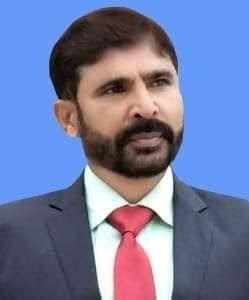
The writer has a PhD in Political Science and can be reached at [email protected]
View all articles →Comments
No comments yet. Be the first to join the discussion!


