

















The Pakistan Nuclear Regulatory Authority promotes nuclear safety and security internationally through adherence to international standards, collaborations, and knowledge exchange with other countries. The institution ensures that Pakistan’s nuclear program is run safely and transparently by actively participating in international forums to support the highest standards of nuclear safety. In order to maintain national and international standards, it performs regulatory monitoring, licensing, inspection, and enforcement. According to Pakistan, International cooperation is a vital tool for advancing peaceful nuclear activities, a nation with a developing nuclear energy program and a pioneering member of the IAEA.
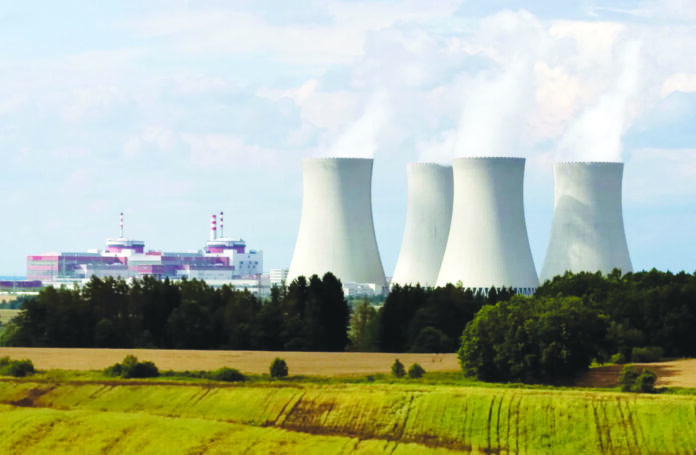
Being among the pioneers in implementing “Atoms for Peace, “Since its inception in the 1960s, Pakistan’s peaceful nuclear program has progressively expanded from the operation of a single research reactor to the development of several nuclear power reactors, as well as from its limited number of applications to its broader use in industry, agriculture, and medicine. Currently, Pakistan uses nuclear technology extensively in several industries. However, while using nuclear technology for civilian purposes, Pakistan’s national nuclear regulator, the PNRA, which was established in 2001, is dedicated to making sure that nuclear safety continues to be a primary concern.
PNRA has recognized the significance of international cooperation among nuclear regulatory bodies in the interconnected world and understood that harnessing shared opportunities and managing shared dangers requires a collective effort. To accomplish this, PNRA has set up an institutional framework for international cooperation and is actively working with the global community by creating a dedicated wing, fulfilling the nation’s obligations under various nuclear-related conventions, signing cooperation agreements with other nations’ regulatory bodies, sending its experts to training sessions organized by the IAEA, and submitting itself for peer reviews.
In order to promote collaboration and deal with everyday issues, PNRA regularly participates in multilateral forums, especially those of the IAEA. PNRA representatives are members of several IAEA Safety Standard Committees, such as the Nuclear Safety Standards Committee, Transport Safety Standards Committee, Waste Safety Standards Committee, Radiation Safety Standards Committee, Emergency Preparedness and Response Standards Committee, Nuclear Security Guidance Committee, and Commission on Safety Standards, to create technical standards and guidance documents.
The Pakistani government has designated PNRA as the national point of international collaboration. Pakistan is a party to several conventions and is carrying out the country’s commitments under such agreements. Conventions on Nuclear Safety, Early Notification of a Nuclear Accident, Assistance in the Case of a Nuclear Accident or Radiological Emergency, Physical Protection of Nuclear Materials, and its amendment are among them. PNRA is carrying out its national responsibilities in accordance with the emergency-related treaties, whether it is by compiling a country report for submission in the CNS review meeting or hosting IAEA emergency exercises. In addition to its mandatory duties, PNRA is also responsible for the non-mandatory requirements originating from Pakistan’s subscription concerning the security and safety of radioactive sources, as well as the safety of research reactors.
Additionally, it takes part in the United Nations Scientific Committee on the Effects of Atomic Radiation (UNSCEAR), Response and Assistance Network (RANET), Global Nuclear Safety and Security Network (GNSSN), Regulatory Cooperation Forum (RCF), Radiation Safety Information Management System (RASIMS), International Generic Ageing Lessons Learnt (IGALL), Technical Support Organisation Forum (TSOF), National Nuclear Security Support Centre (NSSC), and International Nuclear Security Education Network (INSEN). The first-ever NSSC meeting outside of Vienna, Austria, in 2016, held in Pakistan, was an honor. Furthermore, PNRA has held meetings for CANDU Senior Regulators twice, in 2005 and 2022.
Additionally, the IAEA has created a number of non-binding reporting channels that allow member states to report on pertinent concerns and benefit from each other’s experiences. To establish and maintain an efficient nuclear security mechanism, Pakistan and the IAEA have inked an agreement for nuclear security cooperation. The Karachi Nuclear Power Plant Units 1 and 27 nuclear medical facilities have reinforced their physical security measures, and PNRA personnel’s capacity building in nuclear security has been strengthened as part of this collaboration initiative.
The head of Pakistan’s delegation announced at the International Conference on Nuclear Security (ICONS): Shaping the Future, which took place in Vienna from May 20–24, 2024, that Pakistan will host IAEA IPPAS in 2026 following the successful conduct of the internal IPPAS.PNRA has signed bilateral cooperation agreements with the People’s Republic of China’s National Nuclear Safety Administration, Nuclear Safety and Radiation Protection Centre, and China Nuclear Power Operations Technology Corporation Ltd. for professional development, regulatory experience sharing, and regulatory support. Additionally, under the IAEA’s auspices, PNRA and the Nigerian Nuclear Regulatory Authority (NNRA) have signed a Memorandum of Understanding for the capacity building of NNRA regulatory professionals through fellowships and research visits.
The PNRA uses a set of performance measures to assess its credibility. The IAEA International Regulatory Review Team and the IAEA Radiation Safety Infrastructure Appraisal mission are two examples of these peer reviews. To help with self-evaluations and encourage transparency, the PNRA regularly consults with other outside partners. PNRA is a reflection of the country’s larger commitment to responsible nuclear stewardship, as it is the driving force behind Pakistan’s commitment to nuclear safety and security. While promoting collective security through robust regulatory frameworks, efficient management of nuclear and radioactive materials, and active engagement with international partners, PNRA exemplifies how national institutions can maintain global standards. Its work demonstrates that nuclear governance is a shared duty that protects people, the environment, and regional stability rather than just being a technological need. By doing this, PNRA upholds the idea of “safety beyond borders,” highlighting Pakistan’s contribution to the development of a more secure and safe nuclear world.





Its like you read my mind You appear to know a lot about this like you wrote the book in it or something I think that you could do with some pics to drive the message home a little bit but instead of that this is fantastic blog An excellent read I will certainly be back
Keep functioning ,splendid job!