Clashes that could ignite a war

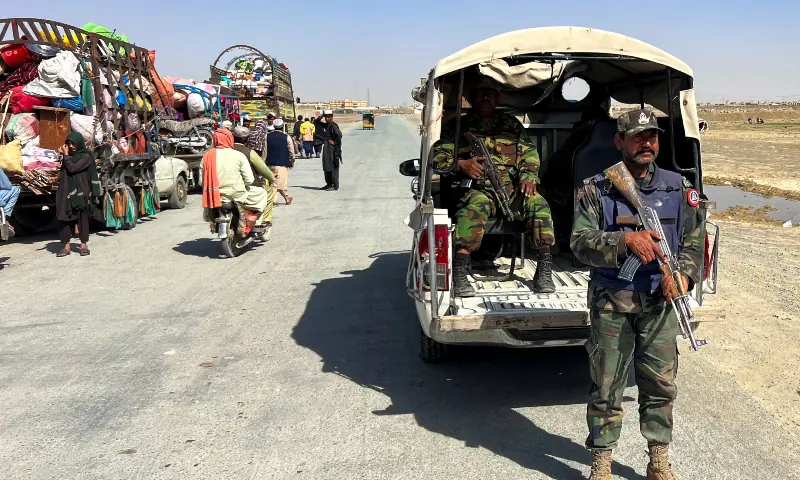
Over the past month, tensions between Pakistan and Afghanistan have entered one of their most dangerous phases in recent years. Pakistani fighter jets launched a series of airstrikes against targets in Kabul and other Afghan cities, while intense clashes erupted along the shared border between the two nations. The violence, which persisted for several weeks, has raised fears of a larger conflict that could destabilize not only both countries but the entire South and Central Asian region.
At the heart of the dispute lies a mix of historical grievances, territorial mistrust and political frustration that has defined Pakistan-Afghanistan relations for decades. The current escalation, however, carries a sharper edge. It comes at a moment when the USA is seeking renewed engagement in the region, including investment in Pakistan’s mineral resources, and as global powers such as China and Russia are expanding their influence in Afghanistan.
The Durand Line, drawn during the British colonial era, continues to be the central fault line. Afghanistan has never formally recognized this border, claiming that it unjustly divides the Pashtun population. Pakistan, for its part, considers it an international boundary and views Afghan reluctance as a challenge to its sovereignty. Over the decades, the border has served as a theatre of repeated skirmishes, smuggling routes and militant movements.
Since the Taliban’s return to power in 2021, Pakistan’s initial optimism for a friendlier Kabul administration has gradually turned into frustration. Islamabad expected the Taliban to curb the activities of the Tehrik Taliban Pakistan, a group responsible for attacks inside Pakistan and believed to be sheltering in Afghan territory. Instead, Pakistan accuses the Taliban of tolerating or even supporting TTP fighters, allowing them to regroup and strike across the border. The Taliban, meanwhile, accuses Pakistan of violating Afghan sovereignty and of using air power to pressure Kabul politically. The Afghan defence ministry recently claimed that Pakistani jets had targeted civilian areas, a charge Islamabad denies. Pakistan insists that its strikes were aimed at militant hideouts responsible for deadly attacks in Khyber Pakhtunkhwa and Balochistan.
The recent air campaign was not the first of its kind, but its scale and precision suggest a shift in Pakistan’s approach. The strikes reached closer to Kabul than any previous operation, signaling a willingness to take risks beyond the border areas. This has led some observers to question whether Pakistan might be seeking more than just retaliation, possibly a strategy to weaken the Taliban government or force a political recalibration in Kabul.
However, regime change is a high-risk calculation. The Taliban’s hold on power remains firm despite internal divisions and economic hardship. Any overt attempt by Pakistan to undermine the Taliban could unite Afghan factions against a common external enemy, reigniting nationalist sentiment. Moreover, a direct confrontation would almost certainly inflame anti-Pakistan sentiment among Afghans and further damage Islamabad’s standing in the Muslim world.
The latest border violence is more than just a flare-up; it reflects the deep mistrust that has defined Pakistan-Afghanistan relations for generations. Unless both governments can find a way to separate their security fears from their political ambitions, the cycle of strikes, reprisals and denials will continue drawing the region ever closer to the brink. Restraint and dialogue remain the only durable path forward. However, as fighter jets roar over the frontier and soldiers exchange fire in the mountains, those voices calling for calm are being drowned out by the echoes of war.
For Pakistan, the conflict is also tied to its domestic security concerns. The resurgence of militant attacks inside its borders has fuelled public anger and political pressure on the military to act decisively. Islamabad’s leadership faces a difficult balance to show strength without plunging into an uncontrollable regional war.
A full-scale war between Pakistan and Afghanistan would reverberate across South and Central Asia. It could disrupt regional trade routes, fuel refugee flows and create new sanctuaries for extremist groups. Iran, already wary of the Taliban’s policies toward ethnic minorities, would likely tighten its own border security. China, which has invested heavily in Pakistan through the China-Pakistan Economic Corridor, would be alarmed at the prospect of instability near its western frontier. Russia, still rebuilding its influence in Central Asia, would view a Pakistan-Afghanistan war as a setback to regional stability that could spill into the former Soviet republics. India, observing from across the border, would see strategic opportunities in Pakistan’s preoccupation and might deepen its outreach to anti-Taliban elements.
For the USA, the situation presents a complex challenge. Washington has recently renewed economic and counterterrorism engagement with Islamabad, including investment in Pakistan’s critical minerals particularly lithium, which is key to the global energy transition. At the same time, the USA continues to engage with Afghanistan through humanitarian aid while maintaining sanctions on Taliban leaders. The USA has a vested interest in preventing a wider conflict. A regional war could derail counterterrorism operations against groups such as ISIS-Khorasan and complicate Washington’s strategic rivalry with China. If Afghanistan and Pakistan descend into open conflict, Beijing could position itself as a mediator, using its leverage with both governments to expand its diplomatic reach.
The USA has limited influence over the Taliban but still maintains significant leverage over Pakistan, particularly through economic assistance and international diplomatic channels. Washington could play a moderating role by encouraging Islamabad to pursue dialogue through multilateral forums such as the Shanghai Cooperation Organization or the Organization of Islamic Cooperation. It could also facilitate intelligence sharing and border monitoring mechanisms that help prevent misunderstandings from escalating into warfare.
At the same time, U.S. policymakers must recognize the depth of Pakistan’s security anxieties. Simply urging restraint without addressing Islamabad’s concerns about TTP sanctuaries would ring hollow. A balanced approach would require pressing the Taliban to crack down on militant groups that threaten neighboring states, while offering Afghanistan limited incentives for cooperation, such as regional trade facilitation and aid flexibility.
Despite the rising temperature, a full-scale war still seems unlikely in the immediate term. Both Pakistan and the Taliban understand the enormous costs of prolonged conflict economically, politically and diplomatically. Neither side possesses the capacity for sustained warfare without jeopardizing domestic stability. Yet, the risk of miscalculation remains dangerously high. What makes this confrontation particularly volatile is the absence of reliable communication channels.
Since the Taliban takeover, formal diplomatic engagement between Islamabad and Kabul has weakened, replaced by sporadic military exchanges and public accusations. Without a mechanism to de-escalate tensions, even a minor border incident could ignite a broader confrontation.
The coming months will test the restraint of both sides. Pakistan’s military operations are likely to continue if cross-border attacks persist, while the Taliban’s leadership faces pressure from hardliners to resist what they view as Pakistani aggression. Meanwhile, the region’s larger powers, the USA, China, Iran and Russia will quietly manoeuvre to protect their interests, each wary of being drawn too deeply into another South Asian crisis.
The latest border violence is more than just a flare-up; it reflects the deep mistrust that has defined Pakistan-Afghanistan relations for generations. Unless both governments can find a way to separate their security fears from their political ambitions, the cycle of strikes, reprisals and denials will continue drawing the region ever closer to the brink. Restraint and dialogue remain the only durable path forward. However, as fighter jets roar over the frontier and soldiers exchange fire in the mountains, those voices calling for calm are being drowned out by the echoes of war.

The writer has a PhD in Political Science and can be reached at [email protected]
View all articles →Comments
No comments yet. Be the first to join the discussion!