At Penpoint
- Downing airliner while taking revenge created a mess for Iran
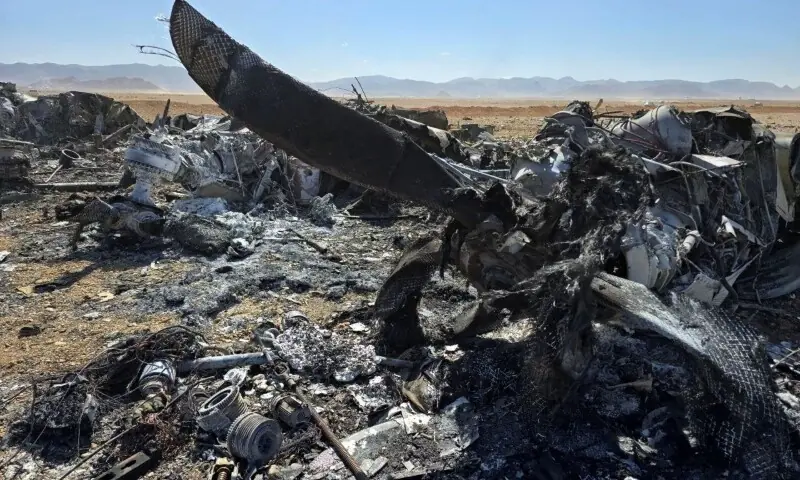
The downing of a Ukrainian airliner as it took off from Tehran airport, the same day as Iranian missiles hit Iraqi air bases housing US forces, was first strenuously denied by the Iranian government, but on Sunday it admitted that the downing was the result of Iranian air defence personnel being too quick on the trigger. The admission was greeted by protests against the authorities, the arrest of the British Ambassador from the midst of one protests indicating that the protest had been taken over by the anti-regime forces.
It was a surprise admission at one level, for military forces around the world are not inclined to admit anything less than perfection. Take Pakistan and India. Both claim victory in the 1965 War, and Pakistan loudly proclaims that 1971 was not a military defeat but a political one. (That this was the first time that a distinction between political and military defeats has been drawn is as conveniently ignored as the fact that Pakistani politics was then under the military with Army C-in-C Gen Yahya Khan then President and COAS.)
It should also be noted that the downing of the Malaysian Airlines flight MH17 on 17 July 2017, in which it went down over eastern Ukraine, no admission of guilt has been made by the Ukraine government and the pro-Russian Ukrainian separatists blame each other for the missile. Whoever was actually responsible, it is fairly certain that it was a Ukrainian who pulled the trigger.
It would be too much to assume that Iran was taking some sort of revenge on Malaysia’s behalf, but it is true that it has been warming up to Malaysia recently, attending the Kuala Lumpur Summit, which Saudi Arabia saw as enough of a threat to stop Pakistan from attending, because it saw the Summit as an alternative to the OIC, which it dominates.
Iran knows the other side of the picture. Back in 1988, a US frigate, the USS Vincennes, shot down an Iran Air A-300 Airbus with 290 aboard on the Persian Gulf, after it had taken off from Bandar Abbas en route to Qatar. Initially, the USA refused to admit culpability, but later did. The career of the Commanding Officer of the Vincennes was ruined, and he never received another sea command.
One of the questions the protesters are asking, and which is perhaps the most pertinent in the whole matter, is why the Tehran airport was allowing any take-offs in the first place. Commentators have noted that a distressing lack of coordination between the military and civilian aviation authorities. Also a factor, and perhaps the decisive one, is that in a desire to maintain secrecy, the military aviation authority kept the civilian authority in the dark.
Thus commercial airliners continued to take off, and air defence personal had to decide what to do about the various aircraft in the sky. These air defenders must have preferred being safe rather than sorry. Presumably they were equipped with the kind of radar which would recognise the plane’s transponder signal. That signal operates as an IFF (Identify Friend or Foe) for military aircraft, and as an identifier for civilian air traffic controllers. An air defence radar needs to be able to identify planes appearing on it, because the air defence team to take very different action towards friendly and enemy aircraft.
Getting the USA out of Iraq would not only suit Iranian strategic goals, but it would also improve its street cred in Iraq, at present badly battered by the failure of the governments it has supported. The USA would not like to get out, first because it would represent a blow to US prestige, and more practically, reduce its presence in the region. Need it be there if it has not just Israel to protect its interests, but also Saudi Arabia?
In fact, in modern air combat, the person manning the radar, and who is in constant communication with his side’s pilots over the radio, has an important role in fighting the air battle. There is no longer any room for the dogfights of the first two world wars, because of the speed and complexity of modern air warfare. The plane is no longer seen as a plane, but as a weapons system. The pilot is more the weapons master, and while his on-board systems do help him in combat, the radars and sensors on ground (or airborne in AWACS planes) are now essential.
Iran has a separate Air Defence Force, somewhat like the Soviet model, where air defence has been hived off the air force and the army to create a separate service. The Iranian Air Defense Force was created in 2008, hived off from the air force. In Pakistan air defence is still part of the Army and the PAF, though it has been elevated to a separate arm in the Army, carved out of the artillery. There is also a separate Army Air Defence Command, headed by a lieutenant general, which operates independently, virtually as a separate corps. A PAF Air Defence Command also exists, under an air marshal.
One of the most important takeaways from the shooting down of the Ukrainian airliner is that the pilots of the Iranian air force will feel mistrust towards the air defence personnel. Whereas Iran gained professional credit for its missile attacks, which got through US defences, it lost credit by shooting down the Ukrainian airliner. The concerned personnel might be hoping against hope that the latest attack will somehow draw attention away from them, for the Iranian government is showing no sign of protecting them now that it has admitted responsibility.
However, the Iranian government may be moving on to the next crisis looming in the Middle East, that of the withdrawal of US forces in Iraq. Iraqi Parliament has passed a resolution asking the US forces to leave. The USA shows no signs of intending anything of the kind. More than anything else, it shows that Iraq, even though it has had two elections since the US capture of Iraq, is not sovereign. US armed forces cannot be removed from its soil.
One problem with Iraq as it is, is that the Iraqi government has resigned, and is holding office now in a caretaker capacity, pending the formation of a new government, or fresh elections. It should not be forgotten that the Iraqi government had resigned on 29 November last year, and a replacement is yet to be found. The government of Adil Abdul Mahdi, formed with difficulty after the 2018 election, had to resign after protests of sweeping magnitude took place, in which 319 people were killed by the law enforcing agencies. The government is not firmly enough in place to defy public opinion.
Though there has been some high feeling in Iraq about the violation Of Iraqi sovereignty that the killing of General Soleimani (who had been invited by the Iraqi government) represents, there is also the feeling that US forces have allowed Shias and Kurds to escape the domination of Sunni Arabs, who had ruled the roost till then. While Iraq was outside the ambit of Persia in Ottoman times, and fought a war with Iran as recently as the 1980s under Saddam Hussain, after the US invasion, there were two major developments: the creation of a Kurd-majority region at Mosul, and the coming to national power of Shia PMs. That has led to an increase in Iranian influence. Getting the USA out of Iraq would not only suit Iranian strategic goals, but it would also improve its street cred in Iraq, at present badly battered by the failure of the governments it has supported. The USA would not like to get out, first because it would represent a blow to US prestige, and more practically, reduce its presence in the region. Need it be there if it has not just Israel to protect its interests, but also Saudi Arabia?