











1,300 families left at mercy of education officials

Even though, incidents of violations against the fundamental rights of the common man have increased significantly in the country, but in Sindh all limits of inhumane behaviour have been crossed as more than 1,300 families of teachers are suffering since June 2012, while the senior education officials have shown no real interest in releasing salaries anytime soon. As a result of this gross violation of fundamental employee rights, the families of unpaid teachers have been left at the mercy of senior education officials. On the other hand, the teachers, in a commendable display of character and morals, were continuously performing their duties despite being faced by a serious financial crunch that every middle class person was currently going through, Pakistan Today has learnt. In the recent past, former chief minister Qaim Ali Shah, and former senior minister Pir Mazharul Haq had fought over the issue of teachers appointments that resulted in the removal of Pir Mazhar-backed education director to ensure recruitment of more than 1,300 Sindhi Language Teachers (SLTs) in the metropolis on merit-basis. The former Pakistan People’s Party (PPP) led Sindh government had announced to recruit more than 1,300 SLTs in BPS-9, 14 and 15 with a condition that the candidate must have studied Sindhi as a compulsory subject throughout his/her course of education. Later, the written test for the candidates was held at Safia Khanum Memorial School near Gurumandir for females and at Government Boys and Girls School Moosmiyat for boys in March 2012. Following the written tests, interviews were conducted in April 2012, however, the process was completely halted over the difference of appointment procedure between Qaim and former education minister Pir Mazhar. The matter got out of hand after former MNA Faryal Talpur had jumped into fray and got appointed Dr Faalullah Pechuho as secretary education, who had major issues with Pir Mazhar. With all this, the worst sufferers were those appointed on the vacant posts and who were performing their duties without being paid even a single penny since June 2012, the sources added. Ironic to mention here, secretary education Dr Pechuho had also forwarded a letter to the Sindh Accountant General (AG), requesting them not to release salaries of the SLTs until the secretary’s office verified the candidates. Sources said that the entire episode had become a matter of satiating his ego for the secretary education who refused to sign the list forwarded by the AG for the release of salaries. Meanwhile, the teachers’ have been continuously visiting the Sindh Secretariat to get their salaries released. Furthermore, sources said that all the district and assistant district officers had time and again requested that the salaries of these 1,300 teachers appointed on vacant posts should be released henceforth. However, the senior official seemed least concerned with the financial problems of the teachers and their families and had conveniently turned a blind eye towards the issue. A teacher, requesting anonymity, informed that he joined his duties in May 2012 and he was still praying to Allah Almighty so that the teachers’ salaries would be released. “It seems the issue of salaries has become a matter of ego between for the Secretary Education and the AG office. Resultantly, the teachers and their families are the only ones suffering,” he added. Speaking to Pakistan Today Secretary Education Shafiq Mahser said, “We don’t have the budget to release the salaries as yet. I don’t see resolution of this matter in the near future as the appointments were over exceeded. The issue can only be resolved politically.”

Violence claims six more lives, four TTP members among 10 nabbed

At least six persons were killed and several others injured in fresh incidents of target killing in different areas of the metropolis on Monday, while the law enforcement agencies (LEAs) personnel arrested more than 10 accused, including four members of Tehreek-e-Taliban Pakistan (TTP), during targeted operations and recovered arms and explosives from their possession. According to police, unknown assailants gunned down a man identified as 42-year-old Muhammad Jamal in Iqbal Market area of Orangi Town. In another incident, a man was killed due to firing of unidentified assailants at Sharah-e-Faisal near Falak Naz Apartments. The body was shifted to a nearby hospital where the identity of the deceased was ascertained as Khalid Mehmood, 38. Furthermore, 35-year-old Mehtabuddin Jan was killed in firing incident in Khokhrapar area of Malir. The body was shifted to a hospital to undergo medico-legal formalities. Dead bodies of three persons were also recovered from various areas of the metropolis. Meanwhile firing incidents continued unabated across the city during which more than 10 persons, including two women, were injured. The wounded people were shifted to various hospitals to receive medical treatment. On the other hand, the LEA’s personnel continued targeted search operation in the city, during which more than 10 miscreants were nabbed. In Sugarcane Market area of Sohrab Goth, police conducted a raid after receiving a tip-off. As a result, four members of banned militant outfit TTP, identified as Anaar Khan, Ameer Khan, Saal Muhammad and Nehmatullah, were nabbed by the security forces personnel. Police also claimed to have recovered explosives filled kettles, two pistols, several repeaters, small arms and hundreds of bullets from the possession of the nabbed criminals. Police sources said the detained TTP members were also involved in the murder of anti-polio vaccination workers in Kurram Agency, Mardan, while also being involved in targeting security personnel.

Flour prices reverted to previous level

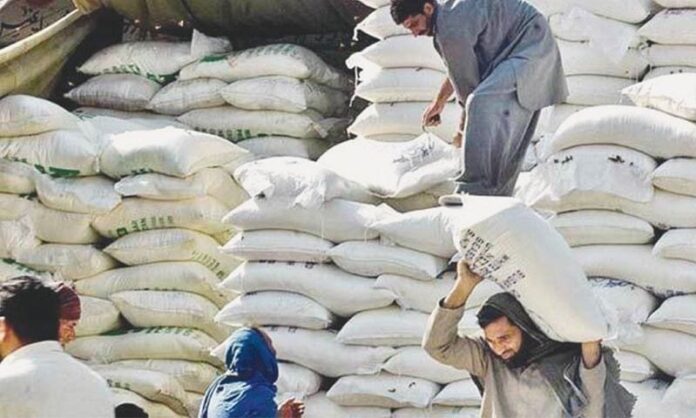
Karachi Commissioner Shoaib Ahmed Siddique has issued a notification reverting flour prices to the previous level. Earlier, while taking notice of the rising flour prices in the city, the commissioner had issued a notification that fixed the price of fine flour at Rs 38 per kg. Commissioner Siddique had also directed all deputy commissioners to ensure sale of flour at government prices across the metropolis.

Two villagers killed in police firing in Jacobabad

At least two persons were killed and eight others injured when police opened fire at peaceful protesters here on Monday. According to details, villagers were holding peaceful protest outside Doudapur Police Station against the misbehaviour and manhandling of police personnel. In order to disperse the protesting villagers, the police opened fire on them, thus killing two people and leaving eight others wounded. The injured protestors were rushed to a nearby hospital, where according to hospital sources condition of some injured was serious and it was feared that the death toll would rise further. Meanwhile, leaders of political parties and locals have strongly condemned the police firing and demanded an inquiry and strict action against those responsible for firing at the unarmed protestors.

Imran Husain Imran Husain
In change there is hope! “I am so proud to be Pakistani”, said Ayesha Baigmohamed, a Pakistani-American based in Washington DC, five minutes into the ride from Dulles Airport earlier this week. “Don’t get me wrong”, she said, “I am privileged to be American, but yes after this election, I am really proud to be Pakistani.” This sentiment has universal echo in Pakistan. Taking this further, I was privileged to attend a distinguished gathering at the Atlantic Council, graciously hosted by Shuja Nawaz, whom I unfortunately did not have the pleasure of meeting as I had to leave early. The principal speakers at the event directed at discussing the recent elections and their anticipated impact on the Pakistan scene were Dr Maleeha Lodhi, via Skype from Islamabad, Riaz Mohammad Khan, former foreign secretary and Mohsin Khan, former IMF Director. Opinion makers in DC and Pakistani-Americans attended the event. Among the attendees was Fauzia Saeed of Islamabad, on a book launching tour of her new book based on the rigours faced by women in our environment. Maleeha is a greatly admired and dear friend. As anticipated she started the meeting with a profound and well-structured discourse covering every aspect of the recent situation and emphasized upon the difference in calibre of governance that the change will bring. She focused on the benefits a Nawaz-led dispensation, considering the elections provided him the simple majority to form government enabling him to deal with critical issues without having to barter or negotiate with coalition partners. At the same time she was precise in warning that being out of office for a long time would require Nawaz Sharif to be cerebral in setting goals, selecting personnel and putting aside personal sentiments in achieving success. There were two significant points she raised which I believe require attention. First, she said that this election has indicated that the base of Pakistani politics would move from the rural to the urban scene. Perhaps she was overcome with euphoria at the election turnout. Let me say I disagree with this statement based not simply on the disenfranchisement of the bulk of the population but on the fact that the majority of urban Pakistan has no idea of how the people of the rural areas exist. If this were to happen Pakistan would suffer irreparable damage. As it is, rural Pakistan is severely under developed and government must focus on horizontal fiscal equalization to ensure more inclusive development. Failing this the march on the urban centres would become so great that infrastructure could never cope. I would therefore hope that this assessment is incorrect. The second point is definitely debatable. When asked during the Q&A that followed: what Zardari would do, she said, “He should contact his travel agent”. Setting popular sentiment aside, one must not forget that President Zardari has certain significant political assets that require logical consideration. First of these is the majority for the next three years in the Senate. Second the large vote in Sindh, with Nawaz barely on the board, the converse of the situation in the Punjab. Third and the most important fact is that Zardari has the numbers to make Imran Khan the leader of the opposition. Considering the number of votes won by Imran’s losing candidates in the Punjab, he is undoubtedly a serious player and, hospital call notwithstanding, will want to build on this much to Nawaz’s discomfort. Add to this the fact that Zardari literally handed Nawaz the election by ensuring the PPP’s pitiful election campaign and by finally deciding at a critically late juncture to follow court orders and give up the two offices. So to completely and quickly write him off is premature. He has proven to be a wily politician and pulled many a trick from his bag. Perhaps they are all used up and this may be one too many and prove difficult to pull off. We will have an answer soon enough. Riaz Mohammad Khan’s rendering of the foreign policy and administrative necessities and realities was both expansive and direct. He believes as do most rational and progressive Pakistanis that improved ties with India, and more importantly trade with India, is of absolute essence. In driving home the point he emphasized that the army no longer holds this fact taboo and is more open to positive developments. On the ‘drone’ factor and the US participation in Pakistan’s development, he advised the new government to continue to work hard in developing relations to mutual advantage. His views that drone strikes are not likely to just “go away”, are by and large correct. In my opinion, a significant fact that the ‘anti-drone’ lobby seems to conveniently forget is that the collateral damage being caused to civilian population is no different to the damage to innocent civilian lives and those of military personnel and installations being caused by ruthless and cruel terror attacks on the Pakistani population by the various factions of the Taliban. Therefore in striving to pressurise the US to stop drone attacks are they ensuring a stoppage to terror attacks? If so, they must reveal the methodology. To take it a step further, should our leaders not be absolutely honest instead of selfishly playing with emotions and reveal that there is precious little we can do if the drone attacks are to continue. His view that election results portray Nawaz as a leader of the majority Punjab province is not entirely incorrect, although Nawaz does have the largest number of seats in Balochistan and a reasonable number in KP with Sindh being the least represented. He opined, in order to overcome this deficit in the Federal government, Nawaz must build consensus overall and in particular in Sindh. This will certainly be an extremely sensitive issue. The new government must provide a level playing field in Sindh as the possibility of serious difficulties in maintaining peace in rural areas and especially Karachi loom large on the horizon. The crux of Pakistan’s problems is centred on the economy. “Economy, economy, economy,” Mohsin Khan highlighted. He stressed the fact that a new programme with the IMF will be required and that will be centred on the basic pre-requisites laid out in the previous programme that the former government had turned down. The caretaker economic team that visited Washington was told the IMF was open to discussion but would like to do this with the elected government. The last government failed to build consensus on the VAT, tax reforms and non-development expenditures. In fact the politicians never had the will to do it despite having a brilliant economic team for the last three years. And political parties opposed the reforms vehemently, especially in Karachi and Lahore. Perhaps with the change in government representing the Punjab maybe a chance exists for reversing the situation. For Pakistan’s economy to even begin to show signs of correction, the new government will have to dispassionately review the status and dismiss political expediency in driving the change. Hold our heads high we must. There isn’t a single Pakistani I’ve met here in the last few days who is not celebrating the flow of democracy in our country. In fact, even the significant Americans I’ve met are rejoicing for us. In democracy lies our future and in change there is hope. But there is extreme sadness in the heinous murder of Zahra Shahid Hussain. Those who knew her will know what a wonderful woman she was. May Allah rest her soul in peace, and let us pay tribute by continuing to work for what she stood for: A better and prosperous Pakistan. The writer can be contacted at: [email protected]

Syed Haider Azhar Syed Haider Azhar
The PML-N’s golden chance After what seemed like years of campaigning, speculations, name-calling, conspiracy theories and what not, the most anticipated general elections, for my generation at least, finally concluded. If the eventual outcome is to be taken at face value, with the huge mandate given to the winner in mind minus the various allegations of rigging and all that is rotten, it appears that the result has been an extremely joyous one for the significant majority of voters of this country; disappointing for those who thought that their voters would still turn up to support them despite their shortcomings and incompetence; and incomprehensible for the rest, who seemed to ride on a wave of unrealistic expectations and perception only to wake up post-May 11 with a bad case of hangover that often follows such a high. Before proceeding any further, I would take this time to toot my own horn for a bit. When my assessment of the seats in Lahore was printed on the pages of this very newspaper two weeks prior to the polls, I faced a barrage of questions and opinions from disgruntled supporters of one particular party for not considering certain factors which they apparently believed were to act as game-changers; the youth vote; the passion and vigour or ‘Junoon’ of their supporters; their naïve and idealistic belief that their message and rhetoric seeking a poll on principles was stronger and more effective than others and was enough to tilt the tide in their favour; and so on. While addressing their reservations, I mastered my two-pronged response; firstly, the entire youth vote was not a guarantee for their particular party and it would split for reasons and factors which are too long to list here; and secondly, for a fair and objective analysis of something as complicated as elections in a city such as ours, you cannot and should not really consider ‘passion’, ‘motivation’ and all that jazz as reasonable indicators because the ground reality was and is significantly different than the one perceived by them. While I got 12 out of a total 13 seats right (I still cannot figure out for the life of me how Samina Ghurki lost) and while am in a position to play my favourite game of ‘I told you so’ and claim a sense of superiority over some extremely senior and respected analysts who predicted differently, I shouldn’t because I believe any prudent mind who had followed politics in the city from the pre-tsunami days should have reached the same conclusion as I did. But what’s the harm in saying it one last time? I told you so! On a serious note, what went wrong? Why, despite the popular perception created by analysts and media houses suggesting a hung parliament, did we see one party walk away with the ‘tiger’s share’ of the seats? Surely the Pakistan Tehreek-e-Insaaf (PTI) and Pakistan Peoples Party-Parliamentarians (PPP-P) were hoping to make more of a dent in Punjab if not in just Lahore than what we eventually saw. And more importantly for these and all other parties, what now? It is the ‘what now’ question that I want to focus on, in turn, aiming to briefly suggest a future course of action and strategy for both the disgruntled party as well as the disappointed party, namely the PTI and the PPP-P respectively. Let’s first address the fall from grace for the one party that has always staked a claim at being the ‘only national party’ in the country, simply because it isn’t anymore. One doesn’t need to know rocket science to figure out where they went wrong. Granted that their campaigns were hampered by threats and other such factors but a mere perusal of newspapers from the last five years should be sufficient for their think-tanks to prepare a mile-long list of faults and errors that they committed while in power. Yes the NFC, amendments to the constitution and the doing away of presidential powers were good initiatives, but the general public, as it showed, weren’t interested in these steps which the common man fails to understand or appreciate, and craves for immediate relief. All the social indicators point towards a job poorly done by the previous government. The level of disappointment amongst the masses can best be analysed by the fact that all the coalition partners of PPP-P suffered due to their affiliation with the last government. Awami National Party (ANP) not only lost their government in Khyber-Pakhtunkhwa but also had only one seat in the National Assembly to show for their performance and sacrifices. Similarly, the Chaudhrys of Gujrat could not have imagined the damage that was caused to Pakistan Muslim League-Quaid-e-Azam (PML-Q) candidates by agreeing to a seat-adjustment/coalition with PPP-P. MQM would probably have lost more seats too, if their voters didn’t have the remarkable capability of casting four votes per second for their candidates. With their popularity graph at an all-time low, the PPP-P needs a complete overhaul, especially in Punjab. Maybe drop the extra ‘P’; maybe do a bit of spring-cleaning and get rid of all such leaders and members who have been successful in alienating and disenfranchising the party’s core supporters; no change will be big enough. One major hurdle for PPP-P turned out to be lack of a central leader for the rest to rally around. With the president barred from campaigning and Bilawal not ready yet, the party should have had someone to lead from the front. It is time to start grooming some young and new faces to re-establish the party in Punjab and try to reconcile with the lost voter base of the party. It won’t win them the next elections, but it would be a significant start. As for the ‘ballaybaaz’ of PTI, they need to first of all pat themselves on the back for a job quite well done. From having won only one seat since 1997 to becoming the third largest party in the National Assembly and being in a position to form a government in KPK, they have come a long way. What went wrong for them? Well for starters, it was a case of too many expectations on the part of the supporters. Secondly, the PTI supporters and candidates are guilty of exactly the same things that they accuse others of; arrogance and indifference to the opinions of others. In some constituencies in Punjab, PTI fielded candidates whom the locals could not relate to and who themselves appeared not to know much about the needs of their common constituents. The Tabdeeli Razakars in Lahore, for example, were mostly volunteers from well off areas of the city with absolutely no recognition in the areas they were working and trying to mobilise support. This is where PTI needs to focus because it is in an ideal position to start the groundwork for the next elections. The candidates or local PTI offices need to start socialising and networking in their areas right away; attend funerals, weddings and whatever event possible to establish grass-root level presence in their respective constituencies. And for heaven’s sake, avoid the fiasco that we saw just a couple of months prior to the elections and have the intra-party elections at least a year in advance, if not more, to the general elections. If there is decent governance in KP coupled with poor performance by the newly elected government in the centre, then PTI may get a chance to avenge the first-innings deficit. A few words for our new rulers: Fortunately for PML-N, the bar set by the previous government at the centre is so low that anything they do will be considered as an upgrade on what we saw for the past five years. But I am sure the leadership of PML-N is aware that they can’t afford any slip-ups or they may face the wrath of the voters with a certain Pathan waiting to pounce on their every mistake come elections next time around. The residents of Punjab are hopeful that we won’t have many complaints from the new government especially as far as administration goes but there are still a few concerns. The PML-N’s continued affiliation with extremist sectarian outfits still sticks at the back of minds of all minorities. So we request the new government of Punjab, can we please have someone new as the provincial law/home minister? We really don’t trust the previous one. Oh, and a proper health minister would be much appreciated as well. The writer is an advocate of the high courts, a guidance and career counselor and a public speaking coach. The views expressed here are his own. He can be contacted at [email protected]

Kuldip Nayar Kuldip Nayar
In what the Indian government says Believe it or not, the Supreme Court gave the Central Bureau of Investigation (CBI) an opportunity to be independent in one of the matters before it, asking the agency why it was not independent. Yet the CBI failed to grab the chance with both hands. It had a fool proof case against Law Minister Ashwani Kumar when he amended the report on the coal blocks allotment scandal. The government’s blatant interference resulted in a “corrected draft,” exactly the way the law minister wanted the report to be. The Supreme Court said that the CBI had “shaken the system” and it expected the agency to give its independent verdict on the probe. But it did not because the agency realised that it would have meant opposing the government. Apparently, it was the failure of both the CBI and the government. They could have seen to it that the agency would have its own say. Now that it has lost the chance to be viable, the way out for the government is to make the CBI independent. The present bill pending before Parliament falls short of giving the CBI independent character. It looks that both major political parties, the Congress and the BJP, do not want the agency to have teeth. I do not know how far other parties want the agency to be independent. In any case, the CBI has lost the opportunity to become viable. Corruption still gets most attention in Indian politics. The present government at the centre beats all records in scandals. Never before did the CBI have so many eyes riveted on it and what comes out again and again is the inadequacy of its powers. The reason, simply put, is that the CBI realises the extent of independence it can exercise in the present setup. The law minister’s argument that he has not committed any wrong by vetting the report as his ministry has been the authorised legal adviser of the agency sounds hollow. However, every time a scam tumbles out of the government’s cupboard, there is a familiar exercise that follows. The CBI is asked to conduct a probe. But when the agency remains a department of the government and part of the system, doubts about its functioning cannot be brushed aside. Several former directors of the CBI have written articles and books to show how they were given instructions from above to decide a case in a particular way. In the entire scenario, it is difficult to say whether or not Prime Minister Manmohan Singh had been briefed. Because of his clean record in public life, we come to infer that he did not know. It is probable, if not possible, that such a situation did obtain and that Manmohan Singh knew what was happening under his nose. But then you expect some heads to roll when the scams come to light and particularly when you can spot out the officials in the loop. Why has no one been punished till today and why has nothing concrete emerged after practically every investigation? This doesn’t surprise me at all. The party has confronted with several such situations before and had weathered them all without much ado or damage to its existence. Yet what the Ashwani Kumar and, of late, Railway Minister Pawan Kumar Bansal, episodes have brought to the fore is that even before one controversy dies down, there is another one waiting to catch the administration on the wrong foot. No government since independence has been as badly battered and shattered as Prime Minister Manmohan Singh’s has been. But there is a certain pattern to the CBI-law minister controversy. As was to be expected, the Congress first dismissed the accusation and then issued a perfunctory explanation before finally admitting that the law minister did go through the report and suggest some changes to it. But for the three-judge bench, which ordered CBI director Ranjit Sinha to file an affidavit, the actual behind-the-scene activities would not have come to light, although we know the agency always functioned under the influence of the government of the day. Hence, the confession by the CBI director before the Supreme Court that “the investigation agency does not exist in isolation” is no revelation. However, Sinha’s admission has let the cat out of the bag. We knew that institutions like the CBI have been devalued over a period of time. And it is the government which has its last word on a charge-sheet because of political power. Even with the Supreme Court breathing down its neck, there have been several instances where the CBI’s investigations have remained questionable. In fact, political parties have their own views and positions on ways and means to improve the efficiency and accountability of the CBI. But no government has been ever willing to give up its administrative controversy over the agency. Take the case of the BJP, the main opposition party. It did create a ruckus in parliament over the issue, demanding the resignation of Ashwani Kumar. So did the other parties with their leaders baying for his blood. But we have not seen anybody making concrete proposals to insulate the CBI from government interference. In a way, it is good that the apex court is seized of the entire matter and is determined to liberate the agency from the clutches of the government. But it remains to be seen what structure it would recommend to give the CBI full freedom. Unfortunately, the government does not seem to be even sorry for what has happened to revive faith in governance. Some ministers try to explain things “in proper perspective”. Yet what the Manmohan Singh government does not realise is the yawning trust deficit: none of its claims is accepted, none of its explanation is considered credible and none of its action is taken seriously. It is thus the loss of faith which has put a question mark against every segment of the administration. The writer is a senior Indian journalist.

Today's Cartoon

Now

Police arrest 46 accused in 24 hours

The police, in their drive initiated against criminals, has arrested 46 accused during the past 24 hours. A police statement released here on Monday said that those arrested included eight absconders. It said that eight weapons of different calibres were also recovered from those arrested along with explosives, motorcycles and mobile phones. Meanwhile, action was also initiated against 10 people for violating the ban on pillion riding.

CS for speeding up pace of development schemes

Sindh Chief Secretary (CS) Muhammad Ijaz Chaudhry has emphasised upon the importance of maintaining effective coordination amongst all departments with a view to speed up the pace of development schemes and projects in the metropolis. He stressed this while presiding over a review meeting of the Finance and Planning & Development Departments here on Monday. The CS stressed that the details of departmental performance should be made available and the impediments being faced during the process should also be pointed out. He also emphasised the need for ensuring the monitoring of the schemes and the projects. Earlier on the occasion, the Additional Chief Secretary Arif Ahmed Khan and Secretary Finance Suhail Ahmed Rajput gave a detailed briefing.

Proper blood test only mode to diagnose diabetes: Experts

ukcuk892679000_diabetes-77742677

Experts on Friday urged the masses to realise the fact that diabetes, a fast emerging hormonal disorder in the country, could only be diagnosed through undergoing proper blood test. Addressing a public awareness session to mark National Pathology Week 2013 at Dow University of Health Sciences (DUHS), the experts said ascertainment of diabetes through undergoing relevant blood test could pave way for early treatment and prevent its complications. The programme, jointly organised by National Institute of Diabetes and Endocrinology (NIDE) and DUHS Pathology Department, was addressed by Prof Zaman Shaikh, Prof Mohammad Masroor, Dr Sahar Iqbal, Dr Rafiq Khanani and Dr Farah Naz Farooq. The experts comprising diabetologists, endocrinologists and pathologists said that governments the world over must implement and strengthen policies for the prevention and control of diabetes in order to curb further complications. It was also necessary to disseminate tools to support national and local initiatives for the prevention and management of diabetes, they said. Speaking on the occasion, Dr Sahar emphasised the need of undergoing necessary and regular laboratory tests in patients with symptoms of the disease as well as those adequately diagnosed to be inflicted with the debilitating disease. Meanwhile, Prof M Zaman said that the mean health expenditure on diabetes of the country was only USD 24/person/year, in contrast to USD 55/person in India. "Even in a country like Afghanistan, the mark is USD 33, Nigeria USD 47, Sudan USD 52 and in Turkey the expenditure is as high as USD 571/person," he added. Speaking in connection to obesity, Professor Shaikh said that central obesity was very common in diabetics and was responsible for most of the complications associated with this disease. These he said also included heart attacks, stroke and high blood pressure. Moreover, Dr Zaman emphasised on life style modifications like reeducation of body weight, daily brisk walking for 30 minutes minimum and taking a healthy diet.

Five more killed in on-going violence in Karachi

karachi Five more people were killed on Monday in different incidents of firing and violence in the country’s commercial hub Karachi. According to details, a worker of a political party – Qasim Chandio – was gunned down in Safora goth area. Following the incident tension gripped the area as commercial areas were shut and traffic remained suspended. 40-year old Siraj was shot dead in Iqbal Market, Organgi Town area while another 45-year-old Yaqub was killed by firing near Denso Hall. Similarly, in Malir 15 area, 30-year-old Mehtab was killed. 40-year-old Nasir Mohammad was killed and a woman was injured in a similar firing incident near Airport Signal at Shar-e-Faisal.

Commissioner urges public servants to develop link with masses

soaibahmedsiddique-newcommissionerskarachi_4-23-2013_98043_l-468x238

Karachi Commissioner Shoaib Ahmad Siddiqui has urged the public servants to develop close links with the citizens and realise their obligations towards the masses with utmost sincerity. Addressing a farewell reception arranged in honour of Commissioner Office's staff officer Syed Afaq Hussain on Sunday, he said servants like Hussain who was being transferred to another department, were always and equally remembered by their colleagues and the masses whom they served. He said district administration had adopted a series of measures to develop a public interest oriented system enhancing mutual respect and confidence between citizens and the administration. The ceremony was also attended by Additional Commissioner Karachi (one), Kamran Shamshad, Additional Commissioner Karachi (two) Rubina Asif, Media Director Mohammad Shabih Siddiqui, Kiran Shaikh, Assistant Commissioner (Revenue) Zulfiqar Abbasi, Deputy Director (IT) Asif Iqbal, PS to Commissioner Abdul Malik, Staff Officer Shahabuddin and other staff members of the Commissioner's Office. Speaking on the occasion, the commissioner said hard working and competent officials were an asset for any department as they were fully conscious of their responsibilities and consequently ensured to complete the task given to them. Other officials present in the ceremony appreciated Commissioner Siddiqui for initiating a system under which welcome and farewell ceremonies were being arranged for those joining the office and those retiring or being transferred to other departments. They also hailed the steps taken to give appreciation certificate to staffers and officers for their hard work. A shield was jointly presented by them to Syed Afaq Hussain. Speaking on the occasion, he expressed his gratitude to the Commissioner Office staff for their cooperation and assistance and said that he had learned a lot about team work from Commissioner Siddiqui.

Traffic police chalk out strategy to manage traffic efficiently

images lights

The Karachi Traffic Police has chalked-out an elaborate strategy focused on traffic management with equal attention paid towards traffic jams, parking facilities and welfare of cops associated with the department. DIG Traffic Abdul Khaliq Shaikh sharing details of the report with Sindh IGP Shahid Baloch said enforcement officers for the scheme have also been selected from amongst the best cops. As for efficient implementation of the reforms, he said representatives of civil society and influential people belonging to different walks of life were also being approached so as to develop close coordination with the citizens. "The idea is to minimise communication gap and restore public confidence in the department," the DIG said. Further, he said strict action would also be taken against cops found to be indulged in over-stepping their authority, negligence and corruption. DIG Khaliq also said it had been decided that only single parking would be allowed at the shopping areas and business centres while strict compliance to no-parking on corners and turnings would also be ensured without any failure. Similarly with the support of area police and business union of the centre’s goods placed by shopkeepers outside their shops, on pavements or thoroughfares, would be confiscated while relevant action would be taken against the shopkeepers and hawkers utilising this space. Moreover, the DIG said that chaotic scenes were witnessed in different parts of the metropolis, including in Quaidabad area, and resolved to address these through implementing a ban on the entry of push carts and peddlers encroaching on the roads. Stalls raised around thoroughfares would also be removed so as to ease traffic pressure and ensure smooth flow of traffic, DIG Khaliq reiterated. Meanwhile, IGP Baloch appreciated the scheme and said citizens must be informed about these efforts. For the purpose, he directed the traffic police officers concerned to make use of FM radio service of the department and alert service through text message to keep the public informed of developments related to the city’s traffic.

Pakistani photojournalist to participate in Chinese exhibition

4320964511_97c3e5ed54_z

Jahangir Khan would represent Pakistan Association of Photo Journalists in the "2013 World Photographers Focusing on Beijing", an international photographic event sponsored by the Information Office of the Beijing Municipality. The exhibition would be held from May 20-30 and had been organised by Beijing Foreign Cultural Exchange Centre (BCEC) and Beijing This Month Publications (BTMP). “World Photographers Focusing on Beijing” is one of city's name-brand events during which world-famous photographers shall meet in Beijing and share their expertise and technique. The event had been held on an annual basis since 1997, and this would be the first time that a Pakistani photographer would be attending the event. The photojournalist from Pakistan would be one from among 50 international photographers selected by the programme organisers to shoot in Beijing during the week long exercise. Photographs taken on the occasion would also be put on display in a series of exhibitions across China, scheduled to take place during the next three months. Consequently the photographers would be awarded according to their work and skill.

Writers, poets call for preserving literature on Sindhi folklore

The Sindhi writers and poets have demanded preservation and publication of all the literature written by hundreds of writers about Sindhi folklore. The demand was made at Sughar Katchehri (discourse of folks) organised by Sindh Culture Department at Sindh Museum's Mumtaz Mirza Auditorium here. Speaking on the occasion, former vice chancellor of Sindh University and known writer Dr Ghulam Ali Allana said a number of Sindhi writers have produced great works on Sindhi folk. "The folk literature also embodies the history, tradition and culture of Sindh. Preserving it means that we would be preserving everything which has been Sindhi," he stressed. He praised Dr Fehmida Hussain, Janat Mangwani and Janat Jarwar for currently being the leading writers of folk literature. "Some three to four million Sindhis live in different parts of the world. In my interaction with them during my foreign visits, I have seen a curiosity in them to read more about their motherland," he said. Meanwhile, Secretary Culture Saeed Ahmed Awan said the role of Sughar's was instrumental in preserving the folk literature. "We ought to preserve the knowledge of Sughars and also to make them a part of our curriculum so the future generations could read them," he said. On the occasion, Awan announced that the culture department would publish the unpublished works of Sughars as well as the books related to Sindhi folklore. A linguistics teacher Dr Nawaz Ali Shauq, while speaking on the ocasion said Sindhi literature was rich in the sense that it was written by a constellation of writers, poets and Sughars. According to him, at least 42 major books on Sindhi folklore exist while as many, if not less, contributed by famous writers were still waiting to be published. The seminar was also addressed by writers Roshan Ali Korai, Ghulam Rasool Mangrio, Gul Muhammad Khatri, Rehmatullah Abbassi and Khalil Zaman Mahesar among other prominent personalities.