World Bank clears Karachi K-IV augmentation procurement with conditions
The World Bank has issued a conditional no-objection certificate for Karachi’s K-IV Augmentation Project, allowing procurement to resume. Sindh must now meet engineering, safety and environmental deadlines to keep the scheme moving.

KARACHI: The World Bank has issued a conditional no-objection certificate for Karachi’s K-IV Augmentation Project, allowing procurement to move forward after months of delays linked to technical, environmental and safety concerns.
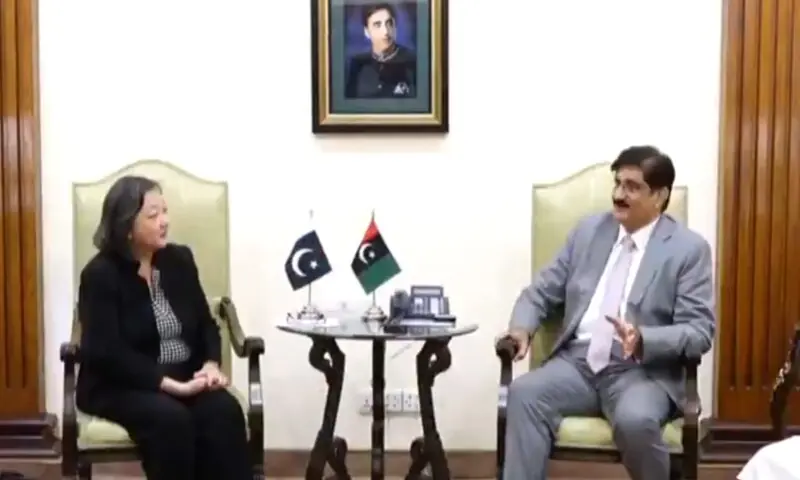
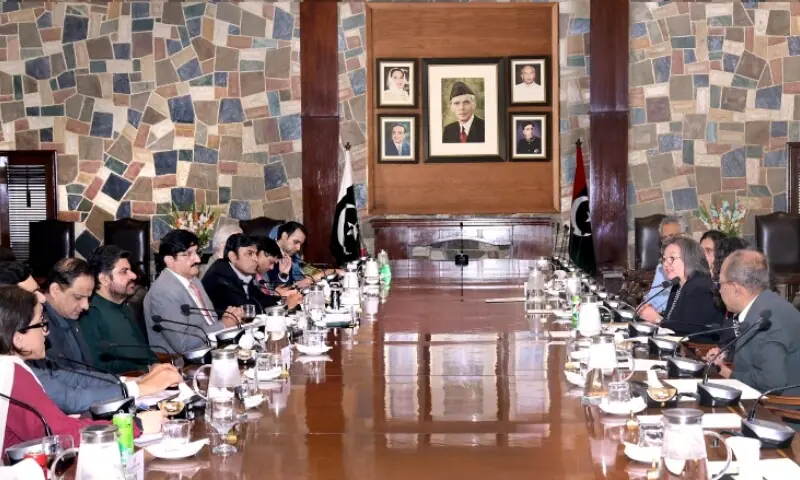
The development came up during a review meeting held by Sindh Chief Minister Murad Ali Shah with World Bank Country Director Bolormaa Amgaabazar at the Chief Minister House on Monday. A statement from the CM House said both sides agreed on an accelerated roadmap to improve Karachi’s water supply and sanitation infrastructure and extend safe drinking water access to more than two million residents.
The K-IV Augmentation Project is part of the Greater Karachi Bulk Water Supply Scheme. Under the arrangement, the Sindh government is executing the augmentation component through the Karachi Water and Sewerage Services Improvement Project, while water is to be brought from Keenjhar Lake under the main K-IV project being carried out by the federal government through Wapda.
Deadlines tied to clearance
The conditional clearance requires the provincial government to meet strict engineering and environmental benchmarks to keep the scheme on track. These include immediate joint integrity verification of the 96-inch pipeline and structural corrections near major flyovers and along the NIPA bridge corridor by Aug 20.
The project also has to fully implement environmental and social impact assessment requirements and maintain coordination with utility agencies, including Sui Southern Gas Company, to prevent design clashes and more delays.
On the 2.7-kilometre common corridor, the meeting was told that SSGC handed over the site on June 22, preparations were under way for joint integrity verification of the 96-inch pipeline, and piling and bridge rectification had started. Weld integrity checks and rectification work at NIPA bridge are scheduled to be completed by Aug 20.
Setbacks before the approval
The project had faced repeated interruptions. In December 2025, a World Bank team raised objections over weak environmental and social safeguards, inadequate technical supervision at site and failure to ensure public safety on the heavily congested University Road.
A more serious technical stoppage followed in May, when World Bank engineering experts found ongoing work on the fast-tracked common corridor to be substandard and not in line with international technical specifications.
Despite that history, the meeting was informed that procurement had reached an advanced stage and that the project advertisement was expected shortly.
Other KWSSIP components reviewed
Officials also decided to move several unfinished elements of KWSSIP-I into KWSSIP-II. These include the non-revenue water strategy, pilot district metered areas, hydraulic modelling, rehabilitation works in Essa Nagri, Supervisory Control and Data Acquisition installation, and master planning studies.
A comprehensive metering plan was shared with the World Bank, and both sides agreed to begin with a pilot before broader installation of system meters.
The meeting was also told that chlorination stations had been shifted to designated sites and commissioning was under way, while water quality testing was expected to begin by July 30. Murad Ali Shah directed the utility and project teams to finish commissioning without delay and maintain water quality standards.
He said, "The ultimate success of this project will be measured by its impact on citizens, and timelines should be treated as commitments to the people of Karachi."
Karachi Mayor Barrister Murtaza Wahab told the meeting that compensation had been paid to 186 of 203 project-affected persons, while notices had been issued to the remaining beneficiaries. He said, "Payments will be completed after approval of the revised resettlement plan." He also said an independent monitoring consultant for environmental and social compliance joined the project on July 13.
Murad Ali Shah called for uninterrupted coordination among all agencies and said delays would hurt the wider effort to strengthen Karachi’s water network. He also welcomed progress in hiring key technical and management staff under KWSSIP-II and directed that the remaining vacancies be filled immediately.
Amgaabazar said, "The World Bank remains committed to supporting the Sindh government and KWSC. Continued focus on reforms, safeguards, governance and timely execution will be critical."
The meeting was attended by Local Government Minister Nasir Shah, Karachi Mayor Barrister Murtaza Wahab, Chief Secretary Asif Hyder Shah, KWSC’s Ahmed Ali Siddiqui and World Bank Senior Water Specialist Tiziana Smith.
Murad Ali Shah said, "Karachi’s growing population requires resilient and modern water infrastructure. We must deliver lasting improvements in water supply, sanitation and public service delivery."
Comments
No comments yet. Be the first to join the discussion!