

Sindh, World Bank set faster plan for Karachi water and sewerage upgrade
Sindh and the World Bank have agreed to fast-track Karachi’s water and sewerage improvement programme. Officials said the project aims to provide safe drinking water to around two million residents.

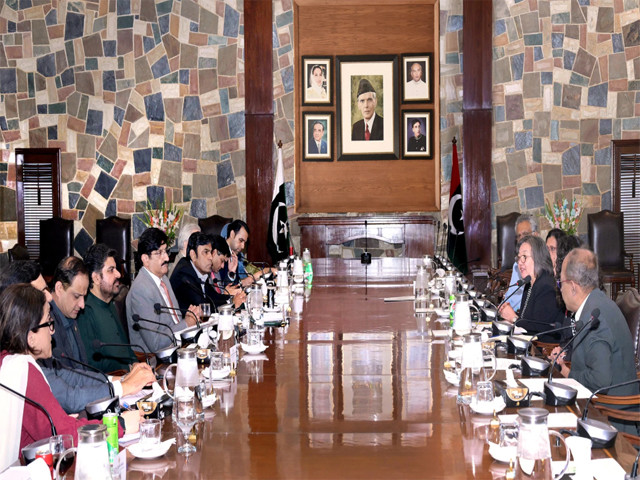
KARACHI: The Sindh government and the World Bank have agreed on a fast-track roadmap to speed up water supply and sewerage works in Karachi, as officials reviewed delays and infrastructure gaps in the city’s utility system.
The understanding was reached on Monday at a meeting between Chief Minister Murad Ali Shah and World Bank Country Director Bolorma Amgaabazar at the Chief Minister’s House. The session focused on the Karachi Water and Sewerage Services Improvement Project (KWSSIP), with participants examining progress, bottlenecks and steps needed to accelerate implementation.
Murad said improving access to clean drinking water and modernising Karachi’s sewerage network remained a top priority for the provincial government. He said, "Karachi needs a robust and modern water infrastructure system to meet the needs of its growing population."
Officials at the meeting said one of the project’s central targets is to provide safe drinking water to around two million people in the metropolis. Karachi Mayor Murtaza Wahab said chlorination plants had been shifted to designated locations and were being made operational, adding that water quality testing is expected to start by July 30.
The chief minister directed the Karachi Water and Sewerage Corporation to complete the remaining work quickly and adhere to project timelines. Participants also discussed persistent structural problems in the sector, including worn-out infrastructure, leakages, weak distribution and limited treatment capacity.
World Bank officials said physical upgrades alone would not be enough and stressed the need for institutional reform to make the project sustainable. They highlighted better governance, financial management and operational efficiency in the relevant agencies as necessary alongside infrastructure work.
The roadmap agreed at the meeting includes defined milestones, stronger coordination among stakeholders and tighter monitoring of implementation. Murad also reiterated the government’s commitment to addressing systemic weaknesses in parallel with development work.
Local Government Minister Nasir Hussain Shah, Chief Secretary Asif Haider Shah and other senior officials attended the meeting, along with a World Bank team that included specialists in water supply, sanitation, procurement, environment and social development.
Comments
No comments yet. Be the first to join the discussion!


