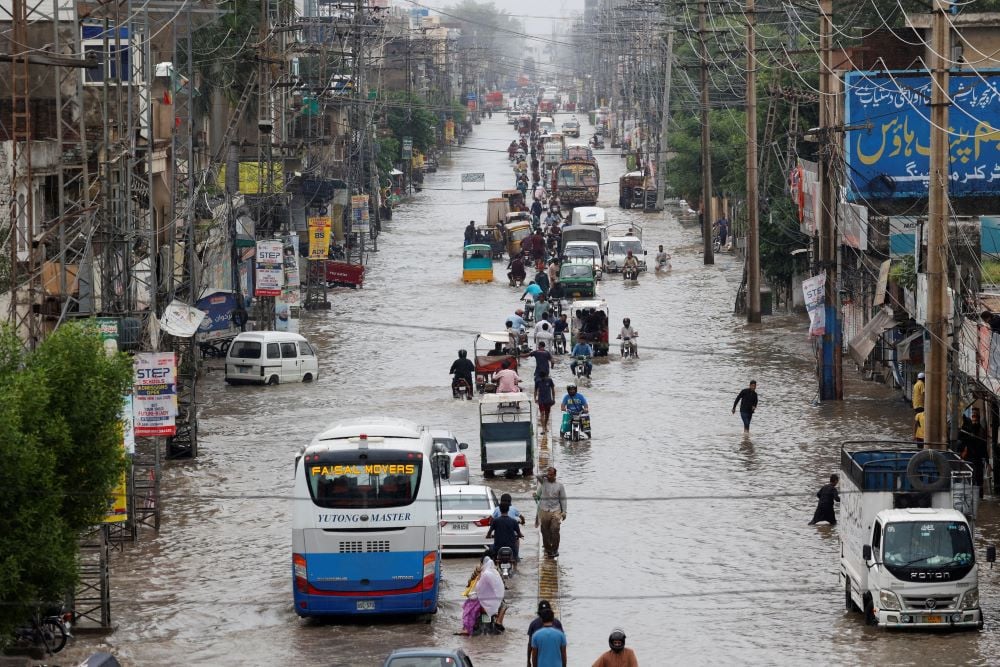
Punjab’s monsoon spending tested by calls for long-term flood strategy
Punjab has allocated over Rs71 billion for flood protection, irrigation and land reclamation, but experts say the province still lacks major water storage projects. Officials say rescue deployments and monitoring are in place as the monsoon season intensifies.

LAHORE: Punjab has set aside more than Rs71 billion for flood protection, irrigation and land reclamation in its 2026-27 budget, but water specialists say the province is still entering the monsoon without the kind of large-scale storage and river management projects needed to reduce recurring losses.
Budget documents show Rs10.5 billion has been allocated for flood control and drainage, while over Rs61 billion has been earmarked for irrigation and land reclamation. The package includes work on canals, embankments and barrages, and around Rs2 billion for several small dams in the Pothohar region. Even so, experts say no major project has been announced to capture excess floodwater despite repeated monsoon damage and rising climate pressures.
Professor Syed Amer Mahmood, a water resources and environmental expert at the University of Punjab, said Pakistan had not received reports of any unusual upstream water releases from India despite the start of the monsoon. He said river flows were being watched under the Indus Waters Treaty through the Flood Forecasting Division and other relevant agencies.
Mahmood said post-flood research from last year found several important risk-reduction steps were still unfinished, including clearing encroachments from rivers and natural waterways, desilting drains, strengthening embankments, fixing weak protection structures and improving urban drainage. He said, "Climate change is changing rainfall patterns, increasing the chances of intense downpours and flash floods within short periods," adding, "Emergency response alone is no longer enough. Punjab needs long-term investment in water storage, river restoration and modern flood management."
Officials say emergency arrangements have already been put in place in vulnerable districts. According to the Punjab Disaster Management Authority, the Chenab, Ravi, Sutlej, Jhelum and Indus rivers are being monitored along with hill torrents in Dera Ghazi Khan and Rajanpur and rain-fed areas of Mianwali, Khushab, Attock and northern Punjab.
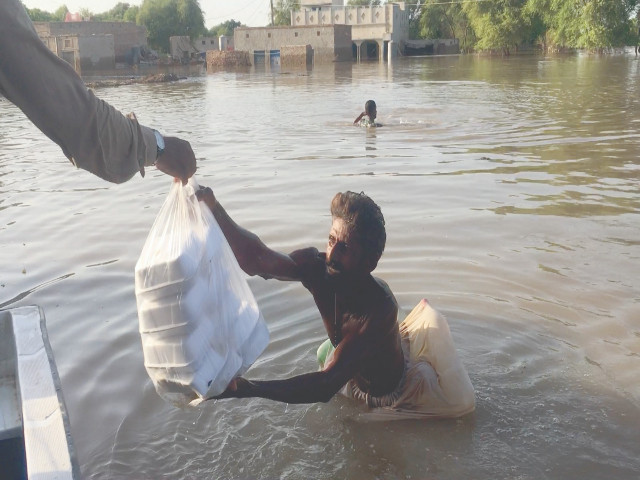
PDMA Director General Umar Javed said Rescue 1122 teams, motorboats, divers, ambulances, heavy machinery and mobile medical units had been deployed. Temporary shelters, food stocks, clean drinking water, medical services and livestock evacuation plans are also in place, while rescue teams have carried out emergency drills with federal and provincial agencies.
For residents living near river belts, however, preparedness remains only part of the answer. Muhammad Asif, who lives on Lahore’s outskirts near the Ravi, said his family still faces uncertainty each monsoon as water levels rise. Recalling last year’s evacuations, he said, "The government needs a stronger early warning system so people have enough time to move before the water reaches their homes."
Government figures show last year’s monsoon affected more than 4,400 villages and around 4.4 million people across Punjab. Thousands of families were displaced, farmland went under water, roads and bridges were damaged, and at least 76 people died.
Water experts say Punjab continues to lose large volumes of freshwater each monsoon because it does not have enough flood reservoirs, groundwater recharge basins and rainwater harvesting systems. Without such infrastructure, they warn, floodwater will keep passing downstream even as repeated inundation damages homes, crops and public works.
Comments
No comments yet. Be the first to join the discussion!