Iran's security chief vows to continue operations until enemy 'fully surrenders'
Iran’s top security official vowed to keep Iranian forces’ strikes going until the enemy is fully defeated, citing attacks on Minab and Lamerd. The remarks came amid wider Iran-region tensions and diplomacy.

TEHRAN: The Secretary of Iran's Supreme National Security Council said on Saturday that the ongoing strikes by Iranian forces would persist until the enemy is "fully defeated" and "retribution is exacted for the innocent children of Minab and Lamerd and will continue beyond that point".
Mohammad Bagher Zolghadr also pledged retribution for the US-Israel war on Iran and the killing of schoolchildren, state news agency IRNA reported.
The single largest casualty from an attack, according to Iranian authorities, was the attack on a girls’ school in the city of Minab, where 168 people were killed and 95 were wounded, most of them children.
Araghchi says ‘no military solution’ to Yemen conflict
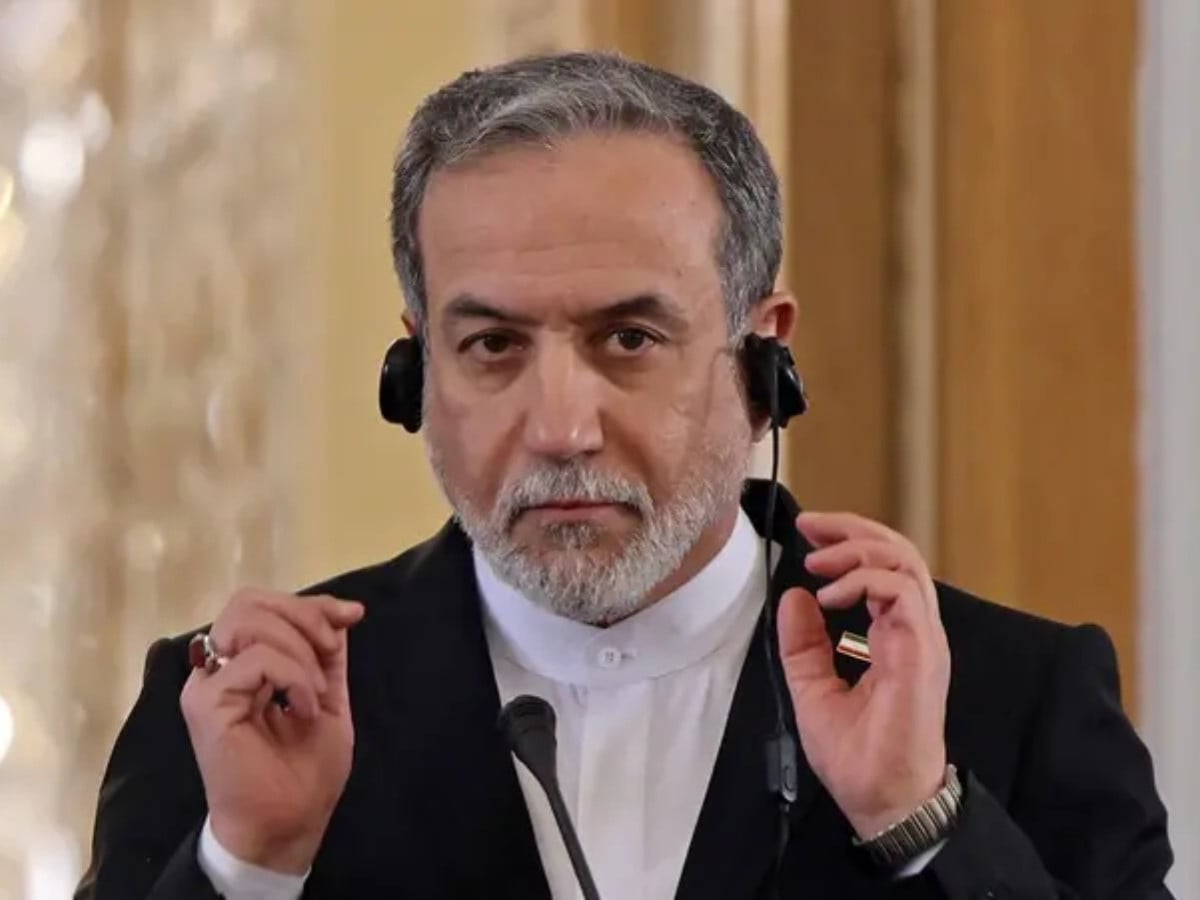
Iranian Foreign Minister Abbas Araghchi said on Saturday there was no military solution to the escalating conflict between Saudi Arabia and Houthi rebels in Yemen after both sides traded attacks.
"We believe that there is no military solution to the issue of Yemen, Bab al-Mandab, and other regional issues," said Araghchi in an interview published on Saturday by the state-run Iran Daily newspaper, calling for "dialogue".
Iran's Baghaei accuses EU of hypocrisy over human rights concerns
Iranian foreign ministry spokesman Esmaeil Baghaei accused the European Union of hypocrisy, saying its stated human rights concerns about Iran cannot be reconciled with what he described as EU support for military attacks on the country.
Baghaei responded to remarks by the EU’s foreign policy chief, Kaja Kallas, about the bloc’s human rights concerns regarding Iran in a post on X.
Baghaei said the EU could not credibly profess a commitment to human rights while providing what he called logistical and technical support for “lethal aggressions” against Iranians that deliberately target civilians and critical national infrastructure.
He accused the bloc of refusing to condemn what he termed war crimes and of offering "not a single word of sympathy for Iranian children slaughtered by American-Israeli bombs and missiles", which he said were enabled by the EU’s “logistical and technical support”.
"This is not merely a loss of credibility. It is the banality of evil — and the purest form of hypocrisy."
Iran reports no new US attacks as Gulf tensions remain high
Iran reported no strikes overnight into Saturday, an apparent break from nearly two weeks of consecutive nights of US attacks, as per Al Jazeera.
The Iranian health ministry’s spokesperson, Hossein Kermanpour, said that “Iran had a peaceful night”. Unlike the previous 13 nights, US Central Command did not announce new strikes.
The war has so far killed more than 3,400 people in Iran, according to the ministry. Eighteen US service members, 24 civilians in Israel and smaller numbers of civilians have also been reported dead in countries across the region.
In Lebanon, more than 4,000 people have been killed, as well as 38 Israeli troops.
Egyptian foreign minister discusses regional de-escalation, maritime security with Iranian, Omani counterparts
Egypt's top diplomat Badr Abdelatty held separate phone calls on Saturday with his Iranian and Omani counterparts to discuss efforts to de-escalate regional tensions and safeguard freedom of navigation, the Foreign Ministry said.
According to a ministry statement, Abdelatty spoke with Iranian Foreign Minister Abbas Araghchi and Omani Foreign Minister Badr Albusaidi as part of ongoing consultations on regional developments and efforts to restore security and stability.
The talks focused on advancing de-escalation efforts, with Abdelatty stressing the need for an immediate halt to all military actions and escalation and for prioritising political and diplomatic solutions to contain rising tensions and prevent the conflict from expanding.
He said such efforts would help strengthen regional security and stability while sparing the peoples of the region from further escalation and its consequences.
Abdelatty also underscored the importance of preserving freedom of navigation in the Strait of Hormuz and the Red Sea, describing it as a cornerstone of regional security and stability and essential to protecting international trade and global supply chains.
He stressed the need to avoid any measures that could threaten the security of maritime routes or endanger shipping, saying such steps are necessary to safeguard the interests of countries in the region and the global economy.
Iran rescues 28 Indian seafarers after vessel attacked
All 28 Indian crew members on board a Mozambique-flagged ship were rescued after coming under attack near Iran’s territorial waters, according to Al Jazeera.
The tanker DISHA transmitted a distress signal after being targeted by “hostile forces” as it entered Iranian waters.
“Upon the occurrence of the incident, the ship immediately transmitted a distress call to the Iranian coastguard,” Mohammad Fathali, Iranian ambassador to India, told the ANI news agency.
“In response, the relevant Iranian maritime and rescue authorities were deployed to the scene without delay and promptly initiated rescue operations. All crew members on board the vessel, including the 28 Indian nationals, were rescued safely and remain in good health.”
Fathali cautioned against foreign naval involvement in the Strait of Hormuz.
“Experience has repeatedly demonstrated that the presence and intervention of extra-regional military forces have not enhanced security in the region; rather, they have contributed to heightened tensions and greater instability.”
Tanker ‘incident’ reported in Gulf of Oman
The United Kingdom Maritime Trade Operations (UKMTO) said it received a report of an incident involving a tanker and military forces in the Gulf of Oman, according to Al Jazeera.
The agency advised vessels in the area to review the latest maritime security information and stay aware of what it called an “evolving operational environment”.
Authorities are investigating the situation, UKMTO said. It gave no further details on the tanker, its flag, or the military forces involved.
Trump says Netanyahu to visit US next Tuesday
US President Donald Trump said on Friday that Israeli Prime Minister Benjamin Netanyahu would visit the United States next week.
The two leaders are expected to meet on Tuesday as the US-Israeli war on Iran completes five months.
US missiles struck targets across Iran on Friday and President Donald Trump vowed "major military punishment" for Tehran and its Houthi allies in Yemen, though he once again left open the door to a diplomatic deal with Iran.
Two weeks after the collapse of an interim truce meant to end the war, Iranian armed forces responded by firing at US bases in neighbouring Arab countries and warning that they could strike non-military buildings there used by US personnel.
Trump has threatened in recent days to widen targets to Iran's energy plants and bridges, send ground forces to seize its oil hub of Kharg Island, and bomb a deep-underground nuclear-linked site known as Pickaxe Mountain.
Read: Iran rejects temporary ceasefire until Strait of Hormuz demands met
On Friday, he said he had not yet decided on new major strikes, however.
"We are talking to them," Trump told reporters at the White House. "I think they're being serious. I think ... they are being by far the most serious that we've seen them, but that doesn't mean we get there."
Asked what the exit strategy was for the Iran war, Trump said, "There's a military exit where we just keep going just the way we are, and we can even make it a heavier dose, and it's knocking out everything they have. Or there's a smarter strategy that you make a deal."
But he added, "We're locked and loaded. We're ready to go."
The key waterway of the Strait of Hormuz, the entrance to the Gulf, has so far been the focus of a war that has killed thousands in almost five months, stoked global inflation and fanned fears of an economic downturn.
The Houthis, who control northern and western Yemen, have also declared a naval blockade of Saudi Arabia, which has diverted millions of barrels of oil by pipeline each day to the Red Sea to skirt Iran's near-total blockade of Hormuz.
After the Houthis said they had struck two Saudi tankers in the Red Sea on Thursday, Trump said he would hold Iran accountable for any further attacks by the fighters.
A Saudi vessel sustained minor hull damage from an attack in the Red Sea on Friday, state news agency SPA said.
The Saudi-led coalition in Yemen said it struck Houthi military sites there, saying they were used to threaten commercial shipping.
Reuters could not immediately verify the reports.
Comments
No comments yet. Be the first to join the discussion!