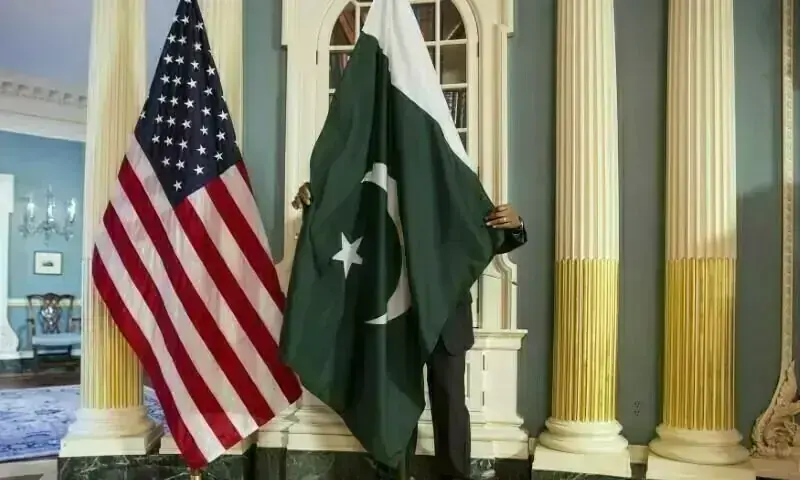
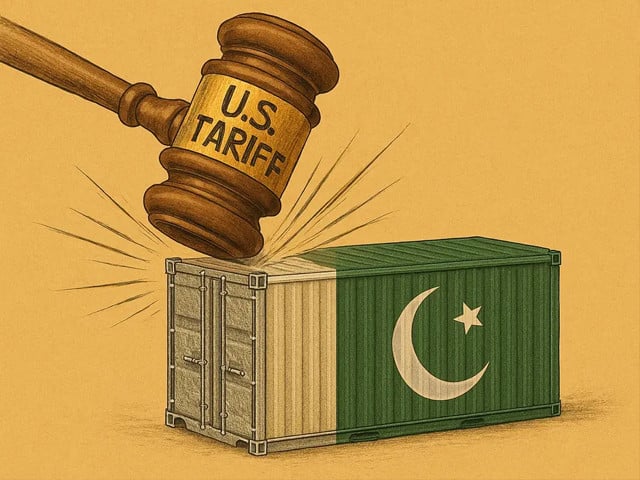
US replaces expiring global levy with new forced labour tariffs on 60 trade partners
The US has imposed new 10% and 12.5% tariffs on imports from 60 trading partners, including Pakistan, as an earlier global levy expired. Washington says the move targets weak enforcement of forced labour bans and covers nearly all US imports, with several exemptions.

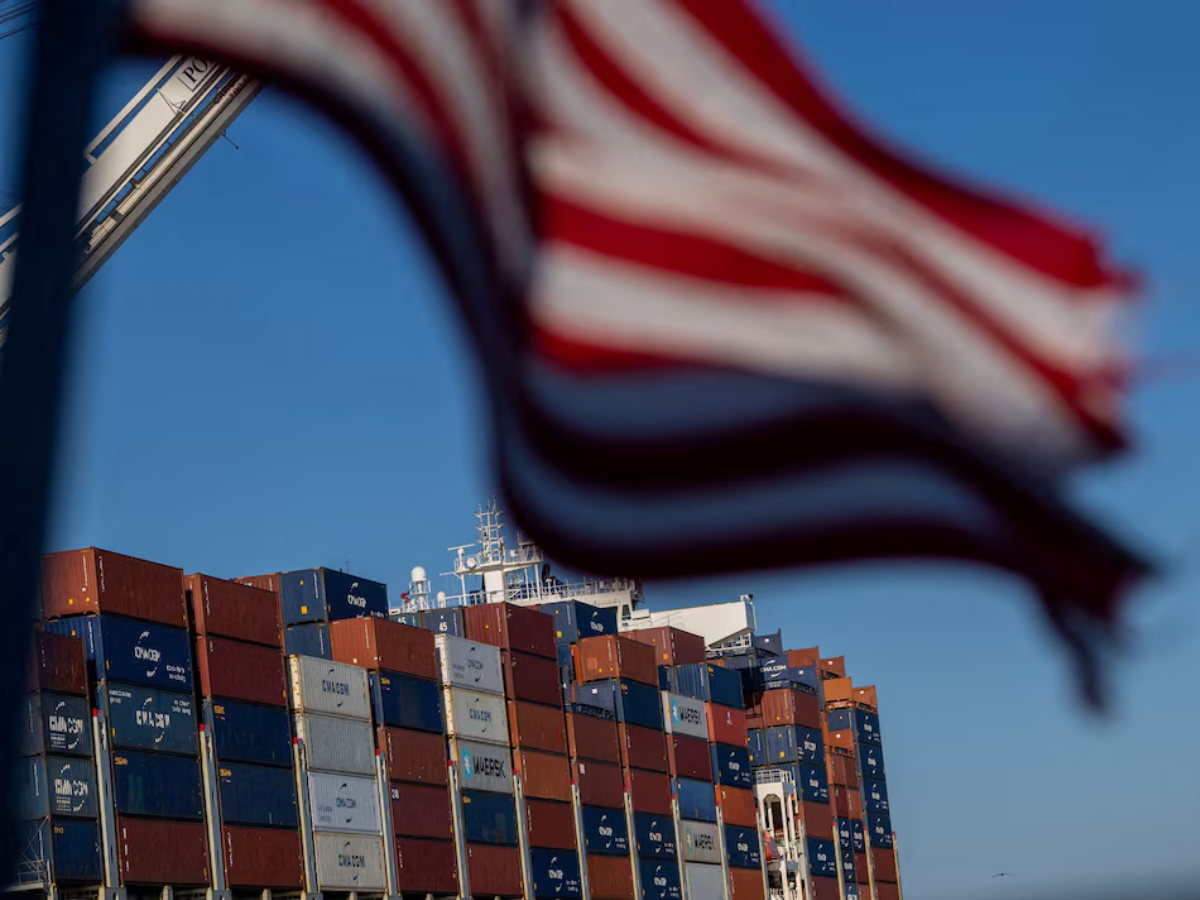
WASHINGTON: The United States has brought in a fresh set of import duties on goods from 60 trading partners, including Pakistan, as an earlier 10% tariff applied globally lapsed at the same moment on Friday.
The new measures, published in a Federal Register notice on Thursday, set rates of 10% and 12.5% and were imposed under Section 301 of the Trade Act of 1974. They apply to 99.4% of US imports, though a range of products has been left out, including oil and gas, fertiliser and some food items. The duties began at 12:01am EDT on Friday, when the temporary 10% global tariff ended after 150 days. Goods already in transit are exempt until 12:01am EDT on July 28.
The move marks the latest step by the Trump administration to preserve a broad tariff base after the US Supreme Court in February invalidated Trump’s earlier reciprocal duties of 10% to 50%, which had been introduced last year under a national emergencies law with the stated aim of cutting the US trade deficit. The new tariffs are seen as carrying lower legal risk because Section 301 has previously survived court scrutiny.
US Trade Representative Jamieson Greer said the action was tied to Washington’s view that other countries were not enforcing bans on goods made with forced labour as strictly as the US does.
The United States has had a forced labor import ban for nearly a century, and rigorously enforces it. It’s well past time for our trading partners to do the same.
Greer added:
Today’s action will begin to correct what is both a human rights abuse and a distortive trade practice to improve the welfare of workers everywhere.
Countries and rates
The US applied a 10% duty to goods from Argentina, Bangladesh, Britain, Cambodia, Canada, Ecuador, El Salvador, Guatemala, Honduras, India, Indonesia, Jordan, Malaysia, Mexico, Pakistan, Sri Lanka, and Trinidad and Tobago. For the European Union, Taiwan, Japan, South Korea and Switzerland, the assigned rates, when combined with existing most-favoured-nation tariffs, came to either 10% or 12.5%.
The remaining 38 countries were given a 12.5% rate. They include Vietnam, which issued a decree this week setting out more detailed rules banning imports of goods produced with forced labour, and China, which the US has accused of detaining Uyghur minorities in labour camps, an allegation Beijing denies.
Trump administration officials have told Chinese counterparts they plan to rebuild second-term tariffs on Chinese products to the 20% level agreed in a trade truce with President Xi Jinping in November 2025, but not go beyond that level. Before Friday’s action, China’s tariff rate had dropped to 10%, excluding the 25% duties placed during Trump’s first term on industrial goods.
Pushback and exemptions
Several US trading partners objected to the decision. European Union foreign policy chief Kaja Kallas said the bloc regarded the tariffs as a shock and rejected the justification offered by Washington.
If you compare our labor laws to the ones of the United States, I mean, we have paid vacations, we have very good labor conditions for our employees, so it’s not really grounded.
she told Reuters on the sidelines of ASEAN meetings in Manila.
Australia and Brazil called the tariffs unjustified and said they would seek their removal, while Norway said there was no basis for them. Canada, which earlier this week was also targeted by new Trump tariffs on $20 billion worth of goods, responded more cautiously. Dominic LeBlanc, the Canadian minister responsible for US trade, said Ottawa would continue discussions with Washington over the coming weeks for the benefit of citizens in both countries.
Kelly Ann Shaw, a former White House trade adviser in Trump’s first term and now a partner at Akin Gump Strauss Hauer & Feld, said the package largely matched what had been signalled in advance, although some changes were made, including the addition of about 471 products to the exclusion list. She said the overall economic effect looked broadly unchanged and noted that some partners, including the EU, had negotiated tariff caps that left their updated rates below what earlier arrangements implied.
A senior Trump administration official rejected the suggestion that the forced labour tariffs were merely a replacement for the expiring duties, despite the overlapping timing, similar rates and broad scope. The official said the US applies stronger bans on imports made with forced labour and enforces them more strictly than any other country, creating what Washington sees as an unfair advantage for competitors. The official also said lawmakers from both major parties had been pressing for forced labour to be removed from global supply chains.
Ryan Majerus, a trade lawyer and former Commerce Department official who is now a partner at King and Spalding, said the administration may be in a stronger position if the policy is challenged in court because Section 301 has held up against earlier legal attacks and some judges may hesitate to block measures aimed at curbing forced labour.
Once the 301 duties are placed, they have a lot of flexibility to adjust them.
Majerus said, adding:
It’s a sledgehammer. It’s also intended to keep the..10% baseline in place, and they think they’re well protected when this goes to court.
According to the senior administration official, exemptions will also cover products already subject to Section 232 national security tariffs, including autos, steel, aluminum and copper. Aircraft and parts, critical minerals, and goods that meet the requirements of the US-Mexico-Canada Agreement are also excluded because of the integrated North American supply chain and the high level of US content in those products.
Comments
No comments yet. Be the first to join the discussion!