Trading for tomorrow
Canadian Foreign Minister Anita Anand’s landmark visit highlights renewed trade and investment ties. Pakistan should use it to diversify partners and push policy reforms for investor certainty.

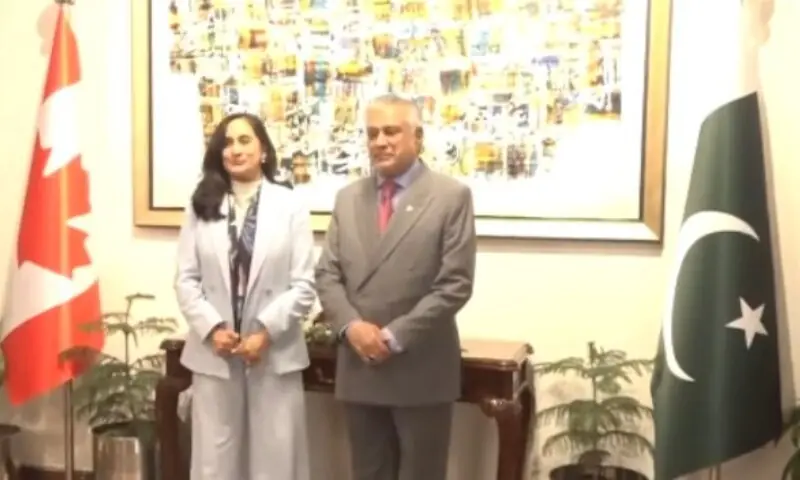
The visit of Canadian Foreign Minister Anita Anand to Pakistan is significant for reasons that extend well beyond diplomatic symbolism. As the first visit by a Canadian foreign minister in almost two decades, it signals a renewed willingness by both countries to deepen economic engagement at a time when the global trading system is being reshaped by conflict, strategic rivalry and growing protectionism. Discussions centred on trade, investment, education and people-to-people ties, while both sides also moved forward with practical cooperation through the signing of a protocol governing canola imports from Canada.
For Pakistan, this should not be viewed as merely another bilateral meeting. It should be recognised as part of a broader strategic imperative. The era when countries could comfortably depend on a narrow set of trading partners is fading. Wars in Europe and the Middle East, persistent tensions between major powers, disruptions to shipping lanes and increasingly politicised supply chains have exposed the dangers of economic concentration. Diversification is no longer an economic luxury; it is a matter of national resilience.
Pakistan's export markets remain heavily concentrated, while imports of critical commodities are vulnerable to global shocks. Building stronger commercial ties with countries such as Canada offers opportunities not only for greater market access but also for investment, technology transfer and agricultural cooperation. Canada's sizeable Pakistani diaspora further strengthens this relationship, creating commercial and cultural links that many countries would envy.
Yet diversification requires more than signing agreements. Pakistan must make itself a more attractive destination for investment by ensuring policy consistency, reducing bureaucratic obstacles and providing regulatory certainty. Foreign investors seek predictability as much as opportunity. Diplomatic outreach must therefore be matched by domestic economic reform.
Equally, Pakistan should avoid framing new partnerships as alternatives to existing ones. The objective is not to choose sides in an increasingly fragmented world but to expand options. Middle powers that maintain constructive relations across regions will be better positioned to withstand geopolitical shocks than those locked into narrow strategic alignments.
Canada's renewed engagement demonstrates that Pakistan still commands international interest despite regional instability and economic challenges. That interest should be cultivated with seriousness and purpose.
In an age when wars can disrupt supply chains overnight and geopolitical disputes increasingly spill into commerce, countries that broaden their economic relationships will enjoy greater security and flexibility. Pakistan cannot control the world's uncertainties. It can, however, control how prepared it is for them. Strengthening ties with reliable, diverse trading partners is among the soundest investments it can make for the future.

The Editorial Department of Pakistan Today can be contacted at: [email protected].
View all articles →Comments
No comments yet. Be the first to join the discussion!