

Beyond Credit: What a Journey to Grameen Bank Taught Me About the Future of Finance
"We are not the bank’s customers. We are the bank."

When the scrawny Bengali woman, adorned in her bright crimson saari, spoke these words, I felt stirred. During our 8-person delegation to Grameen Bank, the most pivotal lessons I picked up were from my conversations with Bangladesh's ordinary women. They seemed to encapsulate an institution that had spent nearly five decades challenging one of the world’s earliest assumptions: that poverty is driven by a lack of ambition.
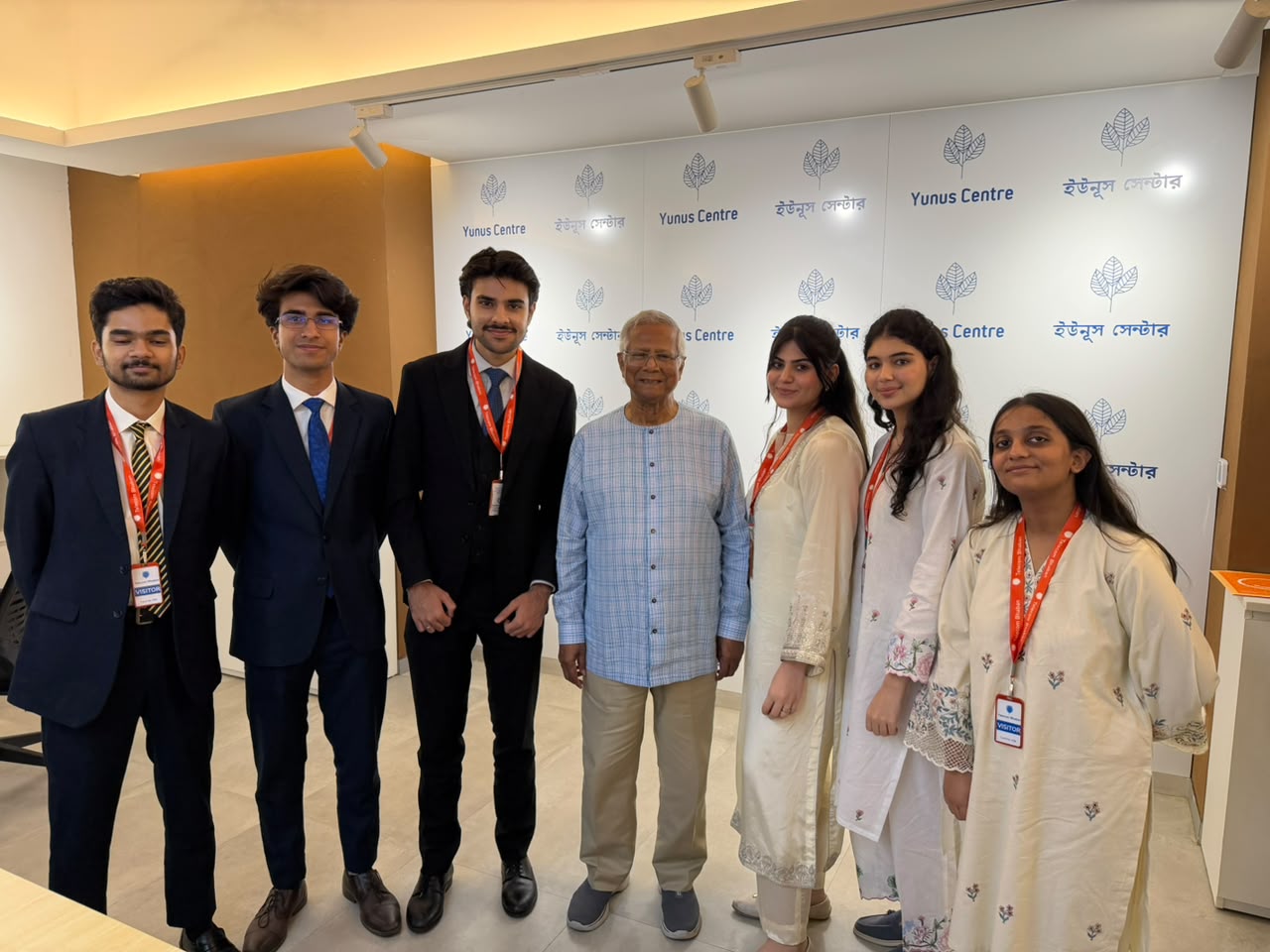
My delegation and I had traversed across the Bay of Bengal to Dhaka’s bustling streets after being graciously invited to Grameen Bank’s 2025–2026 Social Business Conference. Quite a feat for high-school students our age, we were filled with both gratitude and an unending curiosity to learn from the experience.
On our first day, the auditorium erupted into applause. More than a thousand delegates stood to their feet as celebratory music echoed through the convention hall. I expected distinguished economists, senior bankers, professors and global investors to walk onto the stage. Instead, six ordinary women entered. Dressed in colourful cotton saris and simple sandals, they looked unsure of where to stand. Some nervously adjusted the microphone. None spoke English, and most had received only primary education. I quietly asked my teacher whether I had heard the announcement correctly.
“Yes,” he replied.
That was the moment I truly understood Muhammad Yunus' revolution.
Nearly 90 percent of Grameen Bank’s equity is owned by its borrowers themselves. Those borrowers elect representatives from local branches, who in turn form the bank’s Board of Directors. The people borrowing from the institution are the very people governing it. That philosophy is perhaps Grameen Bank’s greatest innovation—not merely lending money to the poor, but transferring ownership, dignity and decision-making into their hands.
Microfinance is often misunderstood as simply giving small loans to the needy. In reality, it is an entire financial ecosystem designed for individuals traditionally excluded from commercial banking. It provides microcredit, microsavings, microinsurance and payment services to low-income households with no collateral, no formal banking history and no access to conventional financial institutions. For millions of families, these are the first opportunities to start a business, educate children, survive health emergencies or escape cycles of informal debt. Institutions such as Grameen Bank in Bangladesh, Akhuwat Foundation and Alkhidmat Foundation in Pakistan have all attempted to bridge this financial exclusion through different models but similar philosophies.
Grameen Bank began in 1976 as a small research experiment by Professor Muhammad Yunus in the village of Jobra near Chittagong. What started with lending tiny amounts to a handful of women evolved into one of the world’s most influential development institutions. The experiment challenged the belief that the poor are inherently risky borrowers. They were not. Today, Grameen serves over ten million borrowers, nearly all women, across more than eighty thousand villages. In recognition of demonstrating that access to credit could become a tool for peace and social development, Muhammad Yunus and Grameen Bank jointly received the Nobel Peace Prize in 2006. Yet statistics alone cannot explain why Grameen became globally influential. For that, one has to visit it.
Being one of the few high-school students internationally to attend the Social Business Conference taught me more than any textbook could.
Bangladesh itself surprised me. Towering commercial buildings stretched across Dhaka’s skyline, construction cranes dominated the horizon, and the country’s rapid economic transformation was visible everywhere. The Social Business Conference brought together delegates from nearly fifty countries to discuss how businesses could solve social problems while remaining financially sustainable. Climate change, women’s empowerment, food security, healthcare, education and social entrepreneurship all became part of one larger conversation about measuring success through human impact rather than shareholder profit.
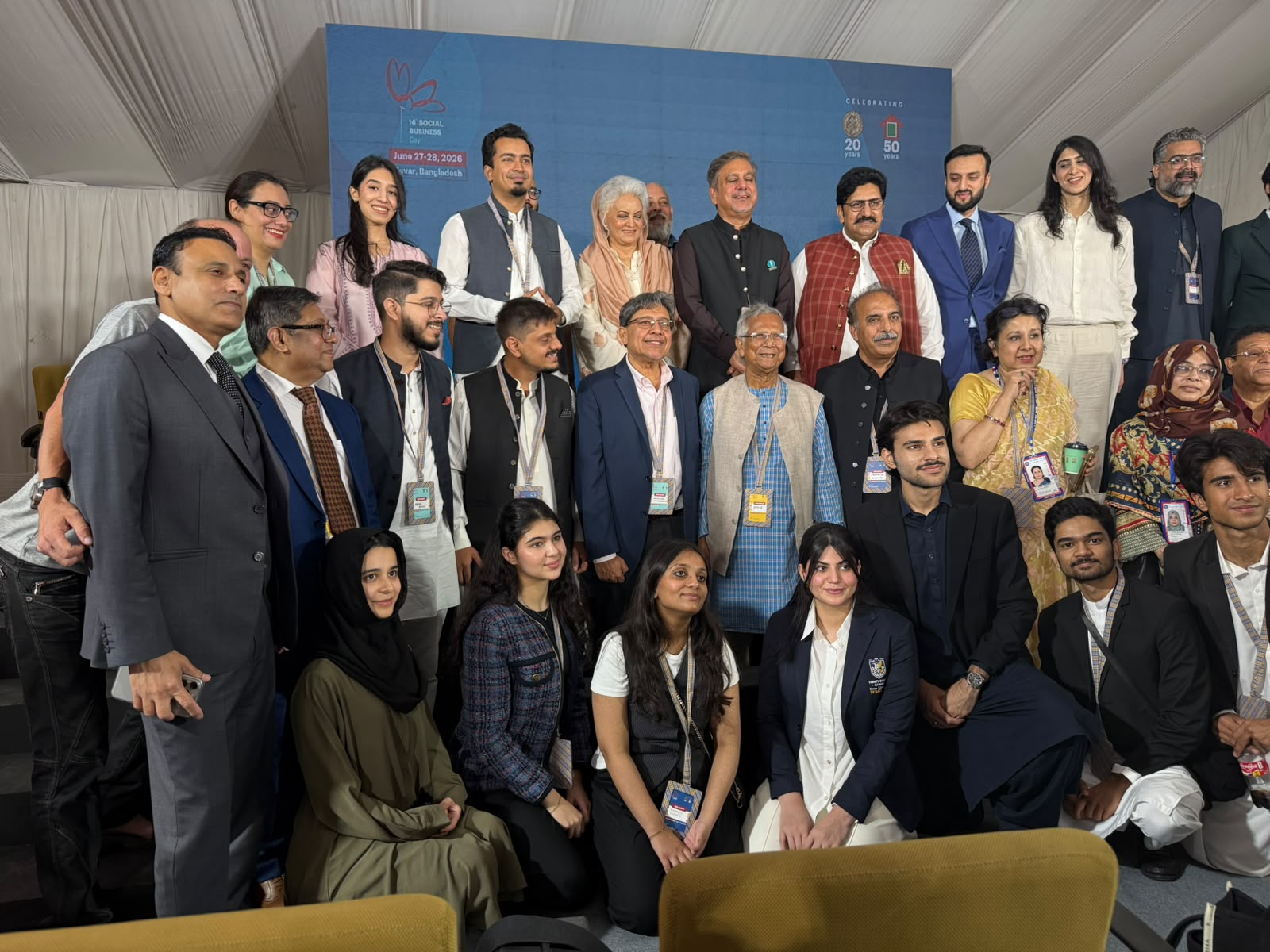
Before arriving, I had heard countless stories about Professor Muhammad Yunus. Everyone described him as exceptionally humble, simple and remarkably kind. Then I met him.
For two days he walked around the conference wearing a modest blue checked Bengali kurta, smiling at everyone. Despite constantly being surrounded by admirers, he somehow made every interaction feel personal. During one keynote address he shared an analogy that perfectly summarised his philosophy:
"Imagine taking the best seed from the tallest tree in the forest and planting it in a tiny flower pot. It grows into a bonsai. Is there something wrong with the seed? No. The only problem is that it never had enough soil to grow."
His argument was simple: poverty is rarely a failure of talent. It is usually a failure of opportunity.
The following day, our delegation had a private meeting with Professor Yunus. Only around twenty people sat inside the room. When my turn came, I told him I was working on my own alternative model for microfinance—one that attempts to replace financial interest with structured human capital contributions. Instead of merely repaying through money, borrowers would also contribute skills, mentoring and community service back to the institution.
He smiled immediately.
"That," he said, "is exactly how the next Nobel Prize winner is born."
I asked whether I could send him my research paper once it was complete. He agreed without hesitation. For a student still developing an idea, that encouragement was invaluable.
No conference hall, however impressive, could compare with visiting Jobra itself. The first Grameen branch remains remarkably modest: a small white building with simple rooms, chipped paint and no architectural grandeur. There were no symbols of institutional power—only history.
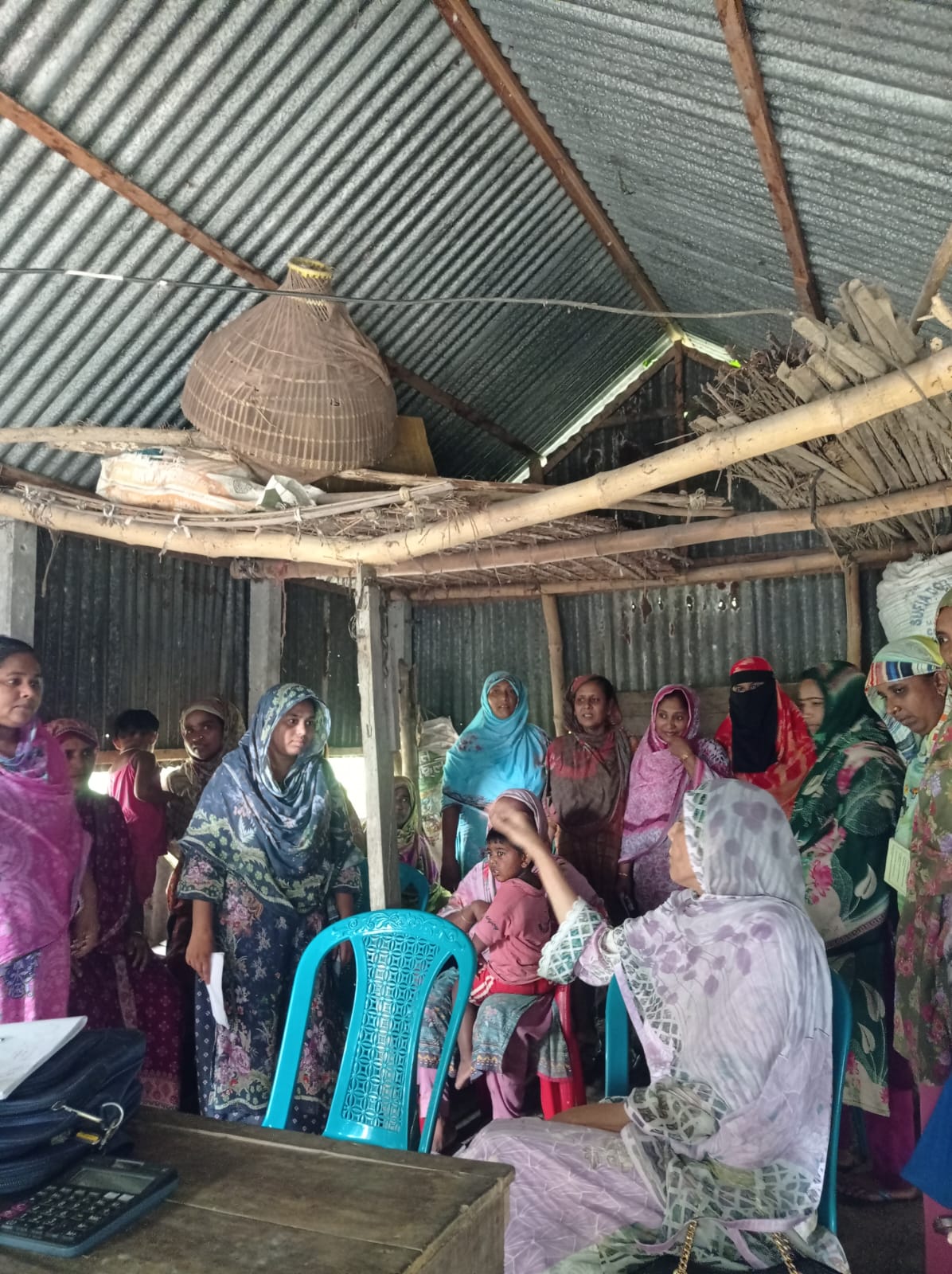
From there we travelled into nearby villages to meet borrowers. Many spoke only Bengali, so conversations required translation. Some women had borrowed modest sums to purchase livestock. Others had expanded family businesses, acquired land or financed microenterprises. What struck me most was not their income; it was their confidence. They spoke about Grameen with genuine affection rather than obligation. The villages, situated far from urban centres, reflected Grameen’s commitment to serving communities that conventional financial institutions rarely reach.
Curious about local perceptions, members of our delegation asked one woman what she thought about Pakistan.
She smiled warmly.
"Bhala." Good.
For me, that single word quietly dismantled decades of inherited assumptions. Politics had divided countries. Ordinary people had not.
Grameen’s lending philosophy rejects many conventions of traditional banking. Loans require no collateral, no mortgaged property and no deposited jewellery. Instead, borrowers join small community groups whose members support and monitor one another’s repayment behaviour. Responsibility remains individual, but accountability becomes social. Its repayment rates consistently remain among the highest in the microfinance sector.
But admiration should never replace critical thinking. Two aspects of the model left me unconvinced.
First was the group-based lending structure. While social collateral substitutes for physical collateral, it may unintentionally exclude those in greatest need. If borrowers naturally prefer reliable group members, would the poorest individuals—the very people microfinance seeks to empower—not become the least likely to be invited into those groups? In economic terms, the model risks creating adverse selection.
Second were interest rates. Although considerably lower than those charged by informal moneylenders, some Grameen loans still carry interest or service charges. For people whose scarcest resource is already money, asking them to return even more money raises an important question: can poverty truly be solved by making financial capital more expensive?
During one panel discussion, I raised these concerns publicly. To my surprise, the audience applauded. Several delegates later admitted they had been wondering the same thing but hesitated to question such a well-regarded institution. The response from senior Grameen representatives was thoughtful rather than defensive. They explained that social collateral replaces material collateral because it removes barriers to borrowing while encouraging financial discipline, while interest enables the bank to remain financially sustainable rather than dependent on charity. Their reasoning was persuasive. Yet I still left believing that another evolution in microfinance remains possible.
Leaving Bangladesh, I carried back more questions than answers. That, perhaps, was the greatest value of the journey. Grameen Bank has already transformed development economics by proving that poor people are bankable, responsible and capable of owning financial institutions themselves. Its legacy is unquestionable. But every great innovation invites the next one.
Perhaps the future of finance lies not in extracting more from what poor communities lack, but in recognising what they possess in abundance: time, skills, knowledge, community and human potential. Financial capital is scarce among the poor. Human capital is not.
That realization strengthened my conviction that future microfinance models should increasingly value human contribution alongside financial repayment. Instead of charging more money from those who already have the least, institutions could create systems where borrowers also repay by mentoring others, training future entrepreneurs or contributing meaningful service back to their communities.
The next breakthrough may not simply involve lending money differently. It may involve redefining what repayment itself means. Because ultimately, poverty is not merely a shortage of income. It is a shortage of opportunity. And finance, at its best, should exist to change exactly that.
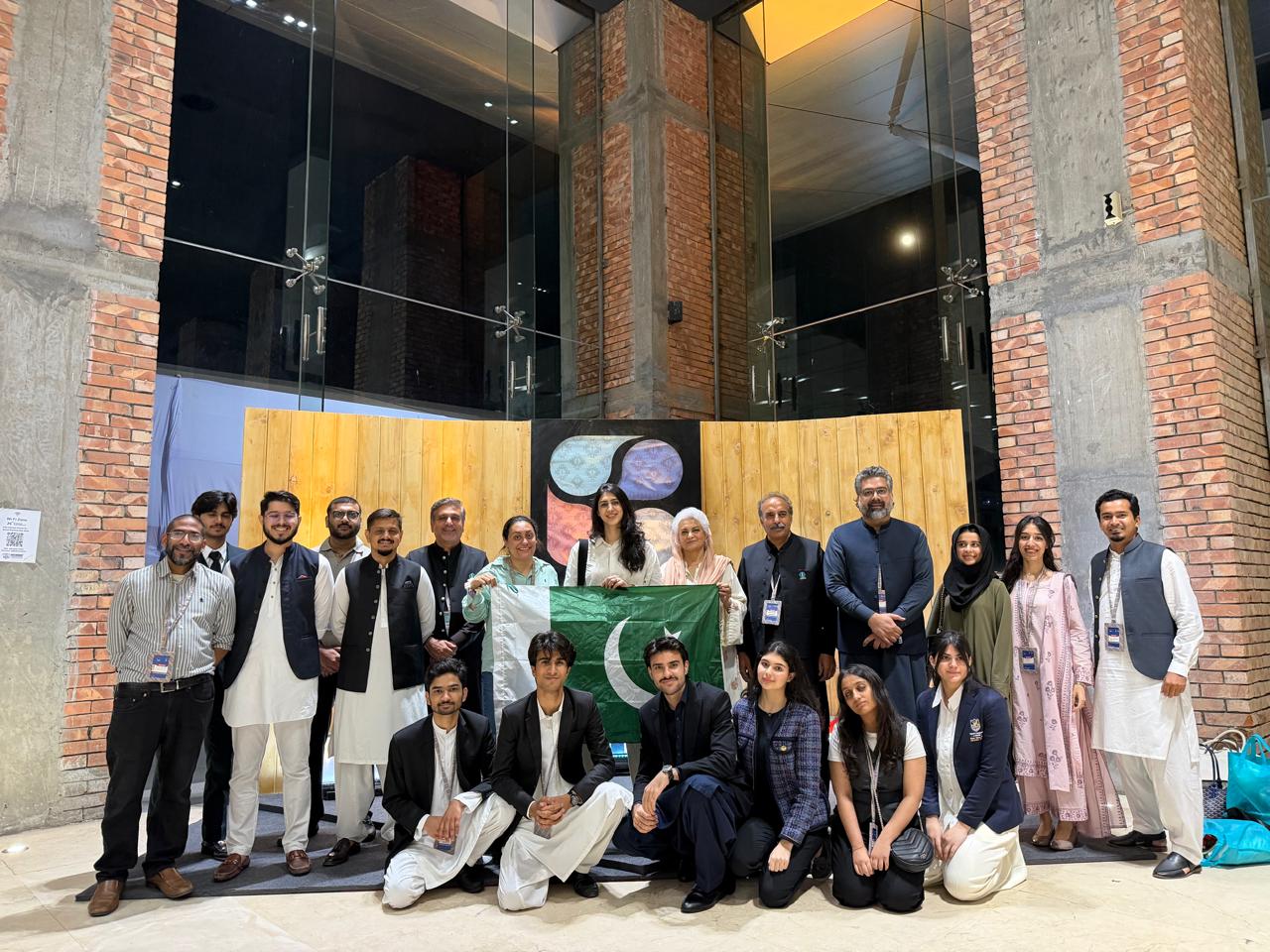

Eman Khan Niazi is an A-Level Economics student and independent researcher whose work focuses on microfinance, financial inclusion, and public policy. She is currently developing an alternative microfinance model centred on human capital repayment and has represented Pakistan at the 2025–2026 Grameen Social Business Conference in Bangladesh
View all articles →Comments
No comments yet. Be the first to join the discussion!


