

Killing of 11-year-old in West Bengal renews focus on sexual violence in India
The rape and killing of an 11-year-old girl in West Bengal has renewed scrutiny of sexual violence in India. Activists say legal reforms after the 2012 Delhi case have not addressed entrenched patriarchy, weak policing and judicial delays.

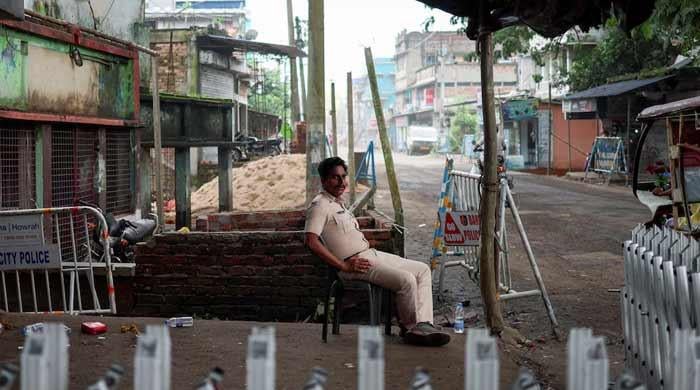
NEW DELHI: The rape and killing of an 11-year-old girl in India’s West Bengal state has renewed attention on the country’s persistent problem of sexual violence, with activists and lawyers saying tougher laws introduced after the 2012 Delhi gang rape have not addressed the deeper social and institutional failures behind such crimes.
According to a local investigating police officer, the girl left home on a Saturday evening earlier this month to attend a friend’s birthday party in the small eastern Indian town of Baruipur and did not return. Police said she was abducted, raped, placed in a sack and thrown into a pond while still alive. Her body, bearing bite marks and bruises, was recovered from a trash-strewn pond on the morning of July 5, a day after she went missing, according to police and local residents.
Her father, 46, told Reuters he had been unable to think clearly since the killing.
My mind is not working. I have not been able to think straight in days,
Reuters said it was withholding the identities of the child and her family because Indian law prohibits disclosure of information that could identify victims or survivors in such cases.
Cases remain high despite legal changes
Data from India’s National Crime Records Bureau shows more than 80 rapes are reported to police each day. The country recorded 29,536 rape cases in 2024, a figure that has changed little in recent years, while cases registered under the Protection of Children from Sexual Offences Act rose to a record 69,191.
Activists cited victim-blaming and social stigma as reasons many assaults never reach police. They also pointed to entrenched patriarchy, misogyny, understaffed police departments and long judicial delays as factors that help sustain a sense of impunity among perpetrators.
The 2012 gang rape and murder of a student on a bus in Delhi led to major legal reforms, including harsher punishments and the creation of fast-track courts. However, the latest government data shows that against an original projection of 2,600 fast-track special courts for sexual crimes by 2026, only 755 have been set up nationwide, including 410 exclusive POCSO courts.
Karuna Nundy, a lawyer involved in drafting anti-rape laws, said successive governments had failed to address the deeper roots of the crisis.
There needs to be a sustained effort towards changing behaviour at the community level,
It is crucial to recruit the right kind of police personnel and appoint judges who have a gender progressive understanding of these issues.
Satabdi Das, a Kolkata-based gender rights activist, said the issue extended beyond any single administration or state.
Nothing is going to change simply because the regime changes. This is a deep-rooted problem embedded in our patriarchal culture, not just in West Bengal but across India,
Pressure on authorities and wider concern
The case has put Prime Minister Narendra Modi’s Bharatiya Janata Party under scrutiny only months after it took power for the first time in West Bengal, where women’s safety had been one of its main campaign pledges.
In the Baruipur case, the girl’s family said a quicker police response to the missing-person complaint filed that night might have saved her life. A close friend of the family told Reuters that police did little beyond asking a few residents if they had seen her, after which locals themselves reviewed CCTV footage and obtained clips from two cameras.
Arvind Kumar Anand, a police officer in Baruipur, said the department was examining internal reports.
to see who made what mistake.
Public anger over slow court proceedings has also, according to rights activists, contributed to support for so-called encounter killings. In the Baruipur case, police said one suspect was killed after officers opened fire when he snatched a weapon from a police team. Agnimitra Paul, a BJP state minister in West Bengal, said four accused had been arrested and one was killed in an encounter.
The message is very clear from our government that we are not going to tolerate any kind of nonsense.
Rights advocates have criticised such killings as a bypassing of due process. Lawyer and rights activist Vrinda Grover said police shootings of suspects create an appearance of instant justice while expanding arbitrary state power.
Other recent cases
At least two other incidents in the past month have also attracted national attention. In Rajasthan, local police told Reuters that a 12-year-old girl was abducted, drugged and raped by several men over four days in different hotels before being rescued. Police said 22 people had been arrested in that case.
India’s National Commission for Women, a government-appointed watchdog, said the Rajasthan case exposed serious administrative failures, gaps in policing and weak monitoring that allowed the abuse to continue. Senior Rajasthan police officer Hari Shankar Yadav said the department acted quickly to arrest the main accused within hours of the case being registered and to rescue the child.
Separately, the Times of India reported on Monday that a seven-year-old girl was raped, killed and her body thrown into an empty shaft at an under-construction shopping mall in Ghaziabad, around 30 kilometres from India’s parliament.
Comments
No comments yet. Be the first to join the discussion!


