PMD warns of glacial lake flood risk in GB and KP as fresh weather system nears
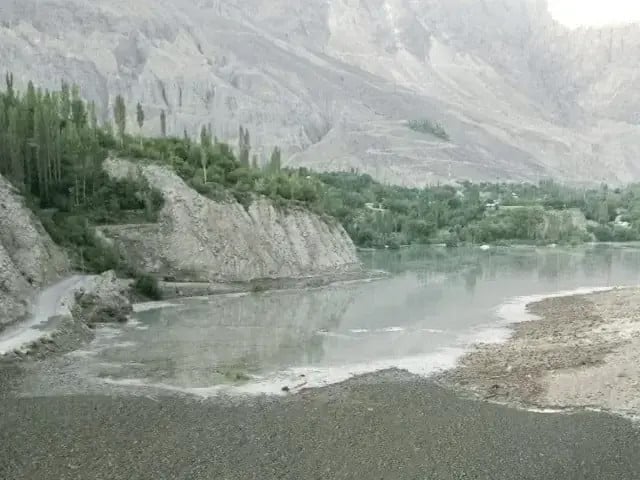
The Pakistan Meteorological Department has warned of possible glacial lake outburst floods in Gilgit-Baltistan and Khyber Pakhtunkhwa as a fresh westerly wave approaches. The advisory cites above-normal temperatures, expected rain and heightened risks of flash flooding and debris flows.

ISLAMABAD: The Pakistan Meteorological Department has issued an alert for possible glacial lake outburst floods in the country’s upper regions, including Gilgit-Baltistan and Khyber Pakhtunkhwa, as a fresh westerly wave is expected to affect the area in the coming week.
In its advisory issued on Saturday, the PMD said partly cloudy to cloudy conditions, along with moderate to heavy rain and thunderstorms, were likely in the glaciated valleys of GB and KP. The department said daytime temperatures in these valleys were already running above normal.
The PMD said the combination of higher temperatures and expected precipitation could sharply speed up snow and ice melt in glaciated areas. It warned that river flows were likely to stay elevated, while existing glacial lakes could grow and new lakes could also develop because of the large quantity of meltwater.
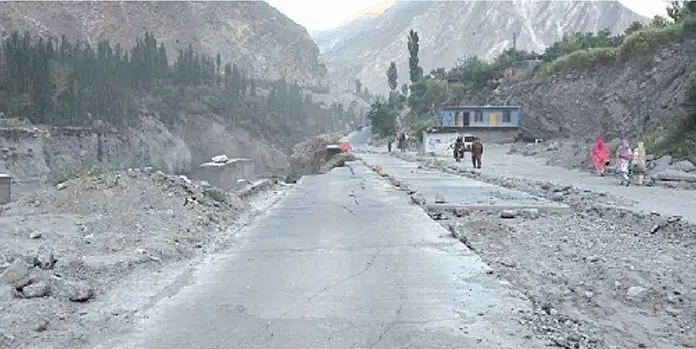
Downstream settlements considered vulnerable and low-lying areas along riverbanks could face sudden flooding, while flash floods remain a major risk in exposed locations. The department also warned that the rapid enlargement of glacial lakes could weaken natural ice or moraine dams and potentially trigger glacial lake outburst flood incidents.
The advisory further said thawing permafrost, along with excess surface water, could lead to mud and debris flows on mountain slopes. Residents and visitors in snow-covered and glaciated valleys were advised to avoid riverbanks, stream beds and local nullahs, and to keep watch on water bodies for abrupt or gradual changes in water levels.
The PMD also urged the public not to camp, trek or stay near rivers, streams, glacial lakes and narrow mountain valleys during the forecast period. It advised people to stay away from unstable slopes where melting snow may cause landslides or debris flows, and to regularly follow official forecasts and warnings issued by the department.
The department directed disaster management authorities and other relevant agencies to remain on round-the-clock alert and take all necessary precautionary steps.
A glacial lake outburst flood is the sudden release of water and debris from a glacial lake, which can cause loss of life, property damage and destruction of livelihoods in mountain communities. More than 7.1 million people in Gilgit-Baltistan and Khyber Pakhtunkhwa are vulnerable to the phenomenon.
Pakistan is home to more than 13,032 glaciers, described as the largest reservoir of glaciers outside the polar regions. Experts have warned that around 10,000 glaciers in Chitral and Gilgit-Baltistan have been reported to be receding because of climate change-driven temperature increases.
Earlier this year, in February, the National Emergencies Operation Centre issued an advisory on possible glacial lake outburst flood risks from March to September 2026, citing expected rising temperatures, shifting weather patterns and the possibility of early heatwave conditions in northern Pakistan.
Comments
No comments yet. Be the first to join the discussion!