

Swat faces renewed climate threat as flood warning revives past trauma
A fresh Glof alert for Swat has revived fears in a region already shaped by repeated floods and climate-linked disruption. A report says rising risk is being compounded by development in active floodplains and long-term social strain.

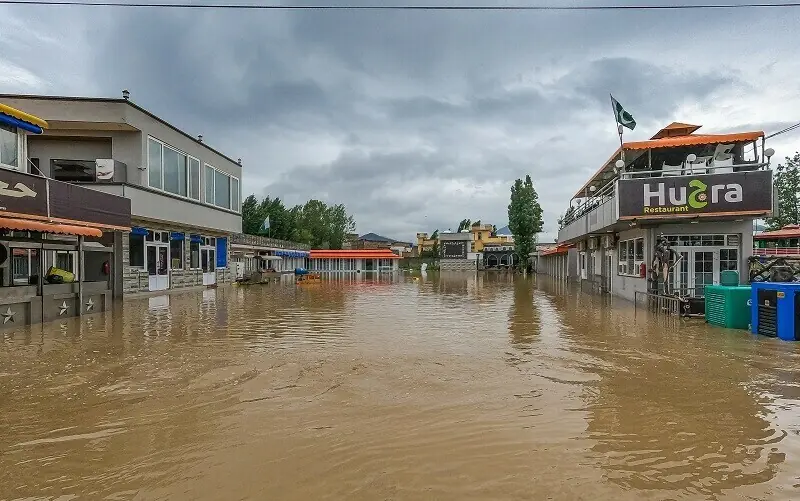
SWAT: A Glacial Lake Outburst Flood alert issued on June 27 for northern districts of Khyber Pakhtunkhwa, including Swat, has renewed concern in a region where residents have already endured years of climate-linked disruption. Authorities warned that rising temperatures could speed up snow and glacier melt in mountain valleys, increasing the likelihood of flash floods, landslides and sudden downstream inundation. They also called for monitoring of vulnerable locations, evacuation preparedness and public awareness in settlements near rivers and streams.
For many in Swat, the warning has revived memories of a crisis that has unfolded over more than a decade. The impact, has not been limited to damaged roads and destroyed bridges, but has also extended to displacement, altered landscapes and continuing uncertainty for communities living along the river system.
River changes and expanding exposure
The Swat River has historically shifted course, widened and reclaimed floodplains during periods of high flow. In recent years, however, the combination of changing climate patterns and expanding development has changed how settlements interact with the river. Satellite-based material published through Space4Climate, powered by the Pakistan Space and Upper Atmosphere Research Commission, highlighted that urban expansion into active floodplains at Bahrain increased exposure to flood damage.
Comparative imagery covering 2010 to 2022 showed extensive construction along parts of the river corridor before the destructive floods of August 2022, narrowing the river’s natural pathways. Pakistan has experienced 89 flood events over the past 25 years, with the effects growing more severe as urban expansion and development continue inside active riverbeds and floodplains. Suparco uses satellite-based monitoring to continuously assess river behaviour and nearby land use in support of flood risk reduction and climate-resilient planning.
Visible damage and social strain
The effects described extend beyond physical destruction. In Upper Swat, from Gabral to Mankiyal and from Matiltan to Daral, repeated floods and other climate-linked extremes since around 2010 have affected daily life. Teachers, local organisers and cultural workers have increasingly pointed to less visible consequences, including anxiety during monsoon periods, prolonged uncertainty for displaced families, changing settlement patterns and the gradual weakening of traditions tied to place.
Many younger residents now view their future in the valley through the lens of repeated disaster cycles. Local activists and researchers have argued that recurring environmental shocks in Upper Swat are affecting social cohesion, oral traditions, seasonal movement patterns and people’s sense of belonging. For many households, recovery is no longer a one-time rebuilding process but a recurring reality.
Calls for broader adaptation
Among those cited is Zubair Torwali, a cultural and linguistic activist and researcher from Upper Swat, who has argued in public discussions and writings that development and climate responses in mountain regions should not be confined to engineering measures alone.
He has said in various public forums and interviews over the years, while stressing that displacement and landscape transformation also put languages, memories and cultural practices at risk.
The August 2022 floods became a major turning point in this debate. Across northern Pakistan, extreme rainfall and swollen rivers overwhelmed settlements and infrastructure. In Bahrain and nearby parts of Swat, the destruction renewed debate over land use, river governance and construction inside active flood corridors. Later satellite assessments pointed to overlap between damaged buildings and historically active river areas.
The latest Glof warning has again placed Swat under pressure as climate scientists warn that warmer conditions can intensify hydrological extremes through faster glacier melt, heavier rainfall and unstable mountain systems. Authorities have advised communities to stay away from riverbanks, remain ready for evacuation and strengthen local monitoring. Scientists, meanwhile, have called for tighter floodplain regulation, better mountain planning, protection of natural river corridors and investment in community-based resilience, while local voices have said adaptation efforts must also preserve people’s connection to place.
Comments
No comments yet. Be the first to join the discussion!


