

Study finds humans and great apes share common laughter rhythm
A new study says humans and great apes share a similar rhythmic pattern in laughter. Researchers say the shared trait may go back to a common ancestor that lived about 15 million years ago.

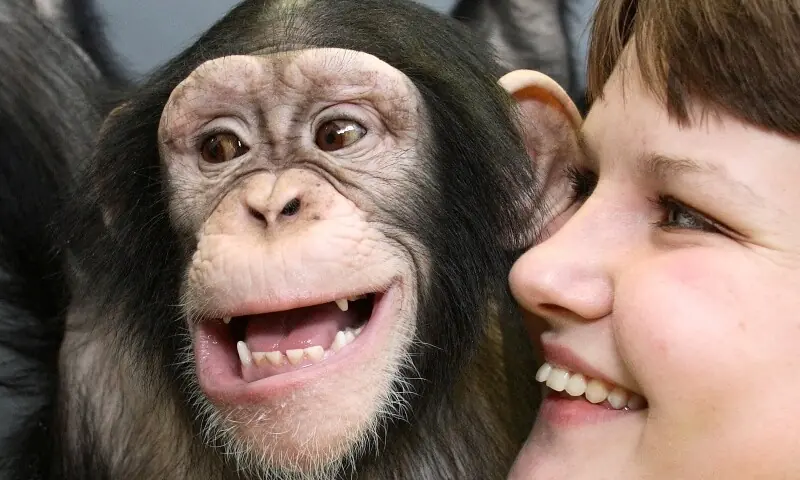
WASHINGTON: New research has found that humans and the great apes share a similar rhythmic structure in laughter, suggesting that this form of vocal expression has deep evolutionary roots.
The study compared laughter in humans with that of chimpanzees, bonobos, gorillas and orangutans. Researchers identified traits that are common across the species, while also noting features that appear to be distinctive to humans.
According to the study, laughter in all the species examined followed a regular rhythmic pattern, with evenly spaced intervals between successive sounds. Because this pattern was present in both humans and other great apes, the researchers said it may date back to their last common ancestor, which is believed to have lived around 15 million years ago in East or Central Africa.
Chiara De Gregorio, a primatologist and research fellow at the University of Warwick in England who led the study published in the journal Communications Biology, said human laughter remains closely linked to that of other great apes, even as it has developed distinct features over time.
“Human laughter shares the same basic evolutionary roots as great ape laughter, but it differs in important ways,” said Chiara De Gregorio, a primatologist and research fellow at the University of Warwick in England and lead author of the study published in the journal Communications Biology. “Human laughter is faster, more variable and more sensitive to social context than the laughter of other great apes. Chimpanzees and bonobos are indeed our closest relatives, and their laughter is generally more similar to ours than that of gorillas or orangutans.
Laughter is not exclusive to humans, despite its many forms in everyday life, ranging from amusement to discomfort or contempt. The findings add to evidence that some of the foundations of human social behaviour can also be traced in the species most closely related to people.
Comments
No comments yet. Be the first to join the discussion!


