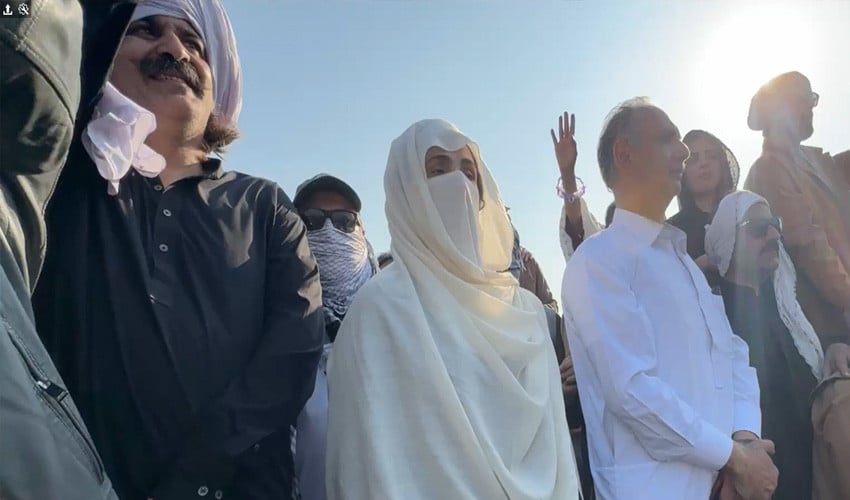
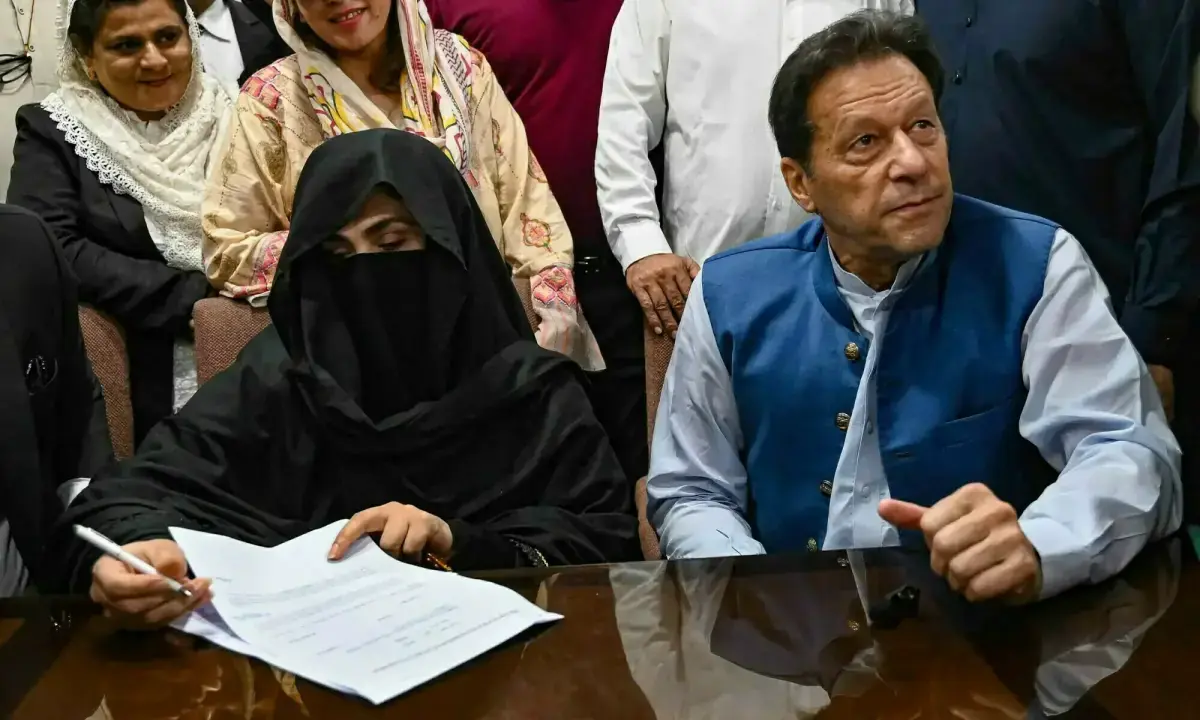
IHC reserves verdict on pleas over alleged solitary confinement of Imran, Bushra
The Islamabad High Court has reserved its verdict on whether petitions over the alleged solitary confinement of Imran Khan and Bushra Bibi are maintainable. NAB denied the allegation, while the petitioners argued the confinement was unlawful.

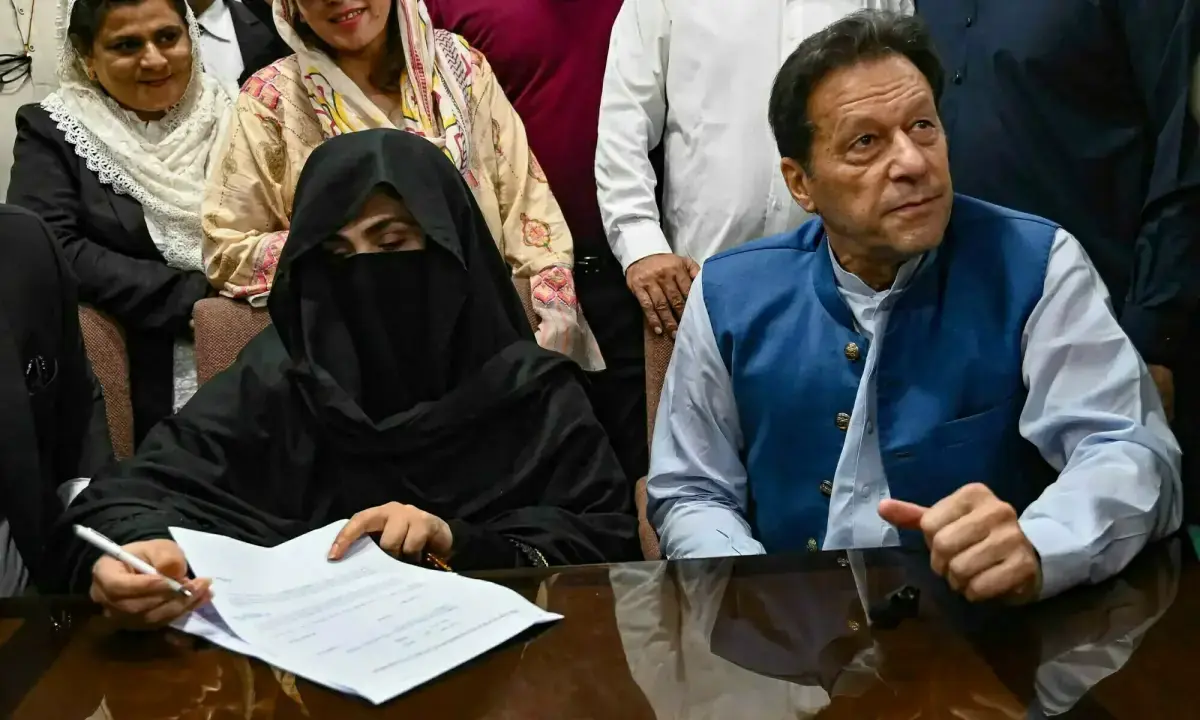
ISLAMABAD: The Islamabad High Court (IHC) on Tuesday reserved its decision on whether petitions challenging the alleged solitary confinement of jailed Pakistan Tehreek-e-Insaf (PTI) founder Imran Khan and his wife, Bushra Bibi, are maintainable.
The matter came before Justice Khadim Hussain Soomro, who heard arguments from counsel for the petitioners and the National Accountability Bureau (NAB). A day earlier, the court had set aside objections raised by the registrar office against the petitions, ordered that they be formally numbered and deferred the question of maintainability to the judicial side before adjourning the proceedings until Tuesday.
The petitions were filed by Aleema Khan on behalf of Imran Khan and by Mubashara Khawar Maneka on behalf of Bushra Bibi. Barrister Salman Safdar, appearing for the petitioners, told the court he would first address the plea filed by Bushra Bibi’s daughter and sought to complete his arguments quickly because he was due before a division bench later in the day. Justice Soomro remarked with a smile "We have also sacrificed our tea."
Petitioners’ arguments
Barrister Safdar argued that both the Lahore High Court and the IHC had previously relied on the Begum Shamim Afridi case in matters relating to solitary confinement. Referring to objections raised by the NAB prosecutor in proceedings linked to the £190 million case appeals, he said no earlier relief had been sought specifically on solitary confinement.
He placed on record a miscellaneous application filed in those appeals and said it only sought signatures on a power of attorney. He argued "There is no mention of solitary confinement in that application or in the written order passed that day,", adding that the issue had appeared only in the grounds as background while applications for suspension of sentence were pending.
Safdar further told the court that Bushra Bibi’s case was without precedent and described it as the first case in Pakistan in which a female prisoner was allegedly being kept in prolonged solitary confinement. He said that after her conviction she had initially been shifted to Bani Gala and confined to a room, and added that no trial or remand proceedings were currently pending against her.
When asked by the bench whether he had recently met his clients, the lawyer said he had met the PTI founder during a court-authorised visit but had not been allowed to meet Bushra Bibi for the past seven months. Citing an earlier judgment by Justice Miangul Hassan Aurangzeb concerning Bushra Bibi, he argued that the situation had remained unchanged despite the passage of time.
Referring to the United Nations Standard Minimum Rules for the Treatment of Prisoners, also known as the Nelson Mandela Rules, Safdar submitted that Imran Khan, 74, had lost vision in one eye, had been taken to hospital five times and was allegedly being kept in solitary confinement for 22 hours a day without access to newspapers, television or regular meetings. He further alleged that Bushra Bibi had been kept alone for 24 hours a day, despite both having undergone eye surgeries.
NAB opposes maintainability
NAB prosecutor Rafay Maqsood opposed the petitions and argued that they were not maintainable. He said the earlier judgment of Justice Aurangzeb could be distinguished because that petition had been filed by Bushra Bibi herself, whereas the current pleas had been moved by her daughter and Imran Khan’s sister.
He also argued that the Begum Shamim Afridi case concerned detainees who had not been convicted, while the present matter involved convicted prisoners serving sentences in Adiala Jail in a financial corruption case. Referring to the Nusrat Bhutto case, he said it arose under martial law and involved constitutional questions under Article 184(3), making it irrelevant to the current proceedings.
The prosecutor maintained that neither Aleema Khan nor Mubashara qualified as aggrieved persons and therefore lacked locus standi to invoke the court’s constitutional jurisdiction. In response to a question from the bench, he denied that either prisoner was being kept in solitary confinement and stated "There is no solitary confinement, absolutely not",adding that the petitioners had not first approached jail authorities or exhausted alternative remedies under prison rules before invoking Article 199 of the Constitution.
According to the NAB prosecutor, prison rules adequately govern the treatment of convicted prisoners, the allegations were not backed by independent material, and regular meetings had continued during the past year. He also argued that the petitioners were seeking indirectly the same relief that had already been declined in other proceedings.
In rebuttal, Barrister Safdar said the NAB prosecutor was defending jail authorities instead of limiting his arguments to NAB’s role. He maintained that the court had earlier made observations regarding Bushra Bibi’s confinement and said the precedents cited by the prosecution did not curtail the court’s constitutional power to examine allegations of unlawful solitary confinement. After hearing both sides, Justice Soomro reserved the verdict on the admissibility of the petitions.
Background of the pleas and case
In her petition filed last week, Aleema Khan described her brother’s detention conditions as unlawful and inhumane. According to the plea, a lawyers’ meeting held on April 8 indicated that Imran Khan had been kept in solitary confinement for 22 hours a day, while Bushra Bibi was allegedly held in isolation for 24 hours a day. Mubashara’s petition said her mother was being unlawfully kept in solitary confinement and asked the court to declare it illegal and set it aside.
Imran Khan, imprisoned since Aug 5, 2023, is serving a 14-year sentence at Adiala Jail in Rawalpindi in the £190 million case, also called the Al-Qadir Trust case. On Jan 17, 2025, an accountability court in Islamabad sentenced Imran Khan and Bushra Bibi to 14 years and seven years in prison, respectively, in the case. Both later challenged their convictions before the IHC.
The case alleges that the couple received billions of rupees and land measuring hundreds of kanals from Bahria Town Ltd in return for legalising Rs50 billion that had been identified and returned to Pakistan by the United Kingdom during the PTI government.
Comments
No comments yet. Be the first to join the discussion!