

June 28, 2026
China, Central Asian states agree joint satellite network for disaster monitoring
China and several Central Asian countries have signed an agreement to build a joint five-satellite constellation for disaster monitoring. The project will use remote-sensing data and AI tools to track hazards including earthquakes, pests and glacial melt.

June 28, 2026
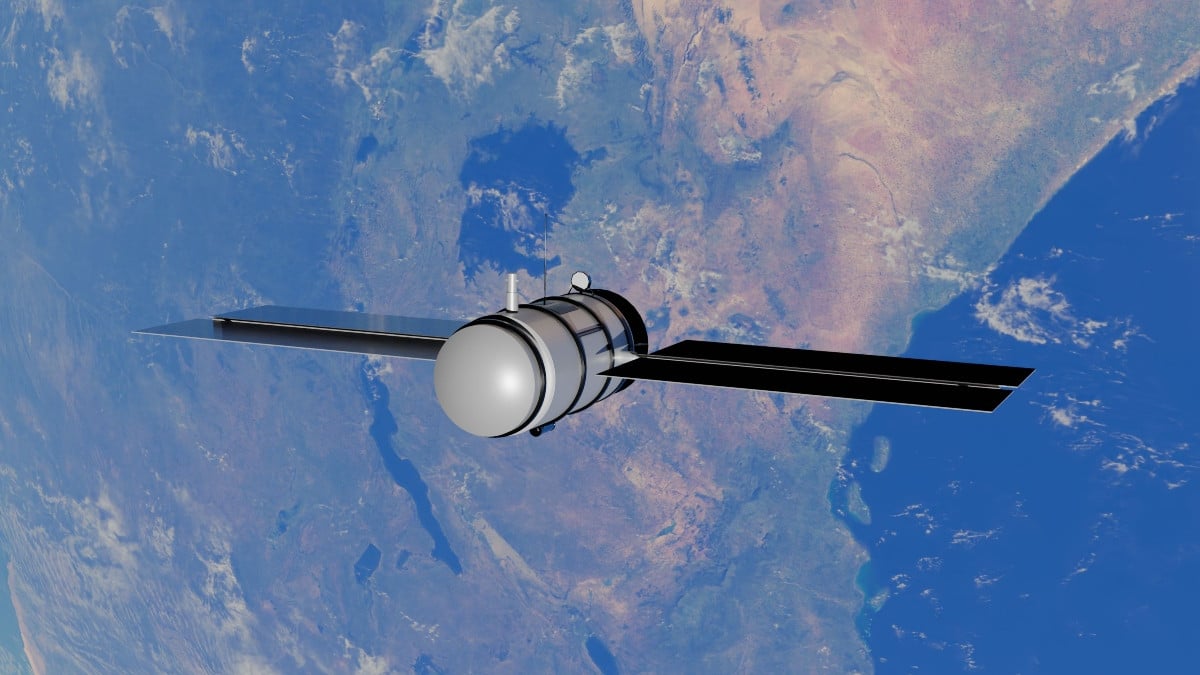
URUMQI: China and several Central Asian countries have agreed to develop a joint satellite constellation aimed at sharing remote-sensing data and responding to common hazards including earthquakes, agricultural pests and glacial flood risks.
The cooperation agreement was signed on Thursday during the 9th China-Eurasia Expo in Urumqi, the capital of China’s Xinjiang Uygur Autonomous Region. Scientists involved in the initiative said the network, named Tianwu Constellation, will begin with five satellites.
Shared threats across the region
Tong Qingxi, a remote-sensing specialist at the Chinese Academy of Sciences, said Xinjiang shares similar geographic conditions with neighbouring Central Asian countries and faces many of the same geological threats, including earthquakes, landslides and flooding linked to glacial melt. He said the joint constellation has been planned to meet these common disaster-prevention requirements.
Speaking about the initiative, Tong said it reflected broader regional cooperation under the Belt and Road framework.
Scientists involved in the project said the plan goes beyond placing satellites in orbit and is intended as an integrated air-space-ground system operating through intelligent coordination.
AI-based processing in Xinjiang
Under the arrangement, satellite data gathered across the region will be processed at a computing centre in Xinjiang. Researchers said artificial intelligence models will be developed there for forecasting geological disasters, identifying agricultural pest threats and monitoring glacier melt.
Chen Xi, an academician of the International Eurasian Academy of Sciences who has long researched glacial geology, said Xinjiang and nearby Central Asian states are connected through the same mountain systems. He said glaciers in those areas have shrunk by 20 to 40 per cent in recent years.
According to Chen, frequent and accurate satellite observation of glacier change would help support water allocation decisions and strengthen regional water supply security.
Central Asian participation
Scientists from Kazakhstan, Uzbekistan and Tajikistan were present at the signing ceremony and voiced confidence that the project would be beneficial for all sides.
Akobir Mirzorakhimzoda, vice president of the National Academy of Sciences of Tajikistan, said the use of advanced technologies such as satellite networking and artificial intelligence would make it possible to monitor and analyse environmental indicators in real time, creating a dependable basis for decision-making.
He made the remarks in comments carried by Xinhua.
0 Comments
No comments yet. Be the first to join the discussion!


