June 28, 2026
AJK shutdown begins to ease as traders, transporters end boycott
Markets, shops and public transport in Muzaffarabad division will resume from Sunday after traders and transporters end a days-long shutdown, citing security assurances and uninterrupted fuel supplies, as the JAAC-led agitation shifts to political demands.
June 28, 2026

Markets, shops and public transport across Muzaffarabad division to reopen from tomorrow
Trade bodies cite security assurances, uninterrupted fuel supply after days-long shutdown
Representatives say movement shifted from public issues to political, constitutional agenda
Transporters announce service restoration after administration guarantees security
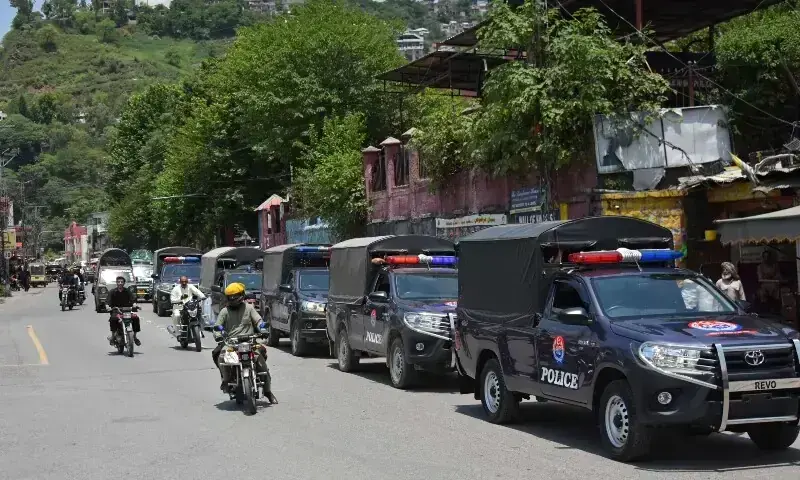
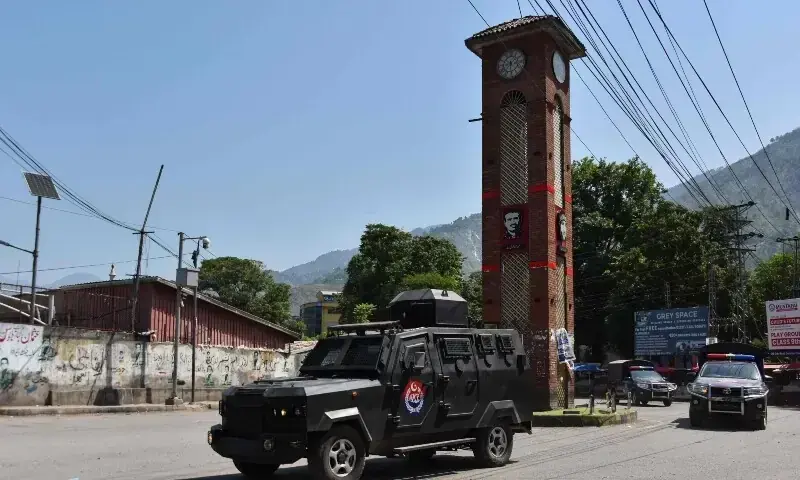
MUZAFFARABAD: Markets, shops and public transport across Muzaffarabad division are set to resume normal operations from Sunday after traders and transporters announced an end to their shutdown, following assurances from the administration of foolproof security and uninterrupted fuel supplies amid the ongoing agitation in Azad Jammu and Kashmir (AJK).
The announcement, made on Saturday by representatives of traders and transporters from Muzaffarabad division, marked the first major break in the shutdown that has disrupted normal life across parts of AJK for several days.
Addressing a joint press conference at the Central Press Club, representatives of traders' bodies and the transporters' union distanced themselves from the ongoing agitation led by the proscribed Joint Awami Action Committee (JAAC).
The press conference was addressed by Markazi Anjuman-i-Tajiran Muzaffarabad Senior Vice Chairman Gohar Kashmiri, President of Madina Market Traders Association Raja Abrar Mustafa, and Divisional Transport Operators Union President Khawaja Azam Rasool, along with office-bearers of several other trade bodies, including Banaras Zaman Bhatti of the Barbers and Beauticians Association and Raja Asif of the Poultry Dealers Association.
The representatives alleged that the movement, which they had initially supported over public issues such as subsidised electricity and flour, had deviated from its original objectives after June 9 and was now pursuing a political and constitutional agenda beyond the mandate of traders and transporters.
The regional administration and the JAAC have remained at odds over the past month on several issues, most notably the committee's demand to abolish the 12 seats in the AJK Legislative Assembly reserved for refugees from Indian-occupied Jammu and Kashmir who settled in mainland Pakistan after 1947. The resulting sit-ins had brought various parts of the region to a standstill earlier this month.
The representatives urged protesters to resolve outstanding issues through dialogue, appealed to traders to reopen their businesses, and called on the authorities to restore internet services to facilitate commercial activity.
As news of the announcement spread through the city, shops in several neighbourhoods of Muzaffarabad began reopening on Saturday afternoon, although commercial activity remained limited in many areas.
Meanwhile, in Poonch division, more than 100 residents staged a demonstration in Hajira, demanding that JAAC activists remove blockades from the two main roads linking the town with Rawalakot and Abbaspur.
The demonstrators warned that if the roads were not reopened, they would remove the blockades themselves on Sunday and also resume business activities in the town.
During the press conference, Gohar Kashmiri said traders had played a key role in the JAAC movement while it remained focused on securing relief for ordinary citizens, including subsidised electricity and flour. However, he said traders had not been consulted when the movement changed course and could not associate themselves with developments after June 9, when the JAAC called for a strike.
He said the inclusion of the issue of the 12 reserved seats for refugees from occupied Jammu and Kashmir in the charter of demands had shifted the movement's focus, even though it was a constitutional matter that should be resolved through legal and democratic means.
"We do not understand why there was such insistence on this issue. Negotiations require flexibility from both sides if disputes are to be resolved," he said.
Maintaining that their movement had always remained peaceful, Kashmiri said challenging the writ of the state was unacceptable and urged traders to pursue their outstanding issues through negotiations with the government rather than confrontation.
Raja Abrar Mustafa said traders had supported the campaign for nearly three years while it remained centred on public issues such as affordable flour, electricity and healthcare.
"The issue of the 12 reserved seats is a constitutional matter that can only be resolved by the elected assembly. It is not for traders to decide," he said.
"We stood with the JAAC as long as it remained on the right course. But after it was declared proscribed and matters began moving in another direction, we collectively decided that we would neither remain part of it nor continue supporting it," he added.
Stressing that Pakistan was their country, Mustafa said traders respected its institutions and armed forces and urged young people not to allow themselves to be drawn into unrest.
He also appealed to the authorities to restore internet services and ensure uninterrupted diesel and petrol supplies, saying businesses had suffered because of the disruptions.
Public transport resumes from Sunday
Khawaja Azam Rasool, who also serves as administrator of the Muzaffarabad Municipal Corporation, said transporters had joined the movement in its early stages and that he himself had been a member of its core committee. However, they decided to part ways after the JAAC continued expanding its demands despite the government's acceptance of key economic demands.
Parliamentary Affairs Minister Tariq Fazal Chaudhry has maintained that 35 of the 38 demands agreed between the JAAC and the government last October had already been fulfilled.
Rasool explained that transport services had remained suspended not because transporters supported the strike, but because road blockades and fuel shortages exposed valuable public transport vehicles to the risk of damage.
"Now that the administration has assured us of fuel supplies and security, public transport across Muzaffarabad division will resume from Sunday," he said.
Rasool added that transporters could never support any movement directed against Pakistan or its armed forces, adding that constitutional issues such as the 12 reserved seats had nothing to do with the concerns of traders and transporters, whose priorities centred on taxation, municipal services and business-related matters.
0 Comments
No comments yet. Be the first to join the discussion!