

June 25, 2026
Pakistan, Iran agree to boost road and rail connectivity for enhanced trade
Pakistan and Iran will strengthen road and rail links and restart the Pakistan-Iran Joint Transport Committee to tackle border, transit and truck clearance delays, boosting trade and investment.
June 25, 2026
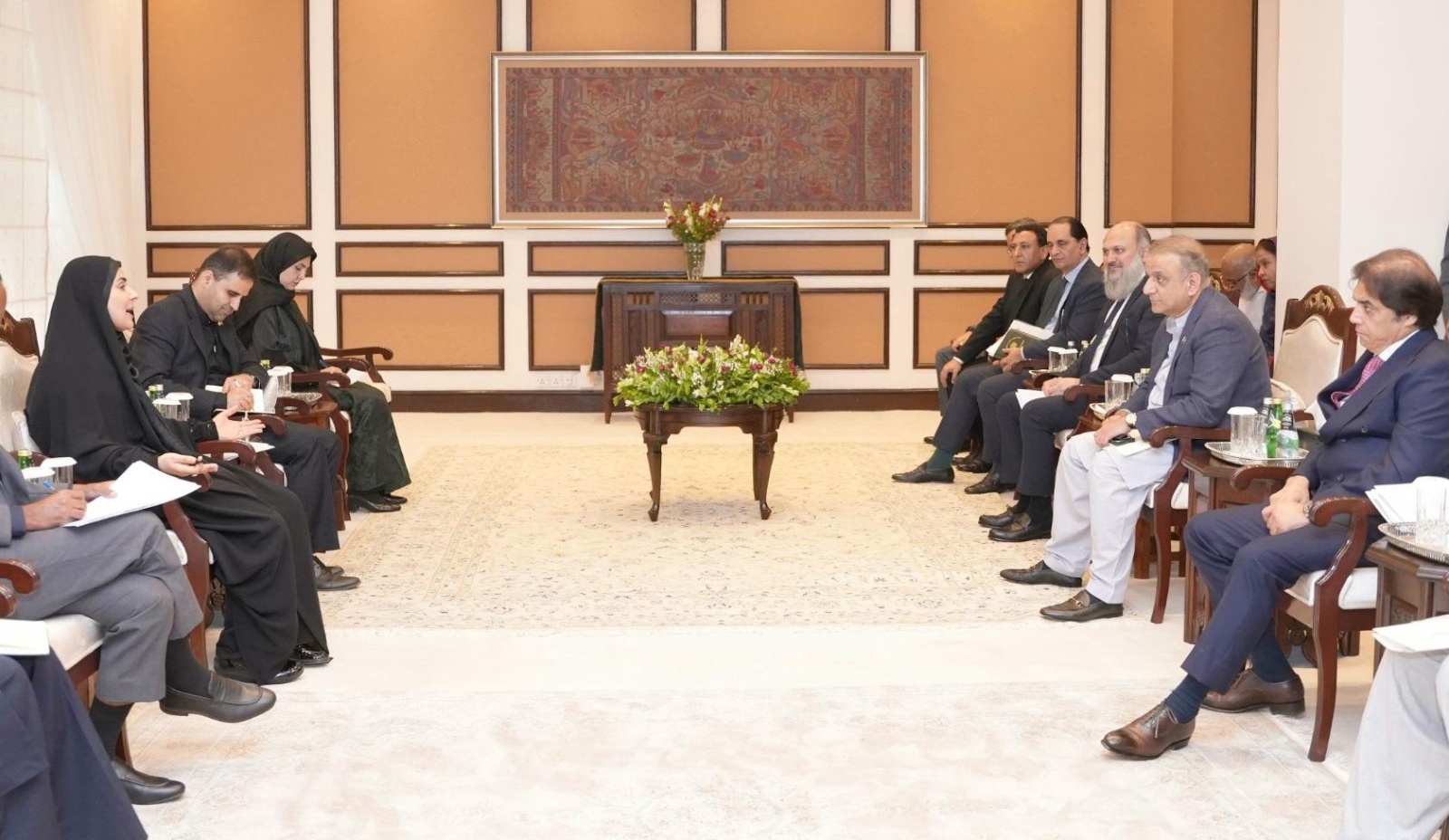
ISLAMABAD: Pakistan and Iran have agreed to strengthen bilateral transport cooperation by enhancing road and rail connectivity and reactivating the Pakistan-Iran Joint Transport Committee to address longstanding border and transit-related challenges.
The understanding was reached during a high-level meeting between Iran’s Minister for Roads and Urban Development Farzaneh Sadegh and Pakistan’s Minister for Communications Aleem Khan, according to an official statement issued on Thursday.
The meeting formed part of ongoing efforts by both countries to deepen economic engagement, improve regional connectivity and facilitate cross-border trade.
During the discussions, both sides reviewed proposals aimed at improving transportation infrastructure and enhancing connectivity between the two neighbouring countries.
Aleem Khan welcomed the restoration of peace and stability in the region and emphasised that stronger road and rail networks would open new avenues for trade, investment and economic cooperation.
He noted that improved connectivity would not only facilitate the movement of goods and people but also contribute to strengthening the longstanding brotherly relations between Pakistan and Iran.
“Enhanced transport infrastructure can serve as a catalyst for regional commerce and mutual economic growth,” he observed.
A key outcome of the meeting was the decision to reactivate the Pakistan-Iran Joint Transport Committee, a bilateral mechanism designed to address transportation, transit and border management issues.
Officials from both countries agreed that the committee would play an important role in resolving operational bottlenecks, improving coordination and facilitating smoother movement of cargo and commercial vehicles across the border.
The committee is expected to provide a structured platform for addressing pending transport matters and promoting greater cooperation in logistics and transit management.
The Iranian minister raised concerns regarding the clearance and movement of trucks and containers operating between the two countries.
In response, both sides agreed to pursue joint measures aimed at removing obstacles affecting cross-border transportation and ensuring more efficient trade flows.
Officials discussed practical solutions to streamline customs procedures, reduce delays and facilitate uninterrupted movement of goods through designated border crossings.
The two countries also expressed their commitment to resolving outstanding transport-related issues through regular consultations and institutional cooperation.
Farzaneh Sadegh thanked Pakistan for its constructive role in promoting peace and stability in the region.
She acknowledged Islamabad’s diplomatic efforts that contributed to the recent ceasefire and broader peace initiatives, describing Pakistan as a valued partner committed to regional harmony.
“We appreciate the support and cooperation extended by our Pakistani brothers,” the Iranian minister said.
Her remarks reflected Tehran’s recognition of Pakistan’s role in facilitating dialogue and supporting diplomatic efforts aimed at reducing tensions in the region.
The meeting was attended by several senior Pakistani cabinet members, including Railways Minister Hanif Abbasi, Commerce Minister Jam Kamal Khan, and Minister for Maritime Affairs Junaid Anwar Chaudhry.
Their participation underscored the significance attached by Islamabad to expanding transport, trade and economic cooperation with Iran.
The presence of ministers overseeing railways, commerce and maritime affairs highlighted Pakistan’s broader strategy of integrating transportation networks and enhancing regional connectivity.
The latest engagement comes amid a series of high-level exchanges between Islamabad and Tehran aimed at strengthening bilateral relations across multiple sectors.
Earlier this week, Iranian President Masoud Pezeshkian visited Pakistan along with Foreign Minister Abbas Araghchi and Interior Minister Eskandar Momeni.
During the visit, the Iranian delegation held meetings with President Asif Ali Zardari, Prime Minister Shehbaz Sharif and Chief of Army Staff and Chief of Defence Forces Field Marshal Syed Asim Munir.
In a separate meeting on Wednesday, Interior Ministers Mohsin Naqvi and Eskandar Momeni also agreed to enhance cooperation in security, counterterrorism, cybersecurity and immigration management.
Observers view the renewed focus on transport and infrastructure cooperation as a significant step toward unlocking the economic potential of Pakistan-Iran relations.
Improved road and rail connectivity is expected to facilitate trade, strengthen regional supply chains and support broader efforts to enhance economic integration across South and West Asia.
The decision to revive institutional mechanisms and address long-standing transport challenges reflects the shared determination of Islamabad and Tehran to transform their geographic proximity into greater economic opportunity and strategic cooperation.
0 Comments
No comments yet. Be the first to join the discussion!


