June 23, 2026
Why seashells pile up on Karachi’s beaches during the monsoon
Karachi’s annual buildup of seashells during June and July is linked to monsoon-driven upwelling that brings low-oxygen deep water toward the coast. Researchers and fishermen say the 2026 accumulation appears higher than usual.

June 23, 2026
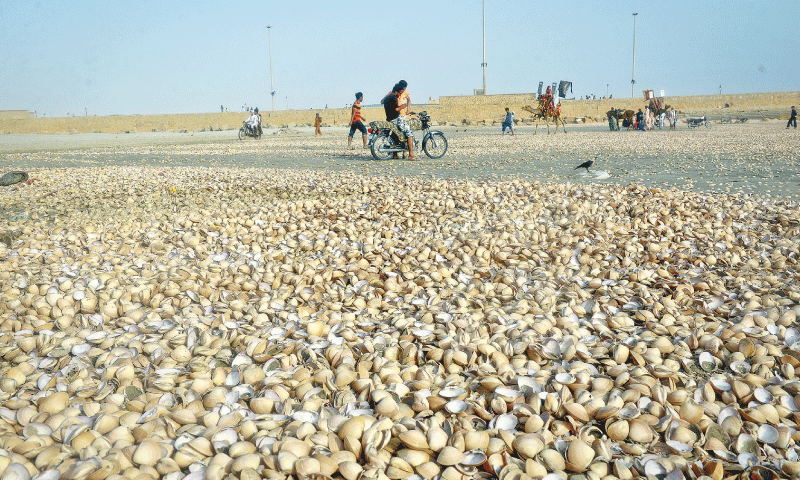
KARACHI: Large numbers of seashells washing onto Karachi’s beaches around June and July is a recurring seasonal phenomenon linked to monsoon-driven changes in the Arabian Sea, according to historical reports, scientific studies and fishermen familiar with the coastline.
The occurrence has again drawn attention this June, with beachgoers seeing thick spreads of shells along the shore and questioning whether the buildup reflects an environmental disturbance or a normal natural process. Earlier records show the same pattern has been observed for years. A report from July 17, 2009 recorded white and yellow shells appearing overnight at Clifton Beach, while another report from May 21, 2016 said wave action had dislodged shellfish, particularly Venus clams known locally as burgar, from shallow sub-tidal habitats and carried them onto beaches, where they died and left behind empty shells. The same event was also reported on May 22, 2016. Those reports linked the development to the onset of the monsoon.
Seasonal pattern and local observations
An Aaj News report dated July 10, 2024 also described June and July as the usual seasonal period for the phenomenon, while adding that growing pollution may be increasing marine deaths in some years and contributing to more shells reaching the shore.
Majeed Motani, president of the Pakistan Fisherfolk Forum, said the event is long known among coastal communities as aokar and is seen not only at Clifton but along other parts of Karachi’s coast, including Ibrahim Hyderi. He said the process has been observed over decades as water from deeper parts of the sea rises and helps drive shells toward the shoreline.
"We have been witnessing this phenomenon for decades, particularly during June and July,"Motani said, adding that water from deeper parts of the sea rises to the surface and eventually pushes the seashells toward the shore, where they are deposited along the coastline.
What research says
Scientific studies describe the mechanism as upwelling. When the southwest monsoon sets in around June, strong winds move warmer surface water away from the coast and pull colder water upward from deeper layers of the sea. Research published in the Journal of Sea Research says this deeper water is low in oxygen, and when it spreads along the seafloor it can kill bottom-dwelling marine life such as clams and other shellfish that cannot move away quickly. Their shells are then brought ashore by strong monsoon waves.
Another paper, published in Deep-Sea Research, found that cold, oxygen-poor water begins appearing off Karachi as early as June and remains present through November, matching the period when the highest concentrations of shells are seen along the coast. A separate study said the monsoon season also coincides with the time when marine invertebrates are most abundant in coastal waters near Karachi, meaning shellfish numbers are high just as ocean conditions become more hostile.
This year’s larger buildup
2026 may differ from other years because the volume of shells appears higher than usual. Motani told iVerify Pakistan that this year’s accumulation seems greater than normal.
Fatima Yamin, a climate change and disaster management expert, said the Indian National Centre for Ocean Information Services issued a Marine Heatwave Advisory in April, placing parts of the Arabian Sea, including the coasts of Pakistan, India and Bangladesh extending towards Oman, on high alert because of increased sea surface temperature anomaly.
"It is yet to be seen if it affects deep waters, but it would impact the continental shelf. This correlates with the accounts of fishermen who have not seen such a large number of marine shell life washed onshore before. Warmer temperatures in the sea surface can also change the oxygen levels, causing marine life to die in water and can cause marine mammals to rise to the surface for oxygen,"she said.
How the shells are used
According to Motani, the shells are also a source of livelihood for some families living near the coast. He said they are collected, cleaned with chemicals and other methods, and turned into jewellery, photo frames, flower pots, decorative items and other handicrafts for sale in markets.
Research into industrial uses for seashell waste has found that shells can be processed into bio-calcium carbonate through high-temperature calcination. When used as a filler in high-density polyethene, the material was found to improve thermal stability, crystallinity and tensile strength, while only slightly reducing flexibility.
0 Comments
No comments yet. Be the first to join the discussion!