June 23, 2026
SC upholds life sentences for man convicted of killing parents
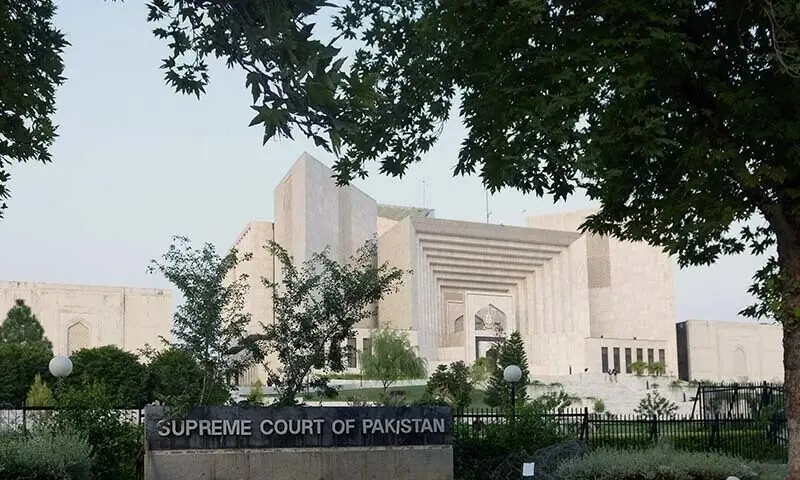
The Supreme Court has upheld life imprisonment for Taimoor Sattar in the 2010 murder of his parents. The court also ordered that the two life sentences would run consecutively.

June 23, 2026

ISLAMABAD: The Supreme Court on Monday upheld the life imprisonment of a man convicted of murdering both his parents in 2010, while expressing alarm over the gravity of parricide and its wider social consequences.
A three-member bench headed by Justice Muhammad Hashim Khan Kakar, and comprising Justice Salahuddin Panhwar and Justice Ishtiaq Ibrahim, dismissed the jail petition of Taimoor Sattar. The court, however, ordered that the life sentences awarded on the two counts would run consecutively.
In the ruling, Justice Kakar said the killing of one’s parents amounted to a serious assault on the moral and social order and warned that, if unchecked, such crimes could undermine the stability of family life in society. Referring to the case, the judge observed that the murder of the convict’s defenceless parents inside their own home was an aggravating factor justifying stern punishment.
“The cold-blooded murder of his own defenceless parents, who raised him, in such a callous manner within the secure premises of their own house, is an aggravating circumstance that warrants a severe penalty,” lamented Justice Muhammad Hashim Khan Kakar.
Trial and appeal history
Taimoor Sattar had been tried by a trial court, which sentenced him to death on two counts and directed him to pay Rs50,000 in compensation to the legal heirs over the killings of his father, Abdul Sattar, and mother, Shamim Sattar.
He later challenged that verdict before the Lahore High Court. On Oct 7, 2015, the LHC converted the death penalty into life imprisonment on each count and also extended to him the benefit of Section 382-B of the Criminal Procedure Code.
Prosecution case and evidence
According to the judgement, the incident took place on Feb 10, 2010, inside the family home, where the petitioner allegedly killed his father with a hammer. The motive assigned to the crime was resentment over the father’s refusal to transfer property in his name. Justice Kakar noted that the prosecution case presented an unusual and deeply troubling instance involving both patricide and matricide.
The judgement said the prosecution relied on an extra-judicial confession, medical evidence, recoveries, forensic material and an inculpatory statement made by the petitioner under Section 342 of the CrPC. It also recorded that the crime was reported without delay and that the parties were already known to each other, leaving no room for manipulation or mistaken identity.
The record showed that complainant Zafar Iqbal stated during his examination-in-chief that the petitioner confessed before him twice — first over the telephone and then again in the presence of another witness, Muhammad Rafique Sajid, while fleeing in a car. The court said no prior hostility or ulterior motive on the part of these witnesses had been shown that could damage their credibility, and noted that their testimony remained consistent despite cross-examination.
The court further observed that the account given by the witnesses was materially supported by the medical evidence. It said the crush injuries to the skulls of both deceased persons pointed to the use of a blunt object and matched the nature of the recovered weapon. The recovery of the hammer and the petitioner’s blood-stained clothes from his bedroom on his own pointing out was also cited as corroborative evidence. The forensic record, the judgement added, showed that the blood-stained earth, the hammer and the clothes all carried human blood.
Sentence maintained
On the issue of punishment, the Supreme Court said the petitioner had failed to point to any mitigating circumstance that would warrant leniency. It concluded that there was no lawful basis to interfere with the Lahore High Court’s judgement, holding that the verdict suffered from neither misreading nor non-reading of the evidence.
0 Comments
No comments yet. Be the first to join the discussion!