June 23, 2026
Judicial Service Tribunal to hear nearly 30 appeals by judges today
A Judicial Service Tribunal of the IHC is set to hear around 50 appeals by nearly 30 judges from Islamabad’s subordinate judiciary. The cases concern promotions, adverse ACRs and alleged supersession dating back to the 2021 promotion process.

June 23, 2026

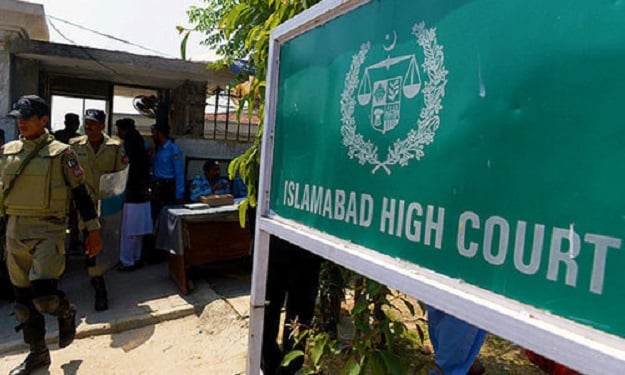
ISLAMABAD: A three-member Judicial Service Tribunal of the Islamabad High Court (IHC) is set to take up on Tuesday around 50 appeals filed by nearly 30 judges from the capital’s subordinate judiciary, who have challenged supersession, refusal of promotions and adverse annual confidential reports (ACRs) that they say were used against them during the 2021 promotion process.
The tribunal comprises Justices Muhammad Azam Khan, Muhammad Asif and Raja Inaam Ameen Minhas. It will examine complaints by judicial officers who have questioned both the standards applied in preparing their performance evaluation reports and the manner in which some of their juniors were promoted ahead of them.
The petitioners include district and sessions judges, additional district and sessions judges, senior civil judges and civil judges. Their appeals contest evaluation reports as well as promotion-related decisions. These officers have been awaiting a decision on their pleas for nearly four years, with the matters remaining pending before the Judicial Service Tribunal.
Promotion and evaluation disputes
The judges have argued that adverse or downgraded ACRs damaged their chances of promotion despite their judicial work, experience and length of service. Some officers have separately challenged their supersession before the tribunal.
Among the cases drawing particular attention is that of Judge Ihtasham Alam Khan. He had been declared among the best judges of the year, but his evaluation report was later reduced. He questioned the basis on which his ACR was downgraded and argued that the revised report ultimately led to the denial of his promotion, while some of his juniors were elevated.
The appeals listed before the tribunal include those filed by Judges Sikandar Khan, Muhammad Abbas Shah, Hafeez Ahmed, Salman Badar, Qudratullah, Sayyed Faizan Haider, Muhammad Sohail, Muhammad Naseeruddin, Mubeshar Hassan, Nasrumminalah, Muhammad Azhar Nadeem, Syed Faizan Haider Shah, Malik Muhammad Imran, Ihtasham Alam Khan, Muhammad Shoaib Akhtar, Shahzad Khan, Raja Farrukh Ali Khan, Muhammad Naveed Khan, Shaista Khan Kundi and Naima Iffat. Several of the judges have filed more than one petition concerning promotions, adverse ACRs and alleged supersession, and the appeals were submitted over different periods.
Long-running concerns in subordinate judiciary
The dispute reflects broader concerns within Islamabad’s subordinate judiciary over career progression. Judicial officers have complained that opportunities for advancement in the federal capital’s judicial system have remained limited despite long years of service.
Gaining promotion in Islamabad’s subordinate judiciary has become increasingly difficult, with at least four judicial officers resigning in recent years after seeing no clear path for advancement. Although some officers were promoted earlier, other judges objected and alleged that some of those elevated had links with certain lawyers’ chambers from their time in practice.
Those allegations prompted debate in legal circles over the transparency of the promotion process. The matter also reached the Supreme Judicial Council when lawyer Murtaza Qureshi filed a reference against an IHC judge. Along with other allegations, the reference accused the judge of showing favouritism in the promotion of subordinate judiciary judges. The complainant also alleged that when the judge was serving as president of the Islamabad High Court Bar Association, he had sought the transfer of judicial officers working in Islamabad on deputation from other provinces.
0 Comments
No comments yet. Be the first to join the discussion!