June 18, 2026
Global fossil fuel use must halve by 2035 to keep warming below 1.5C, analysis says
A new Climate Analytics analysis says global fossil fuel use must fall 50pc by 2035 and reach zero by 2070 to keep warming below 1.5°C by century’s end. The study also warns against investing in new oil and gas fields.
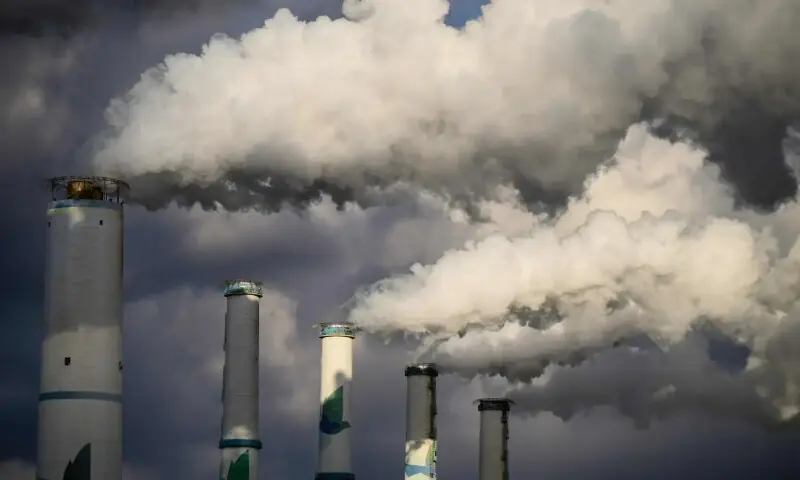
ISLAMABAD: Global use of fossil fuels needs to be cut by half by 2035 and eliminated by 2070 to keep end-of-century warming below 1.5°C and avoid the worst effects of climate change, according to a new analysis released by Climate Analytics on the sidelines of the UN climate talks in Bonn.
The analysis was based on the Highest Possible Ambition scenario developed by Climate Analytics and the Potsdam Institute for Climate Impact Research. Under that pathway, fossil fuel production and consumption peak in 2025, decline by 20pc by 2030, fall by 50pc by 2035 and reach zero worldwide by 2070.
The study said fossil fuel production and use were responsible for 70pc of global emissions in 2023, making the shift away from oil, gas and coal the single biggest lever available to reduce emissions. It also argued against investment in new oil and gas fields.
According to the same scenario, global carbon dioxide emissions reach net zero around 2045, net zero greenhouse gas emissions are achieved around 2060, and temperatures rise to a peak of 1.7°C before dropping to well below 1.5°C before the end of the century.
Warning against new oil and gas expansion
Climate Analytics chief executive Bill Hare said new oil and gas fields were inconsistent with any credible move away from fossil fuels. "Governments and fossil fuel companies continue to pour billions into expanding production, particularly of fossil gas. This is a fast-track pathway to climate chaos,” he added.
Dr Neil Grant, senior expert on mitigation pathways at Climate Analytics, said the findings pointed to the need for deep cuts this decade. “Fossil fuels are still pouring oil on the climate fire. Our analysis is clear: we need to cut fossil fuel use sharply this decade, halve it by 2035, and drive it down to real zero by 2070,” said Dr Neil Grant, senior expert, mitigation pathways at Climate Analytics.
Pakistan transition can move at its own pace
Speaking to Dawn, Dr Grant said Pakistan was already seeing a market-led shift away from fossil fuels through rapid solar uptake across the country. He said this trend was being driven by citizens opting for cheaper and cleaner electricity instead of fossil-fuel-based energy, which he described as volatile and unreliable.
“In Pakistan, the market is already driving the phase-out, and we’re seeing a huge wave of solar installation across the country. This is driven not by government leadership but by individual citizens choosing cheap and clean electricity over volatile and unreliable fossil fuels,” he told Dawn.
He also said planned oil and gas developments in Pakistan carried significant risk because there was no certainty that demand for fossil fuels would remain when such projects eventually started operating. “There’s no certainly that, when these projects finally come online, that there will be the fossil fuel demand to meet them. A much surer bet would be to invest in the economy of the future: solar, batteries, electrification,” he said.
Dr Grant said countries did not all need to move at the same speed, but all of them needed to make the transition. In his view, countries such as Pakistan could move more gradually, but still had to plan for a complete phase-out of fossil fuels by 2070. “Countries like Pakistan can transition more slowly, but they still need to plan for their destination – zero fossil fuels by 2070.”
0 Comments
No comments yet. Be the first to join the discussion!