June 15, 2026
PCB announces new five-track central contracts system from July 2026
The PCB has introduced a new five-track central contracts system for players from July 2026, with greater format-specific classification and a stronger focus on Test cricket. The board said selection will be primarily data-driven and confirmed no changes to the selection committee or coaching staff.

June 15, 2026
LAHORE: The Pakistan Cricket Board has unveiled a new framework for awarding central contracts from the next fiscal year starting on July 1, 2026, introducing a five-track structure while leaving the national selection committee and coaching set-up unchanged.
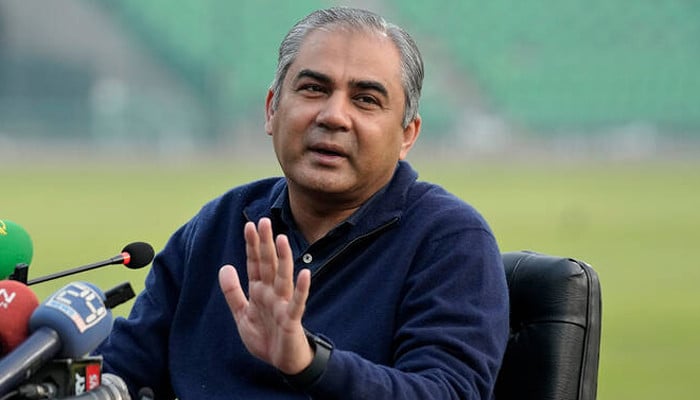
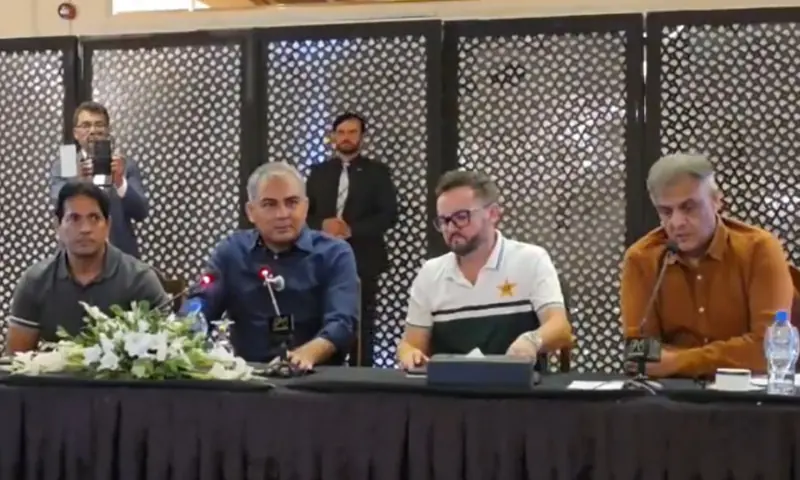
PCB Chairman Mohsin Naqvi announced the changes at a press conference at a local hotel on Monday. He was joined by High Performance Centre Director Aaqib Javed, white-ball head coach Mike Hesson, PCB Chief Medical Officer Dr Javed Mughal and other officials. Earlier in the day, Naqvi met 49 players from Pakistan’s red-ball and white-ball squads, who are attending training camps in Lahore, and briefed them on the revised contracts model.
Although Naqvi had indicated during a media interaction on Saturday that broader changes within the PCB structure were possible, Monday’s announcement centred on overhauling the central contracts mechanism.
Five categories under revised model
Under the new system, players will be placed in five categories instead of the earlier four: Track AB, Track A, Track BC, Track C and Track D.
According to the PCB, Track AB will be the dual-format category for cricketers involved in Test and One-day International cricket. The board described it as the highest level of commitment for Pakistan’s leading multi-format players and said those in this bracket would not be treated as short-format players by default.
Track A has been created for red-ball specialists, with the PCB saying it is intended to recognise and safeguard players committed to Test cricket. Track BC will cover white-ball specialists who feature in ODIs and Twenty20 Internationals, effectively absorbing what had earlier been a separate ODI category.
Track C is meant for T20 franchise specialists and gives formal recognition to players focused on the shortest format, with greater room to pursue franchise cricket around national duties. Track D will serve as a development category for younger players linked to the National Cricket Academy and the broader high-performance system.
Assessment and contract principles
The PCB said the revised structure rests on two main principles. First, players will be judged only against others in the same track rather than against players committed to other formats. Second, each senior track will contain two internal tiers so that a player’s position can move up or down on the basis of performance without changing playing format. The Development Track will remain a single tier.
The board also said it would not make public the distribution of contracts within each track, stating that the number and allocation of deals would remain a selection matter to be reviewed every cycle rather than disclosed as a fixed figure.
Test cricket focus and overseas red-ball window
Placing special emphasis on Test cricket, the PCB announced what it called a significant policy shift for dedicated red-ball players. For the first time, Pakistan’s Test specialists will be allowed to participate in overseas first-class competitions in leading red-ball environments, though they will still not be permitted to join franchise T20 leagues under that category.
In its statement, the PCB said the move was intended to strengthen Test cricket by exposing players to demanding first-class conditions abroad and improving their preparation for Pakistan.
Naqvi, Aaqib and Hesson outline rationale
Naqvi said the selection process would be driven largely by data, with analytics carrying 85 per cent weightage and selectors accounting for the remaining 15 per cent. He said national team selection would rest on fitness and medical evaluations, compulsory participation in domestic cricket and performances on the field.
Speaking about accountability in the system, Naqvi said
Assessment is structured rather than impressionistic. The process is documented and no single individual’s preference determines an outcome. Players are recognised for the commitment they make and the cricket they play, and the board can stand behind every decision it takes.
Naqvi added that the PCB was extending all possible support to players. He said Pakistan had produced encouraging results in bilateral cricket but had not met expectations in major tournaments, including events organised by the International Cricket Council and the Asian Cricket Council. He added:
Work is underway to improve results in those tournaments as well.
Aaqib Javed, the former Pakistan fast bowler who is currently serving as a selector, said the changes would make Test cricket more attractive through better financial returns, including improved match fees. At the same time, he cautioned against expecting a sudden transformation, saying
No one can guarantee that the team will start winning within a specific timeframe or that it will not lose matches in the future.
Mike Hesson said he believed the reforms would help Pakistan secure the desired results over the longer term. Responding to a question, Dr Mughal said it was not possible to carry out players’ physical fitness tests before the media, which he noted had been done by the PCB in the past.
0 Comments
No comments yet. Be the first to join the discussion!