Policy decisions of statutory bodies beyond court intervention, says LHC
The Lahore High Court has dismissed a public interest petition on electricity loadshedding, gas shortages and energy governance, ruling that such policy matters fall within the domain of statutory regulators. The court also imposed Rs100,000 in costs on the petitioner.

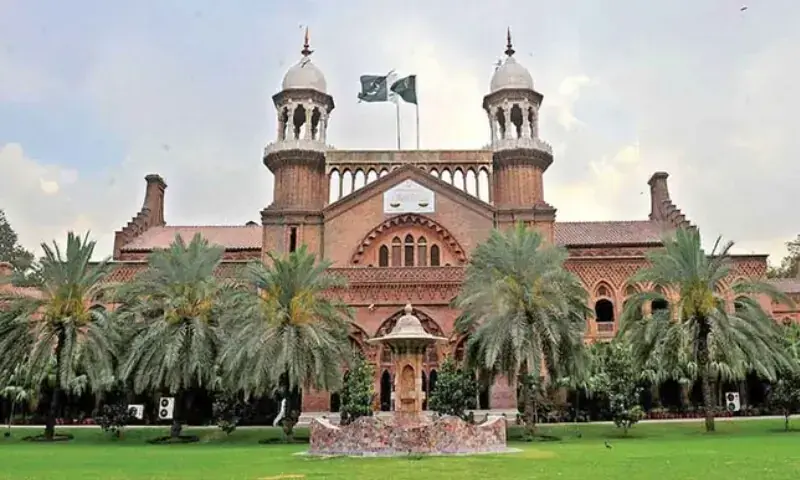
LAHORE: The Lahore High Court has dismissed a public interest petition seeking broad directions on electricity loadshedding, gas shortages and governance in the energy sector, ruling that courts cannot step into policy domains assigned by law to specialised statutory regulators.
In a detailed judgement, Justice Khalid Ishaq held that the judiciary cannot function as a regulator or an appellate forum over bodies such as the National Electric Power Regulatory Authority and the Oil and Gas Regulatory Authority, nor replace the assessment of expert institutions unless their actions are shown to be arbitrary, mala fide or without lawful authority.
The court also imposed punitive costs of Rs100,000 on the petitioner, finding that the case was based on allegations that were vague, generic and unsupported. The judgement directed that the amount be deposited in the dispensary fund of the Lahore High Court Bar Association within 45 days. It added that the order on costs would remain suspended for 30 days to allow the petitioner to pursue an appeal if it chose to do so.
Judgement stresses limits of judicial review
Justice Ishaq said public interest litigation remained an important legal instrument but had to be used with great care, caution and circumspection. The judgement said courts must ensure that petitions filed under the banner of public interest are not driven by private malice, vested interests or a desire for publicity.
The judge observed that the judiciary was required to discourage such litigation where necessary so that the course of justice was not polluted or obstructed. He said a genuine public interest case must be brought in good faith, pursue a public purpose rather than a private objective, and rest on substantiated and verifiable facts.
Referring to Supreme Court precedents, the judgement said speculative, hypothetical or malicious challenges to executive functions could not be entertained in the name of public interest litigation. It further stated that courts must distinguish between bona fide public interest cases and petitions merely labelled as such for ulterior motives, including attempts to gain publicity or bypass statutory remedies.
On the question of judicial review, the judge held that matters concerning electricity and gas tariffs, procurement, distribution, regulatory supervision and energy policy involve technical, financial and administrative questions better addressed by forums created under the law. The judgement added that while courts may intervene to safeguard fundamental rights, restraint was required in matters tied to executive policy, warning that unchecked intervention in areas such as price control, procurement oversight and energy regulation could have significant national and international consequences.
Petition and response
The petition had been filed by the Judicial Activism Panel against the federation, the Punjab government, Nepra, Ogra, electricity distribution companies and several other public authorities. It sought declarations relating to electricity loadshedding and gas shortages, directions for uninterrupted energy supply to courts, hospitals and other public institutions, formulation of energy policies, the setting up of inquiry commissions and accountability proceedings against officials allegedly responsible for the energy crisis.
The court, however, said the petitioner had not availed the remedies available under the laws governing Nepra and Ogra and concluded that no case for judicial interference had been made out.
Reacting to the ruling, Judicial Activism Panel chairman Advocate Azhar Siddique described the judgement as erroneous and said the court had exceeded its jurisdiction in deciding the matter. He said the Lahore High Court had already issued several rulings on the same legal questions and maintained that the petition had been filed because of the continuing energy crisis and the hardships faced by consumers.
"There is widespread concern over the energy crisis and the plight of consumers. I merely brought the issue before the court," Azhar Siddique said.
He also called the judgement an attempt to strengthen the executive at the cost of judicial oversight and said he expected to challenge the ruling in appeal while urging bar councils to take notice of the matter. "I can foresee more such judgments from the LHC in the coming days."
Comments
No comments yet. Be the first to join the discussion!