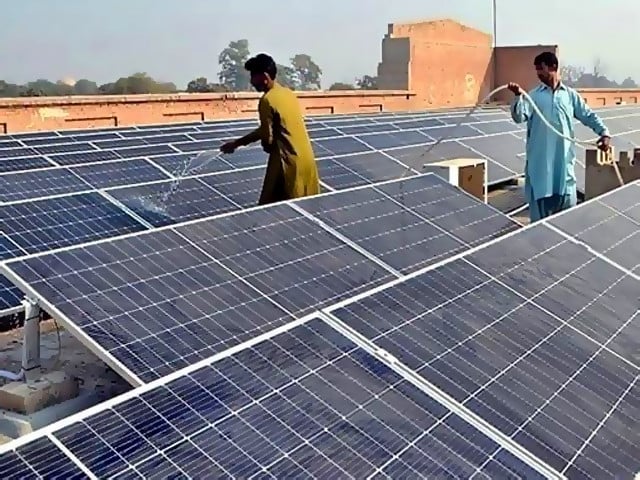
'New industrial power tariff optional'
The Power Division says the proposed two-part electricity tariff for industry will be voluntary, not mandatory. It says the structure is designed for round-the-clock industrial users with stable demand and could help spread fixed costs over higher sales.

ISLAMABAD: The Power Division said on Thursday that a proposed two-part electricity tariff for industrial consumers will be offered as an optional arrangement, adding that industries will be free to either adopt the new structure or stay on the current tariff system.
In an official statement, the division said there would be no requirement for any industrial consumer to move to the alternative regime. The clarification came after reports that the government had shared a plan with the International Monetary Fund under which the fixed portion of electricity bills would be linked to consumption from the national grid.
Alternative structure aimed at specific users
According to the Power Division, the proposed model uses a different cost allocation method. It would involve comparatively higher fixed charges along with lower variable energy charges, with rates differing across various time periods, including hours associated with solar generation and night-time use.
The division said the purpose of the proposed design is to give consumers another tariff option that may better suit their operating and consumption patterns. It added that the structure is intended particularly for process industries and other users operating around the clock with high utilisation levels and steady demand, as such consumers may find the arrangement more economical and predictable.
The statement said any industrial consumer that finds the proposed model unsuitable for its business needs can continue under the existing tariff regime without facing any adverse consequences. However, the Power Division did not officially clarify whether an industrial consumer that opts into the new policy would be able to immediately return to the normal tariff system if its grid consumption drops significantly.
Government expectations and rationale
According to the proposal shared with the IMF, fixed costs would be spread over a larger volume of electricity sales, which would in turn lower the per-unit cost of power. The government is expecting that demand could rise by around 1,000 megawatts within six to 12 months of implementation, though it said the actual outcome would depend on market response and the level of participation.
The Power Division said discussion on energy-sector reforms should be based on accurate facts and technical understanding. It also said the optional tariff should not be described as a punitive step against solar adoption, warning that such characterisation could create unnecessary confusion among consumers and stakeholders.
The division further said that, at present, the energy component for all consumers is far higher than the fixed cost being recovered from them, even though fixed charges have been raised repeatedly over time. A spokesman said many industrial consumers keep a high sanctioned load or maximum demand indicator capacity while using relatively small amounts of electricity. He said the power sector still has to maintain generation, transmission and distribution infrastructure to provide standby availability for such users, and that this system carries fixed costs regardless of actual consumption.
Comments
No comments yet. Be the first to join the discussion!