Talking about money
The article reviews Pakistan’s annual policy statements, focusing on Finance Minister Muhammad Aurangzeb’s Budget Speech—public spending plans, revenue measures, and how tax proposals affect implementation timelines.

The speech that is more than a speech
AT PENPOINT
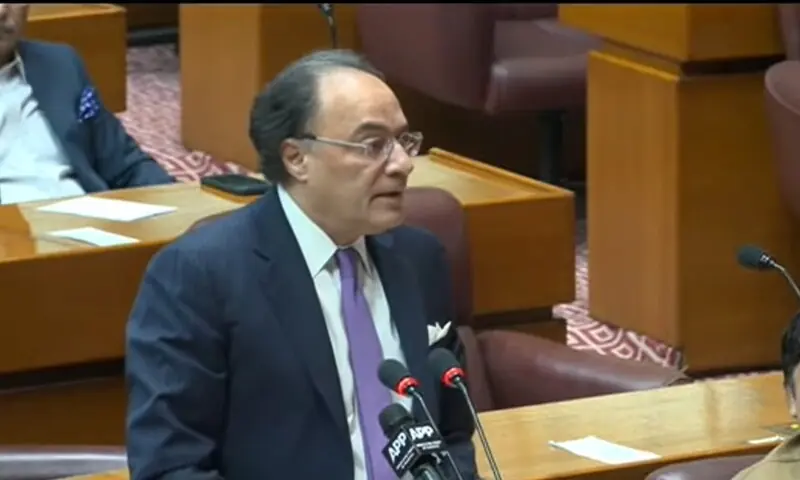
Finance Minister Muhammad Aurangzeb was to have delivered today one of the two most important annual policy statements the government can make, the other being the President’s speech to the joint sitting of Parliament at the beginning of the parliamentary year. It is of interest to note that the Prime Minister is not involved in either, though he has to approve both, for they contain statements of policy. It is also worth noting that in speaking on these two speeches, members may raise any topic under the sun, and are restricted to the content of the speech in question. However, such are the difficulties of governance that the speech had to be thrown forward to June 10.
The President’s speech, which is modelled on the King’s Speech to Parliament, is supposed to contain the legislative programme of the government for the coming year, as the Houses are informed of the reason why they have been summoned. There is no debate on the address. Though drafted by the government, it was delivered by the head of state, and his words are not debatable. (Well, the President is debatable, but this procedure was taken over wholesale from British parliamentary procedure, where the fiction of monarchical infallibility is maintained.)
However, the government comes in when a minister (here the Parliamentary Affairs Minister) moves a resolution of thanks, in which the President is thanked in the most obsequious and fawning terms for having graced the House with his presence and deigned to address the members. That resolution may then be debated. That resolution is supposed to be a measure of confidence in the government. The government’s failure to get it passed by the National Assembly should mean the fall of the government. That is not necessarily the case in Pakistan, unless it is made a matter of confidence by a party leader.
However, the British tradition has been maintained, of the debate ranging over the entirety of government policy. Members may refer to the absence of any mention of their pet peeve in the Speech, and hold forth on whatever bee has got into their bonnet. It is an opportunity for backbenchers who are constrained by party discipline to hold forth.
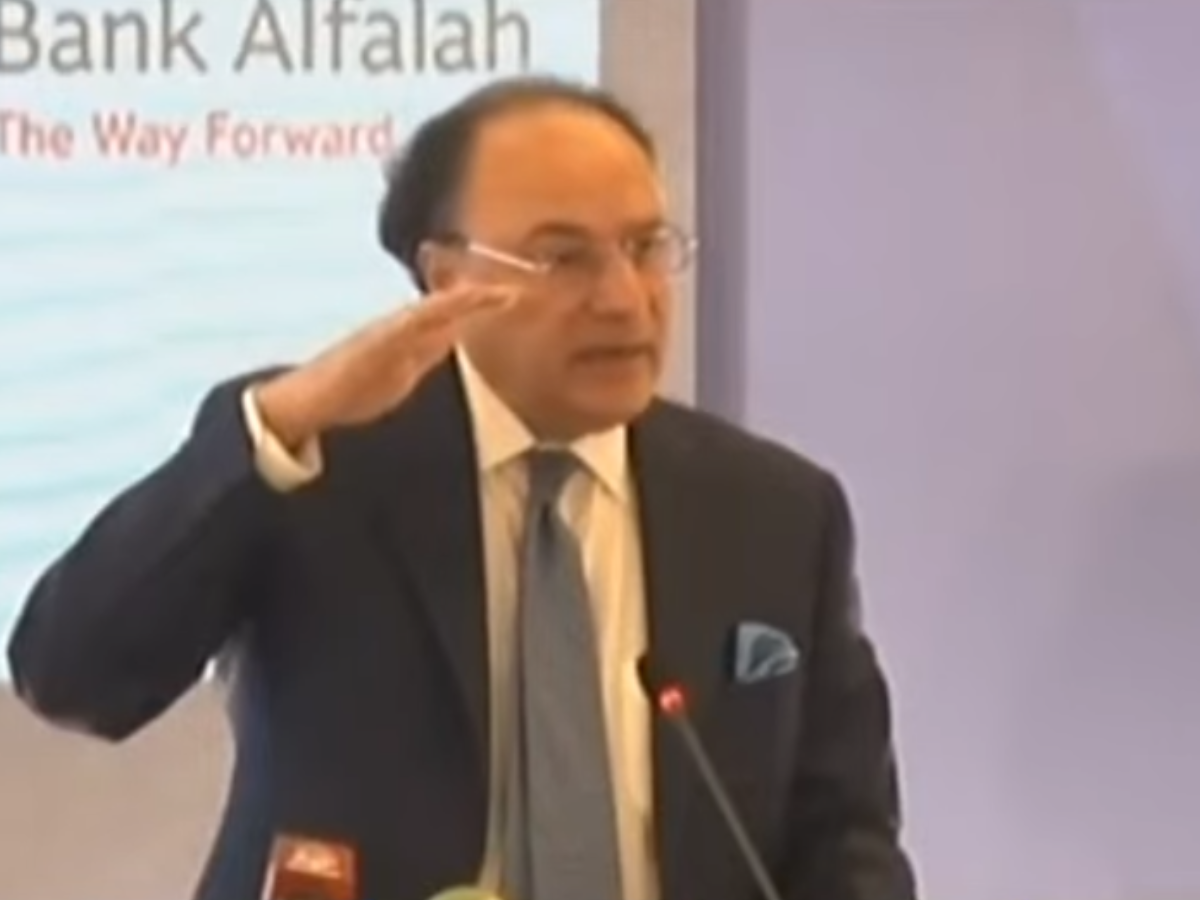
The Budget Speech is made by the Finance Minister, and is both an accounting about how the government has handled the public monies entrusted to it, as well as an explanation of how it intends to spend those monies in the coming year. The Speech also explains why enough money is needed, and what extra measures will be taken to increase revenues.
These dreaded taxation proposals are responsible for much of the mythology of secrecy about the budget as a whole. The Supreme Court has torn down the wall of secrecy, because until it ruled that changes in taxation would only be applicable if the law was changed, as soon as the taxation proposals were announced, they would be implemented. There was thus an incentive to bring in the budget early, so that there could be a few days of collecting taxes at the new rates and on the new items.
Now, however, the collection only begins on July 1 for those items which are implemented through legislation. However, much taxation, such as the rates for customs duties, is levied on the basis of executive orders. So those executive orders are issued around the time the taxation proposals are announced, so those taxes are levied.
The Budget Speech has been called, along with election manifestoes, a piece of political journalism, which is probably why, though delivered by a technocrat, it is carefully vetted by politicians.
Though most people pay attention to the taxation proposals, the Budget Speech is supposed to be a statement of government policy for the year. As so much of government is supposed to be about economic management, that is inevitable, but there are other policy areas where the Budget Speech may be used to make a point. Exempting solar panels from taxation is one way of encouraging solarization, so that is done through the Budget, and if it is part of the government’s policy, the Finance Minister is likely to mention it.
The main issue with the Budget was only mentioned on the floor of the House by the Prime Minister, not the Finance Minister, who maintains the fiction that it was produced by himself and a team of dedicated advisers, who have refused to discuss the budget since they were assigned the task of preparing it.
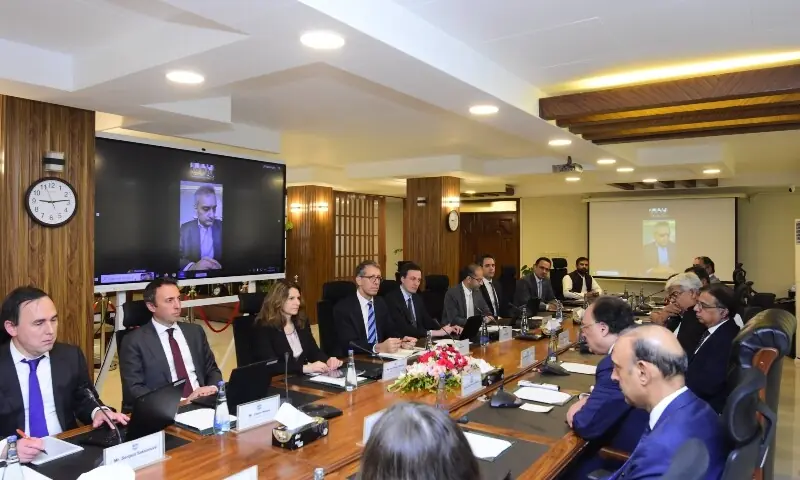
That is, the IMF has to clear all taxation proposals. With that came other issues, the most basic of which were the economic assumptions on which the Budget was to be based. The IMF, it should be remembered, has a primary interest in getting its money. That is how it hopes to keep the international trading system, based upon the dollar, stable. Because of this, the Budget consists of a torrent of figures, which seem intimidating even to members, let alone their voters.
It is this approval which has led to the moving forward of the Budget
Pakistan has developed the concept of technocrat Finance Ministers, with the result that they have mostly been Senators, even though this is quintessentially a job for someone who faces re-election from a constituency. Even though present Deputy PM Ishaq Dar, who holds the Pakistani record with eight budgets presented between 2009 and 2023, started in the National Assembly, he has spent since 2003 in the Senate. He is a chartered accountant by profession, and is a stark contrast to Winston Churchill, one of those rare British Chancellors of the Exchequer (the model for our Finance Minister) to present five Budgets.
Churchill did not have much of a head for figures, and in school, as he recorded in his autobiography, was appalled that a column of figures would add up and yield the same result every time. He found this boring. Actually, he had been offered the Exchequer after the 1924 election by the Prime Minister in the hope that he would refuse. The offer was made because he was too senior a man to be ignored. He rather grandly said that he still had his father’s robes of office.
However, the impression has been firmly implanted among Pakistani politicians that one needs a head for figures. Another reason why it is left to ‘men of business’ is that it is not seen as affording the kind of opportunities for providing the boys jobs. For that reason, Finance Ministers have usually not been found in the National Assembly. Miftah Ismail had a seat in neither House, and had to use the provision which allows a non-member to be sworn in as a minister, provided he finds a seat in either House within six months. He has twice been Finance Minister, though he has never been a NP.
The Budget debate which follows the Budget Speech is often the only time that certain members, usually ‘backwoodsmen’, ever open their mouths in the National Assembly, after having made their oath. As a result, budget debates contain a freer expression of opinion from the backbenches than is usually tolerated by the Whips as members give vent to their constituents’ concerns. This is also an opportunity to plug for pet projects, such as a road or a water supply scheme. Even if the scheme is not approved, at least the member can tell his constituents he tried.
The Budget Speech has been called, along with election manifestoes, a piece of political journalism, which is probably why, though delivered by a technocrat, it is carefully vetted by politicians.
Comments
No comments yet. Be the first to join the discussion!