

SC upholds death sentence in child rape, murder case
The Supreme Court has upheld the death sentence of Sunni Masih in the rape and murder of five-year-old Angel Kumari in Sibi. The court ruled that voluntary intoxication does not excuse criminal liability.

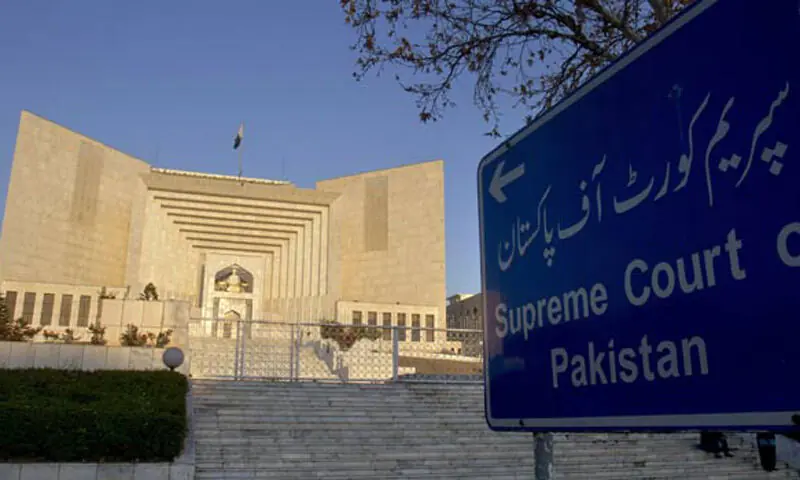
ISLAMABAD: The Supreme Court has upheld the death sentence awarded to a man convicted of raping and killing a five-year-old girl in Sibi, ruling that voluntary intoxication does not exempt an offender from criminal responsibility.
The judgement was issued by a three-member bench headed by Justice Muhammad Hashim Khan Kakar and comprising Justice Salahuddin Panhwar and Justice Ishtiaq Ibrahim. In a three-page verdict authored by Justice Kakar, the court rejected the defence raised by appellant Sunni Masih, who had stated during the trial in a confession recorded under Section 164 of the Criminal Procedure Code that he committed the offence while intoxicated.
The case arose from the rape and murder of Angel Kumari in January 2014. Sunni Masih was booked at Police Station City, Sibi, and was later sentenced to death by the trial court under Sections 302(b), 364-A and 376 of the Pakistan Penal Code. His appeal against the conviction and sentence was dismissed by the Sibi bench of the Balochistan High Court on Feb 28, 2018, leading to the appeal before the apex court.
Bench rejects plea for sentence reduction
During the hearing, the appellant’s counsel did not contest the conviction on merits. Instead, the lawyer asked the court to commute the death sentence to life imprisonment, arguing that the case rested only on the appellant’s judicial confession and that the offence had been committed under intoxication.
Justice Kakar said the record showed that the child had been raped and then killed in a cruel manner. He noted that, after a detailed appraisal of the evidence, both lower courts had reached the same conclusion that the appellant’s guilt had been proved beyond reasonable doubt. The judge further said the Supreme Court, after independently reviewing the evidence, found no valid basis to disagree with those findings.
Referring to the legal question raised in the appeal, Justice Kakar stated that a person who voluntarily becomes drunk cannot seek protection from criminal liability. “Intoxication caused by one’s own negligence or recklessness does not excuse the offence,” he wrote.
“A man who gets drunk voluntarily has no right to claim exemption from criminal liability,” the judgement also stated.
While dismissing the appeal, the Supreme Court unanimously held that the Balochistan High Court’s judgement suffered from no illegality or defect and that there had been no misreading or non-reading of evidence. It concluded that the high court ruling did not warrant any interference.
Comments
No comments yet. Be the first to join the discussion!


