Beverage industry seeks cut in excise duty ahead of FY2026-27 budget
Pakistan’s beverage industry has proposed cutting FED on aerated waters from 20pc to 15pc in the upcoming budget. It says the move would expand the documented market and raise tax collections over three years.

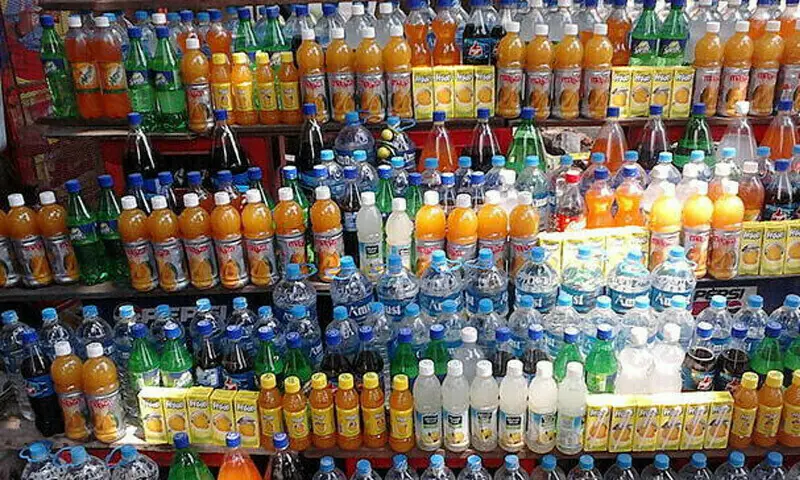
ISLAMABAD: Pakistan’s beverage industry has asked the government to lower the Federal Excise Duty (FED) on aerated waters from 20 per cent to 15 per cent ahead of the FY2026-27 budget, arguing that the move would widen the documented market and increase tax receipts over time.
In a letter sent to the Federal Board of Revenue and the finance ministry, the Beverages Advisory Foundation (BAF) said a reduced duty rate would help expand the tax base and lift cumulative collections. It said higher taxation on the sector had increased the market share of undocumented manufacturers, reducing the relative contribution of the formal industry.
The industry has proposed that the government implement the lower FED rate and review the outcome by June 2027. According to the proposal, if the expected results are not achieved by then, the duty could be restored to its current level.
Industry projections
The BAF said the formal beverage industry would generate an additional Rs8 billion in gross tax revenue in the first year if the duty is reduced, while cumulative gross collections over three years would be around Rs63 billion higher than under the current tax regime.
According to the industry’s calculations, tax collections would reach about Rs185 billion in FY2026-27 under the reduced-rate scenario, compared with a current baseline of Rs167 billion. It also projected that industry volumes would grow by more than 16 per cent in the first year, while the documented sector’s market share would recover to roughly 88 per cent.
The proposal further estimated that total revenues from sales tax and FED would rise to Rs238 billion by FY2028-29, compared with Rs204 billion if the 20 per cent FED remains in place. Over the three years from FY2026-27 to FY2028-29, cumulative tax collections were projected at Rs633 billion under the proposed lower rate, versus Rs570 billion under the existing structure.
Impact of previous tax changes
The industry said that before 2023-24, when FED stood at 13 per cent, the sector posted compound annual volume growth of about 14 per cent and annual tax revenue growth of 23 per cent. It added that documented companies then accounted for nearly 90 per cent of the market and contributed around 95 per cent of FED collections.
After the duty was raised to 20 per cent in 2023, however, the industry said volume growth slowed sharply and tax collection growth fell to low single digits. At the same time, undocumented manufacturers’ share of the market rose to around 20 per cent, while their contribution to FED revenue remained at only about 5 per cent.
The advisory foundation also said that a lower tax rate would support investment in distribution networks, trade activation and market expansion instead of increasing manufacturer margins. It said narrowing the retail price gap between documented and undocumented producers would reduce incentives for tax evasion and help move more businesses into the formal economy.
The federal budget for the next fiscal year is expected in the coming days after the National Economic Council’s approval on June 3. The government is also expected to clear a consolidated national development programme exceeding Rs3.5 trillion, along with a macroeconomic framework targeting 4.1 per cent growth and 8.5 per cent inflation for FY2026-27.
Comments
No comments yet. Be the first to join the discussion!