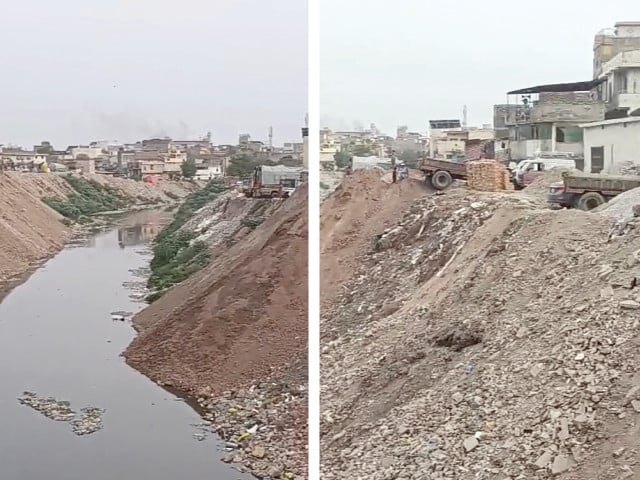
Peshawar canals remain choked by waste despite anti-dumping law
Peshawar’s canals continue to fill with garbage and sewage despite a 2015 law imposing prison terms and fines for dumping waste. Officials and residents say weak enforcement, poor coordination and a lack of disposal sites are driving the problem.

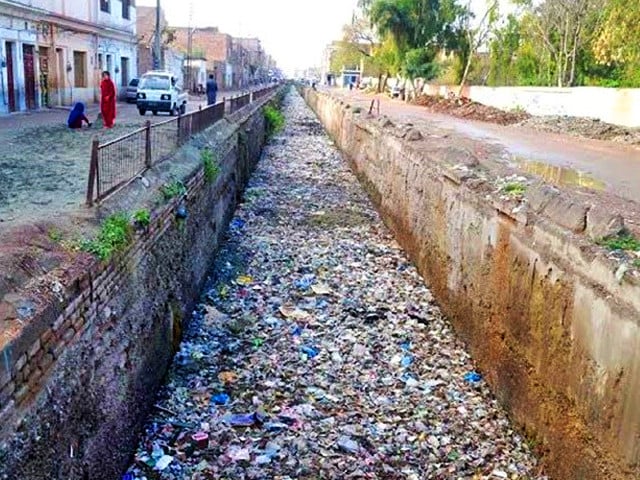
PESHAWAR: More than a decade after the Khyber-Pakhtunkhwa Assembly enacted stricter penalties against dumping garbage and sewage into canals, waterways in Peshawar and other parts of the province continue to receive large volumes of waste, while no major punishment under the law has been publicly reported.
The legislation, passed in 2015, made the disposal of garbage, polythene bags and other waste into canals a criminal offence, carrying jail terms of up to two years and fines of up to Rs20,000. It also barred the release of untreated sewage into canals and declared encroachments along canal banks unlawful. Before the amendment, violators were subject to comparatively minor fines and short prison terms. The stricter law was intended to curb canal pollution and respond to a growing environmental and irrigation problem in urban areas, but enforcement has remained weak.
According to Khyber-Pakhtunkhwa Irrigation Department data, the province has a canal network of more than 4,060 kilometres. Of this, about 2,030 kilometres are scheduled for desiltation and cleaning during the current fiscal year at an estimated cost of Rs441.27 million. The department has also estimated the overall Annual Maintenance and Repair requirement for irrigation infrastructure in 2025-26 at Rs1.124 billion, including Rs900 million for maintenance work and Rs224 million in liabilities carried over from the previous year.
The Peshawar division has received a sizeable portion of these funds. Allocations include Rs170 million for the Peshawar Canal Division, Rs58 million for the Warsak Canals Division, Rs52 million for the Charsadda Irrigation Division and Rs27 million for the Tube Well Irrigation Division in Peshawar. Even so, canals in thickly populated urban areas continue to collect garbage and sewage, adding to the financial burden on the government, which spends hundreds of millions of rupees each year on cleaning and desiltation drives.
Residents cite lack of disposal facilities
Ajmal Khan, a resident near Ring Road in Peshawar, said the absence of proper dumping sites leaves many people with few alternatives.
"There is no dumping site in our area, so people have no other option. Whenever irrigation officials stop us from throwing waste into canals, we ask them where we should dump it, but there is no answer," he said.
He also said that residents had approached Water and Sanitation Services Peshawar, but were told the locality did not fall within its jurisdiction. "Local government institutions have also become ineffective after losing funds and completing their tenure without significant performance," he added.
Water and Sanitation Services Peshawar says the city produces between 700 and 1,000 tons of municipal waste each day, and much of it remains uncollected before ending up in drains and canals. The provincial capital generates nearly 324,000 tons of solid waste annually. Areas such as Hazar Khawani, Gulbahar, Board Bazaar, Yakatoot and parts of the inner city have increasingly emerged as points where household refuse, plastic waste and untreated sewage are discharged into canals.
Officials acknowledge weak implementation
Executive Engineer of the Irrigation Department KP Shireen Khan Momand acknowledged that the law exists but has not been effectively enforced.
"Irrigation inspectors identify individuals and factories polluting canals, but only the commissioner administration can punish violators. Weak coordination among government departments and the absence of the magistracy system have hindered effective implementation of the law," Momand added.
The continued lack of enforcement means the 2015 legal changes have not produced visible deterrence, despite repeated canal cleaning expenditures and long-standing concern over pollution, illegal sewerage connections and encroachments along waterways.
Comments
No comments yet. Be the first to join the discussion!