

Government plans Rs200 billion import-duty relief for industry in FY27 budget
The government plans about Rs200 billion in import-duty relief for industry in the 2026-27 budget under the second phase of its tariff reform plan. The package includes lower additional customs and regulatory duties across thousands of tariff lines.

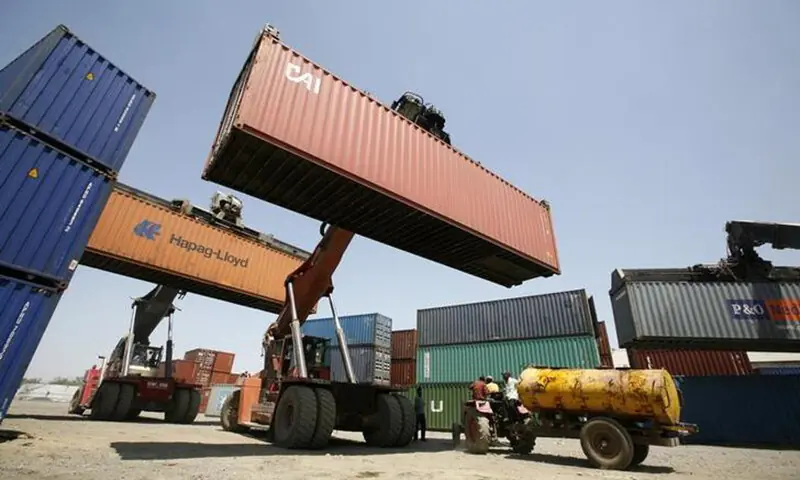
ISLAMABAD: The federal government has decided to provide about Rs200 billion in import-duty relief to industry in the 2026-27 budget under the second phase of its five-year tariff reform programme, according to officials involved in the budget exercise.
The plan, approved by Prime Minister Shehbaz Sharif, includes cuts in additional customs duty on 3,149 tariff lines and a reduction in regulatory duty to a maximum of 20pc on more than 1,900 tariff lines. The measures are part of a broader tariff rationalisation strategy aimed at lowering input costs, improving competitiveness and supporting industrial growth.
Officials said sectors including automobiles, iron and steel, textiles, chemicals and plastics, which currently benefit from effective tariff protection of around 100pc to 150pc, will see those rates brought down to roughly 50pc to 70pc. They said major reductions in customs and regulatory duties are expected in automobiles and batteries as well, although efforts are being made to preserve some degree of protection for those industries.
According to the officials, the prime minister has directed the relevant ministry to move ahead with the reforms despite opposition from some cabinet members and parliamentarians linked to sectors likely to be affected. The second phase is to be announced in the Budget 2026-27, while the first phase of the tariff reform plan was implemented in the current fiscal year.
Changes in duty structure
Under the upcoming budget proposals, the remaining 2pc additional customs duty on 518 tariff lines in the 15pc tariff slab will be abolished. The duty will be reduced from 4pc to 2pc on 2,166 tariff lines in the 20pc slab, while on 465 tariff lines currently facing customs duty above 20pc, the additional customs duty will be cut from 6pc to 4pc.
In the first phase, the government had already removed 2pc additional customs duty on 4,383 tariff lines. It had also reduced the levy from 4pc to 2pc on 518 tariff lines, from 6pc to 4pc on 2,166 lines and from 7pc to 6pc on 468 tariff lines. Officials said that phase had provided relief estimated at Rs200bn to Rs250bn.
The government has also approved reducing regulatory duty to a ceiling of 20pc on over 1,948 tariff lines in the next budget, compared with the current maximum of 50pc. An average 20pc cut in regulatory duty will apply across products in the second phase. In the FY26 budget, the maximum regulatory duty had already been brought down to 50pc from as high as 90pc, though it was completely withdrawn only on a limited number of items.
The five-year plan provides for the gradual elimination of regulatory duty on more than 1,900 tariff lines. It also envisages customs duty cuts of between 20pc and 50pc on all tariff lines currently above 20pc in the coming budget, including products such as automobiles and alcoholic beverages, which previously faced rates as high as 100pc.
Automobile duties and broader targets
Officials said that for vehicles, customs duty of 100pc and regulatory duty of 50pc will be reduced in 2026-27 to 50pc and 20pc, respectively. That would lower the overall import duty burden on vehicles to 70pc from 150pc, a change expected to reduce prices in the market.
The second phase sets a simple average tariff target of 13pc for 2026-27, following a drop to 15.65pc in the first phase from 20.2pc. The projections for subsequent years show a further decline to 11.5pc in 2027-28, 10.25pc in 2028-29 and 9.7pc in 2029-30, the final year of the implementation framework.
Officials said the 5th Schedule of Customs, under which sector-specific tariff concessions are granted, will be scaled back further, with most products currently covered under it to be shifted to the First Schedule in the second phase. This would mean the withdrawal of exemptions on certain products in the coming budget.
At the same time, the government plans to exempt pharmaceutical products and instruments from duty in the upcoming budget. It also aims to simplify customs duty slabs into four bands of 0pc, 5pc, 10pc and 15pc by the end of the five-year plan. According to the officials, the government expects tariff rationalisation to raise exports by around $5bn by the end of the programme period.
Comments
No comments yet. Be the first to join the discussion!


