India’s viral Cockroach Janta Party taps youth anger but faces offline test
India’s Cockroach Janta Party has amassed millions of young followers online by tapping anger over unemployment and exam paper leaks. Analysts say the satirical movement must build an offline structure if it is to last.

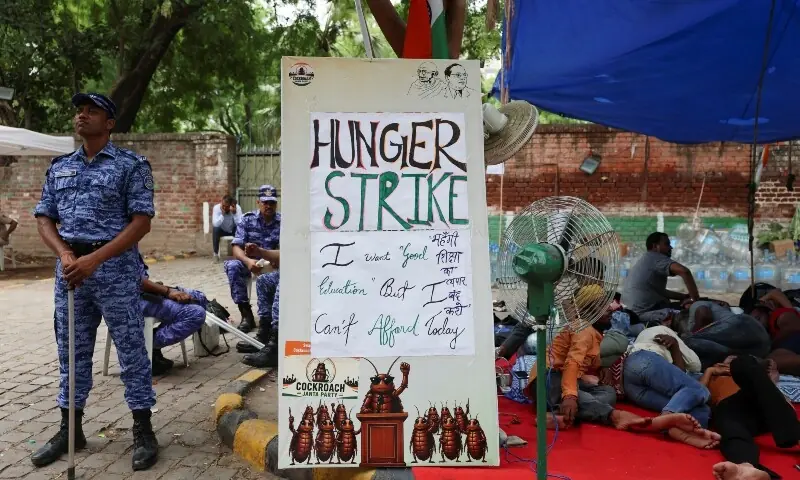
NEW DELHI: A satirical online movement in India that emerged as a protest against Prime Minister Narendra Modi’s long rule has rapidly attracted millions of young followers, but analysts say it will need organisation beyond social media if it is to endure.
The Cockroach Janta Party, led by 30-year-old Abhijeet Dipke, describes itself as representing the lazy, the unemployed, and the chronically correct. Its rise comes amid frustration among younger Indians over unemployment, repeated examination paper leaks and broader concerns about living conditions. Political analysts believe the group’s popularity has started to affect Modi’s image, even though his Bharatiya Janata Party has recently won key state elections.
Political activist Yogendra Yadav said the scale of support reflected deeper unease. He said 20 million young people would not gather around such a platform if conditions in the country and economy were satisfactory, calling it a sign of widespread underlying disquiet. Lawyer Prashant Bhushan, another prominent figure from India’s 2011 anti-corruption movement, said the group would have to organise and bring its issues onto the streets if it wanted to build on its momentum.
Started as satire, grew into a youth platform
The controversy began after Dipke posted on X on May 16 asking, "What if all cockroaches come together?"
He said the post was a response to remarks by India’s Chief Justice Surya Kant, who had compared some unemployed youth to cockroaches. Kant later clarified that he had not intended to criticise young people and said he was referring to people with fake and bogus degrees, whom he described as parasites.
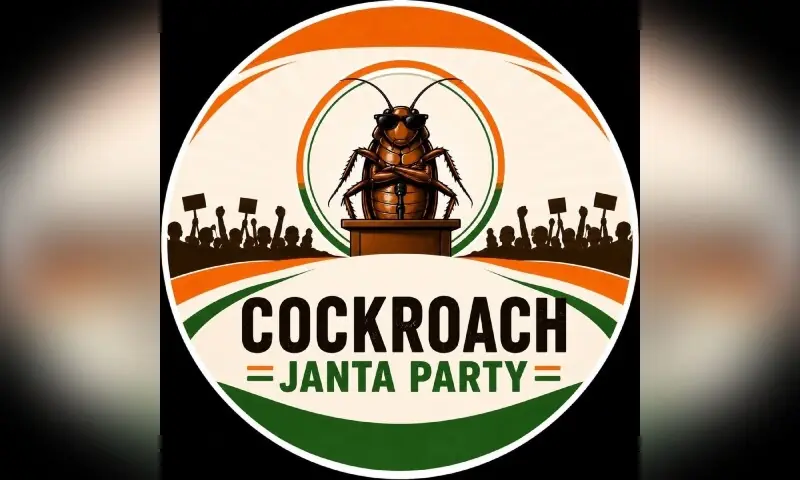
The movement then adopted a manifesto and a cockroach-on-a-mobile-phone mascot. Amplified by social media influencers and content creators, the group’s Instagram following surged within days to nearly 23 million, according to data shared publicly by Dipke. He said about 95 per cent of those followers were in India, with the United States among the next largest locations, and that more than two-thirds were from Gen-Z, defined in the report as those born between 1997 and 2007.
Dipke, a public relations strategist who graduated from Boston University and previously worked as a social media intern with the opposition Aam Aadmi Party, told Reuters from Chicago that the initiative began as a joke but had outgrown that origin. He said young followers now wanted action rather than memes.
He said 70 per cent of the group’s followers were under 28 and largely apolitical, adding that they were unhappy not only with the government over unemployment and quality of life, but also with opposition parties for failing to hold the government to account.
Threats, account restrictions and official criticism
Dipke, who has lived in the United States for the past two years, said the movement’s rise had brought personal pressure. Speaking by telephone from Chicago, he said:
"The Indian government has declared me a national security threat; they are trying to defame me. But democratically, within our constitutional rights, we will do what needs to be done," he said.
Dipke has spent sleepless nights producing content and handling media requests while also trying to restore his X account after a government block, recover control of the group’s Instagram page from unknown hackers and protect relatives in India and the United States after receiving threats of physical harm on WhatsApp. He said police in Maharashtra, his home state, had assured him that his family would be protected. He has also challenged the X block in a Delhi court.
Senior cabinet minister Kiren Rijiju has criticised the group, saying it was undermining the world’s biggest democracy by adopting the name of an insect and accusing it of trying to gain social media support from Pakistan and the anti-India gang. X, India’s home ministry, the information technology ministry and Modi’s office did not respond to requests for comment.
Apar Gupta, a lawyer and director of the Internet Freedom Foundation in New Delhi, said the increase in web blocking in India showed that dissent and satire were being treated as administrative threats rather than democratic expression.
Economic frustration and questions over next steps
Government data showed unemployment in 2025 at 3.1 per cent for people aged 15 and above. For those aged 15 to 29, however, it was 9.9 per cent, including 13.6 per cent in urban areas and 8.3 per cent in rural areas.
That frustration is reflected among followers. Shurin Dixit, a 23-year-old entry-level operations worker at a technology company in Lucknow, said he had an MBA degree, was overqualified for his job and underpaid, and would join any protest called by the group.
The movement has drawn comparisons with Gen-Z-led uprisings in Bangladesh and Nepal that toppled governments, but Dipke rejected those parallels. Analysts said converting online support into a durable political force would be difficult because of the need for funding, volunteers and a physical presence. Sanjay Kumar of the Centre for the Study of Developing Societies said these were major resource-based challenges. Large street protests under Modi have previously faced heavy crackdowns, sometimes with deadly consequences for demonstrators.
Still, some supporters believe the moment could be significant if the group moves quickly. Content creator Madri Kakoti said she hoped it would present an organisational plan soon because Gen-Z can lose interest in trends as quickly as it adopts them.
Comments
No comments yet. Be the first to join the discussion!