

Saudi Arabia uses drones to speed medical supplies for Hajj amid intense heat
Saudi Arabia is using drones to deliver medical supplies to Hajj clinics as temperatures in Makkah hit 45°C. Officials say the system is helping speed up support for pilgrims amid heavy crowds and extreme heat.

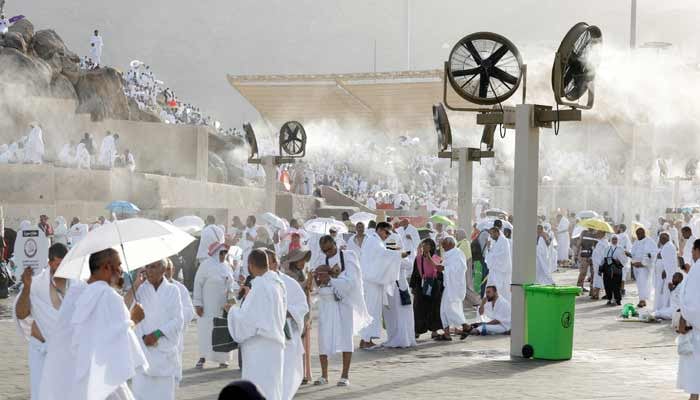
MAKKAH: Saudi authorities are increasingly using drones to deliver medical supplies to clinics serving Hajj pilgrims as temperatures in Makkah reached 45°C this week, according to AFP.
The annual pilgrimage, whose core rituals have remained unchanged for centuries, is being supported by a growing range of technologies, including artificial intelligence, unmanned aerial vehicles and mobile applications, to improve services, logistics and crowd management for the more than 1.5 million pilgrims taking part.
Drones have become a key part of efforts to keep 127 clinics across Makkah, Mina and Arafat stocked with medicines and other essentials without relying on heavily congested roads.
Fahd Al-Bathi, chief operating officer at the National Unified Procurement Company (Nupco), said the purpose of the system was to accelerate assistance for pilgrims during the Hajj season.
The main goal is to provide fast service to the guests of God during the season
Officials said planning for the pilgrimage’s medical requirements began nine months in advance. At an operations centre displaying a colour-coded map of medical facilities across the holy sites, Nupco operations officer Turki Al-Obaidi said teams were working continuously throughout Hajj to maintain rapid response times.
Our teams must ensure we reach patients as quickly as possible. This is a crucial factor with these extremely large crowds
Before drones were introduced, drivers delivering supplies to clinics could spend more than an hour on the road when facilities were running short. Authorities have now concentrated operations in a large central hub from which drones are dispatched carrying medicines and other items.
Al-Bathi said the authorities were trying to incorporate new technologies to make sure supplies reached clinics safely, quickly and at the required standard.
We are seeking to integrate new innovations through which we can ensure that medical supplies arrive safely, as quickly as possible, and with the highest quality
Technology and heat management
Inside the operations room, staff monitor drone movements on a large data display, while other workers use electric scooters to move around more efficiently.
The drone network is part of a broader technology-based approach to managing Hajj and addressing the risks posed by extreme desert temperatures. Saudi authorities have also deployed artificial intelligence to help analyse footage from thousands of cameras in and around Makkah.
These newer systems are being used alongside more conventional heat-mitigation measures, including large fans, trucks handing out free water and misting systems designed to cool pilgrims in crowded areas.
A Saudi health official said heat exhaustion remained one of the main concerns during Hajj.
Heat exhaustion is one of the main issues
Comments
No comments yet. Be the first to join the discussion!


