IHC declines immediate relief to One Constitution Avenue apartment owners
The Islamabad High Court declined immediate relief to around 30 appellants claiming to be sub-lessees in the One Constitution Avenue project. The bench directed the CDA to submit a written response by May 25.

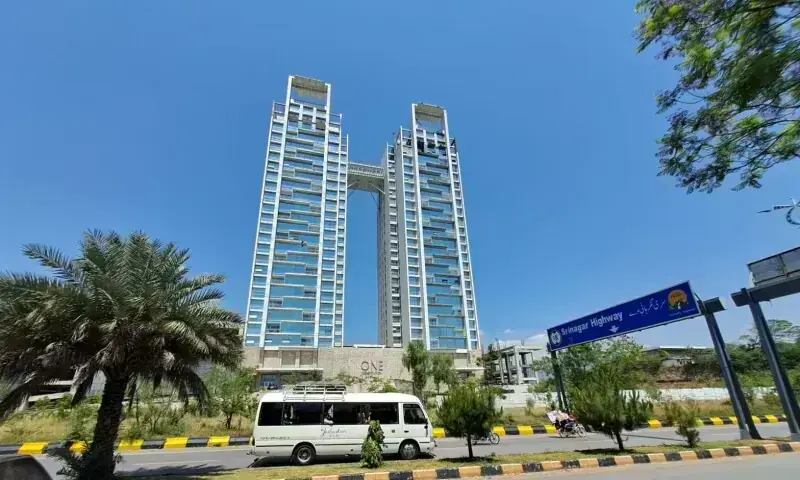
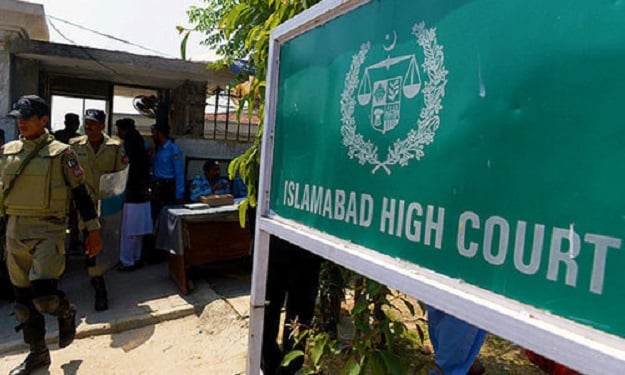
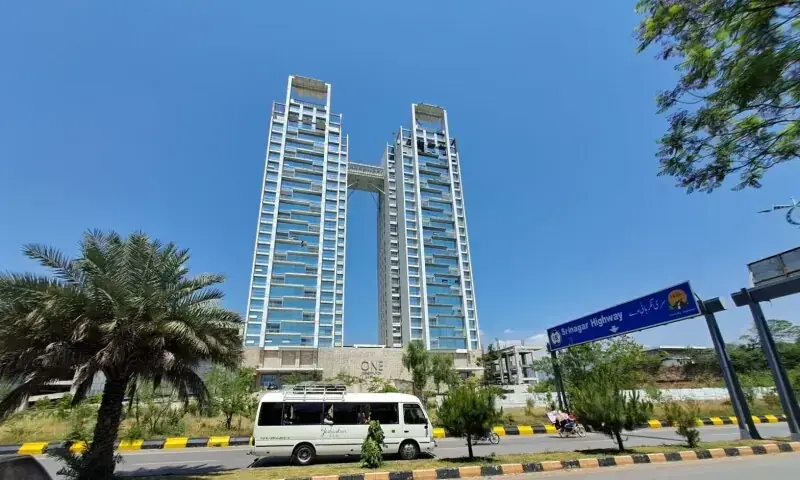
ISLAMABAD: The Islamabad High Court on Wednesday declined to grant immediate relief to around 30 appellants who say they are sub-lessees in the disputed One Constitution Avenue project, while hearing intra-court appeals against parts of an earlier ruling in the property case.
A division bench comprising Justice Mohammad Azam Khan and Justice Raja Inaam Ameen Minhas heard the appeals filed by several apartment owners, including former air chief Mujahid Anwar Khan, former ICC president Ehsan Mani and former Senate chairman Wasim Sajjad. The appellants challenged paragraph 30 of the earlier judgement to the extent that, according to them, it affected the third-party rights of apartment owners who had bought units in the building.
Advocates Taimur Aslam and Ali Raza appeared for the appellants, while Kashif Ali Malik represented the Capital Development Authority.
CDA sets out its position
During the hearing, CDA counsel told the court there was already a clear high court order regarding cancellation of the lease and argued that once the lease stood cancelled, the building vested in the CDA. He contended that the basic document presented as a lease deed was void in law and could not create enforceable rights.
According to the CDA, BNP paid only around 16 per cent of the total consideration amount over 21 years and never obtained title in its own name. The authority's counsel further submitted that the plot had originally been allotted for construction of a five-star hotel and was not meant for the creation of third-party interests through apartment sub-leases.
He also informed the bench that the purported 99-year lease in the One Constitution Avenue project was never registered after the sub-registrar refused registration on the ground that the document first needed to be processed before the rent controller as a lease agreement. The counsel argued that despite the absence of a duly registered parent lease deed constituting a valid title document, third parties still acquired sub-leases without conducting due diligence.
The CDA counsel maintained that because the foundational instrument lacked legal effect and evidentiary value, no enforceable rights could arise from it. Referring to the principle of caveat emptor, he argued that purchasers were required by law to exercise caution before acquiring interests in immovable property and had entered the transaction at their own risk. He further said a person could not transfer a better title than the one vested in it, and therefore any later transfer or sub-lease based on a defective title could not independently create lawful rights for third parties.
Referring to the earlier judgement, the CDA counsel submitted that the sub-lessees would sink or swim with the principal transaction entered into by BNP.
Bench raises questions
At one point, Justice Minhas asked whether, in that case, a committee constituted by the prime minister in relation to the matter would also become illegal. The bench also asked CDA counsel why the authority had not challenged the prime minister's committee. In response, the counsel said: "I would not comment on that; perhaps the Attorney General’s Office can explain."
Justice Minhas observed that failure to challenge the committee could create complications in the matter. The bench also noted that the rights of apartment owners had previously been defended before the Supreme Court.
Justice Minhas further asked whether any notices had been issued to residents directing them to vacate the apartments. Observing the position of the residents, the judge said: "When the lease legally existed, they were residing there."
The judge added that any future occupation would be a separate matter. Justice Minhas also remarked that the dispute was no longer centred on BNP alone but now involved the affectees and apartment owners.
CDA counsel, however, maintained that in the authority's view the apartment owners had no status before the CDA. In reply to a court query, he said the authority had not formed any committee comprising apartment residents.
Appellants seek restraint order
During the proceedings, counsel for the appellants alleged that officials accompanied by police personnel were trying to break open doors and asked the court to restrain the authorities through a stay order. One of the counsels remarked:"What should we do then, register FIRs against police officers?"
Justice Azam Khan observed that the building was standing and not going anywhere, adding that the court needed clarity from the CDA on its proposed course of action.
The CDA counsel told the bench that the CDA Board would take a decision strictly in accordance with law. He also argued that if relief was granted to third parties, the direct beneficiary would ultimately be BNP.
After a preliminary hearing, the bench directed the CDA to obtain instructions and submit a written response. The case was adjourned until May 25.
Comments
No comments yet. Be the first to join the discussion!