Sindh wheat procurement lags far behind target as market prices climb
Sindh has procured only about 65,000 tonnes of wheat by May 12 against a target of one million tonnes, while open market prices have climbed sharply. Growers’ representatives say delayed procurement and lower official rates pushed farmers to sell to private buyers.


KARACHI: Sindh’s wheat procurement drive has remained well below its official goal, with the provincial food department purchasing about 65,000 tonnes by May 12 against a government-approved target of one million tonnes under the Wheat Policy 2026, according to figures cited in a Dawn report.
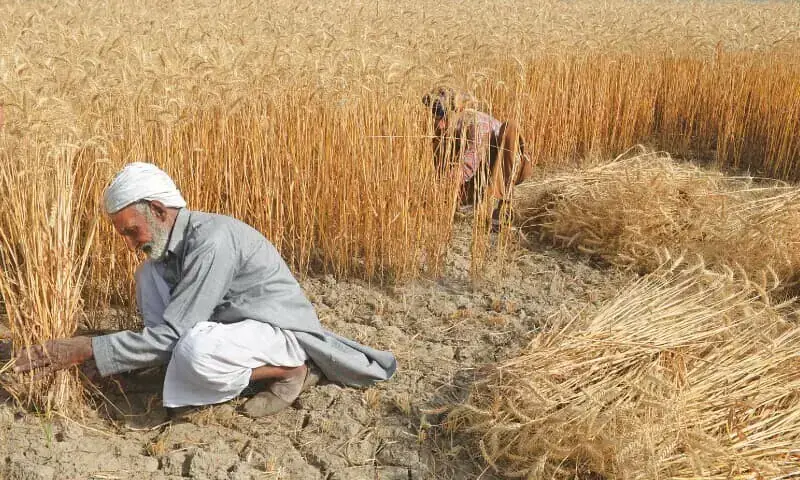
The province’s wheat crop has almost been harvested, making it increasingly difficult for the department to achieve its target. Wheat prices in the open market have already started rising, a trend that could push up flour prices for consumers already facing higher fuel costs.
For the 2025-26 rabi season, the Sindh government fixed the procurement price at Rs3,500 per 40kg, or Rs8,750 per 100kg, after resuming procurement following a one-year break. The decision, was taken in line with International Monetary Fund conditions. The plan was to buy wheat from small farmers owning between one and 25 acres, and only from growers registered under the Benazir Hari Card, which was to be used for the first time in Sindh.
Around 330,000 farmers have so far been registered by the Sindh agriculture department. These growers had also received cash assistance for wheat cultivation under the Wheat Growers Support Programme, which cost Rs84 billion and was aimed at supporting grain production.
However, procurement did not proceed as planned. The government had initially limited purchases to 10 bags of 50kg per farmer and began procurement on April 1. That cap remained in place for about three weeks before being withdrawn after the government realised farmers were not selling to the food department because open market rates were higher than the official support price.
During the early harvest period in late February and March, wheat was selling in the market at around Rs7,800 to Rs7,900 per 100kg. By the time official procurement began on April 1, market prices had already moved up sharply. Wheat is now trading at Rs10,900 to Rs11,000 per 100kg bag, up by Rs3,200 in two months.
This increase has also fed into flour prices. The per-kilogram rate of flour has risen from Rs100-Rs110 in March to Rs140 in May.
Concerns over policy timing and price gap
Sindh Abadgar Board president Mahmood Nawaz Shah criticised the timing and implementation of the policy, saying the government entered the market too late. “The decision to procure wheat from small farmers was not bad to begin with. But the government didn’t realise that starting procurement in April would be too late.”
He also objected to what he described as inconsistency in the province’s wheat policy. Sindh had procured wheat at Rs4,000 per 40kg in 2023-24, then halted procurement in 2024-25 because of IMF restrictions, and has now resumed purchases at Rs3,500 per 40kg despite higher production costs.
Shah said most wheat had already been bought by private traders and expressed doubt that the government could still secure one million tonnes by raising the support price. “Any such step [increasing support price] will benefit the middlemen alone and not the primary grain producers. SAB won’t support it,” he added.
The food department is now considering an upward revision in the support price, but added that such a move would mainly benefit private stockists rather than farmers.
The food department currently holds around 200,000 tonnes of fair-quality wheat in its warehouses and usually releases wheat in October and November after fresh procurement. Last year the Sindh government reduced the issue price of wheat from Rs9,500 to Rs8,000 per 100kg bag for chakki owners and roller flour mills in December 2025 to bring it in line with open market rates.
Punjab and supply concerns
A similar pattern has been seen in Punjab. Pakistan Kissan Ittehad leader Khalid Mehmood Khokhar said growers there were also selling in the open market instead of to the government. Punjab had planned to procure three million tonnes of wheat through companies notified by the government.
When harvesting started in Rahim Yar Khan around mid-April, no one approached farmers to purchase wheat. He said the food department tried to procure grain after prices rose, but with limited success.
Sindh contributes around 25 per cent of Pakistan’s wheat output after Punjab. Sindh agriculture department figures cited in the report put the province’s wheat production for 2025-26 at 4.8 million tonnes, although the figure remained open to revision.
Chakki owners have also raised concerns over the price trend. Atta Chakki Owners Social Welfare Association general secretary Najmuddin Chohan has written to the Sindh chief minister, urging wheat imports to counter hoarders who bought grain at lower prices. An identical letter was also sent to the prime minister seeking permission to import wheat.
Comments
No comments yet. Be the first to join the discussion!