JI chief moves constitutional court against petroleum levy
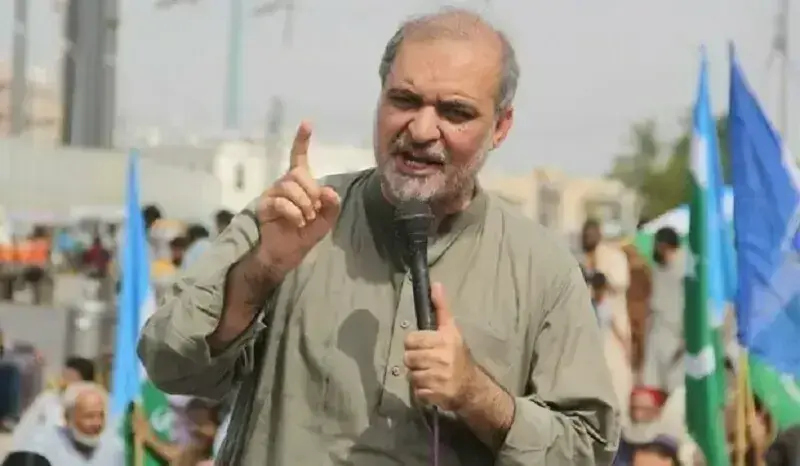
Jamaat-i-Islami emir Hafiz Naeemur Rehman has challenged the petroleum levy regime in the Federal Constitutional Court. The petition argues the current framework allows taxation-like burdens through executive notifications without proper parliamentary oversight.


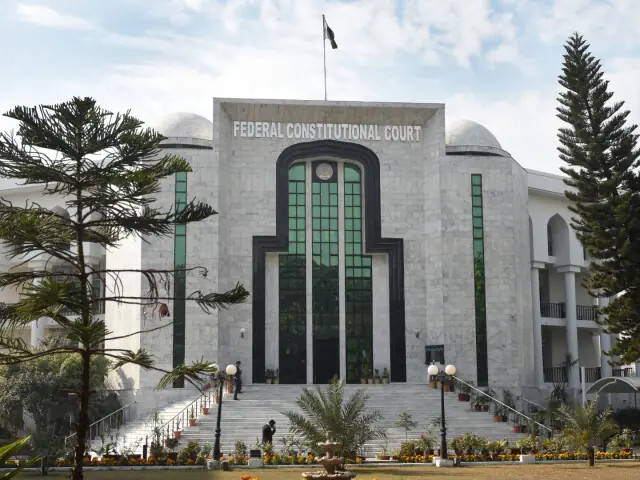
ISLAMABAD: Jamaat-i-Islami emir Hafiz Naeemur Rehman has approached the Federal Constitutional Court (FCC) against the petroleum levy regime, arguing that the federal government has given itself sweeping authority to impose fiscal burdens through executive notifications without parliamentary oversight.
The petition, filed on Monday through senior counsel Imran Shafeeq, challenges the petroleum levy and climate support levy framework operating under the Petroleum Products (Petroleum Levy and Climate Support Levy) Ordinance, 1961, as amended through Section 3 of the Finance Act, 2025. Rehman asked the court to declare the current arrangement ultra vires, unconstitutional and in violation of Articles 4, 9, 14, 18, 25, 77, 90 and 160 of the Constitution.
The move comes after the government announced a petroleum and carbon levy on June 14, 2025, under an iron-clad commitment with the International Monetary Fund. Last month, the government reduced the levy by Rs80 amid a global oil crisis linked to the Middle East crisis. However, after the IMF required the restoration of an average Rs80 per litre petroleum levy on petrol and high-speed diesel last week, the government passed on only a slight reduction in international oil prices to domestic consumers.
The petroleum levy on petrol currently stands at Rs117.41 per litre, while the levy on high-speed diesel is Rs42.60 per litre.
Constitutional objections raised in petition
In his plea, the JI chief asked the FCC to suspend, restrain or otherwise limit any further increase in the petroleum levy and climate support levy through executive notification mechanisms unless Parliament first enacts constitutionally compliant legislative safeguards and statutory limits.
The petition also requested the court, if it considered appropriate, to order the formation of an independent expert-assisted mechanism or commission to review the constitutional, fiscal, economic and federal implications of the present levy structure and to recommend a framework consistent with parliamentary supremacy and fiscal accountability.
The petition argued that while general sales tax on petroleum products becomes part of the divisible pool shared with provinces under Article 160, the petroleum levy remains solely with the federal government. It described this as colourable legislation, saying the use of the term levy was a way to bypass constitutional fiscal distribution mechanisms.
It further contended that the flat per-litre charge applies equally to all consumers regardless of income, creating what the petition called a radically unequal burden. According to the plea, the impact is especially severe for the working class, transport-dependent labourers, lower-income households and small traders because it affects subsistence, mobility, food access and economic survival.
Demands for records and parliamentary framework
The petition maintained that the omission of the Fifth Schedule through Section 3(5) of the Finance Act, 2025, was ultra vires, contrary to the principle of separation of powers and a breach of citizens’ fundamental rights, and should therefore be struck down.
It also asked the court to declare that, in its current structure and operation, the petroleum levy has the constitutional character of taxation rather than a levy, and is therefore subject to the constitutional safeguards and limitations that apply to taxation.
The plea said the present framework allows the executive to continue altering major public fiscal burdens through notifications and Statutory Regulatory Orders without meaningful parliamentary supervision, which it argued was inconsistent with constitutional principles of parliamentary financial control, democratic accountability and collective governance.
On the climate support levy, the petition stated that the impugned amendment lacked identifiable statutory accountability mechanisms, earmarking requirements, climate-governance safeguards and enforceable environmental obligations governing the use of the proceeds, making it constitutionally infirm and open to judicial limitation.
Rehman also requested the FCC to read down Section 3 of the ordinance so that levy-related executive powers are subject to constitutionally enforceable legislative limits, intelligible standards, parliamentary supervision and structured safeguards.
The petition further sought directions for the federal government and relevant authorities to place before the court complete records of the collection, allocation, transfer, accounting, utilisation and end-use of amounts realised under both levies, along with related petroleum and energy-sector recoveries. The record should show whether the recoveries were used for the statutory, regulatory, environmental, developmental or publicly asserted purposes underlying the levy structure.
The plea also asked the court to direct that Parliament be presented with an appropriate statutory framework setting clear ceilings for a maximum levy, a transparent pricing methodology, accountability mechanisms and periodic parliamentary oversight for both levies.
According to the petition, retrospective validation provisions contained in Section 9 of the ordinance cannot constitutionally bar judicial review or remedial scrutiny in matters involving public exactions alleged to violate constitutional limits on taxation and delegated fiscal authority.
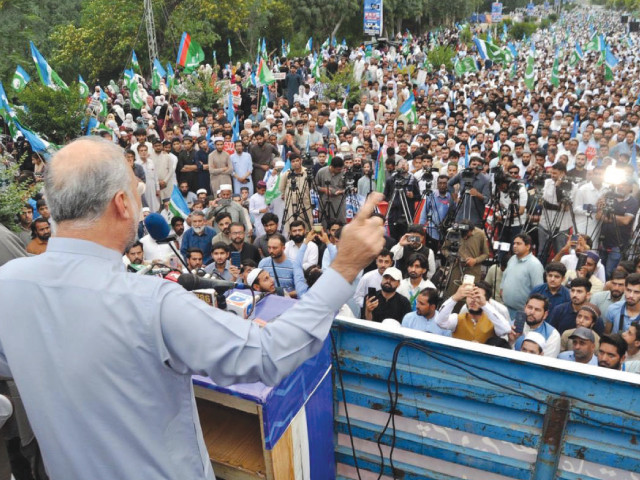
The petition has been filed in the backdrop of Jamaat-i-Islami’s recent nationwide protest campaign against heavy petroleum levies, inflation and high electricity costs. Rehman has repeatedly criticised the government over major increases in petroleum prices following the closure of the Hormuz Strait, calling them a burden on ordinary citizens. Earlier this month, the party’s Khyber Pakhtunkhwa chapter also held demonstrations in different parts of the province against rising fuel and electricity prices, prolonged power outages and the closure of CNG stations.
Comments
No comments yet. Be the first to join the discussion!