Pakistan advancing rapidly toward digital revolution, says PM
Prime Minister Shehbaz Sharif says Pakistan is rapidly moving toward a full digital revolution, highlighting AI Policy 2025, a transparent 5G spectrum auction, expanded fibre networks, and growing IT exports.

Premier Shehbaz says Digital Nation Pakistan vision built on economy, society and governance pillars
Nails National AI Policy 2025 as milestone for tech ecosystem, terming 5G spectrum auction major step toward global telecom standards
Reveals telecom spectrum expanded from 274 MHz to 754 MHz, with over 234,000 km fibre network and 205 million subscribers powering digital growth
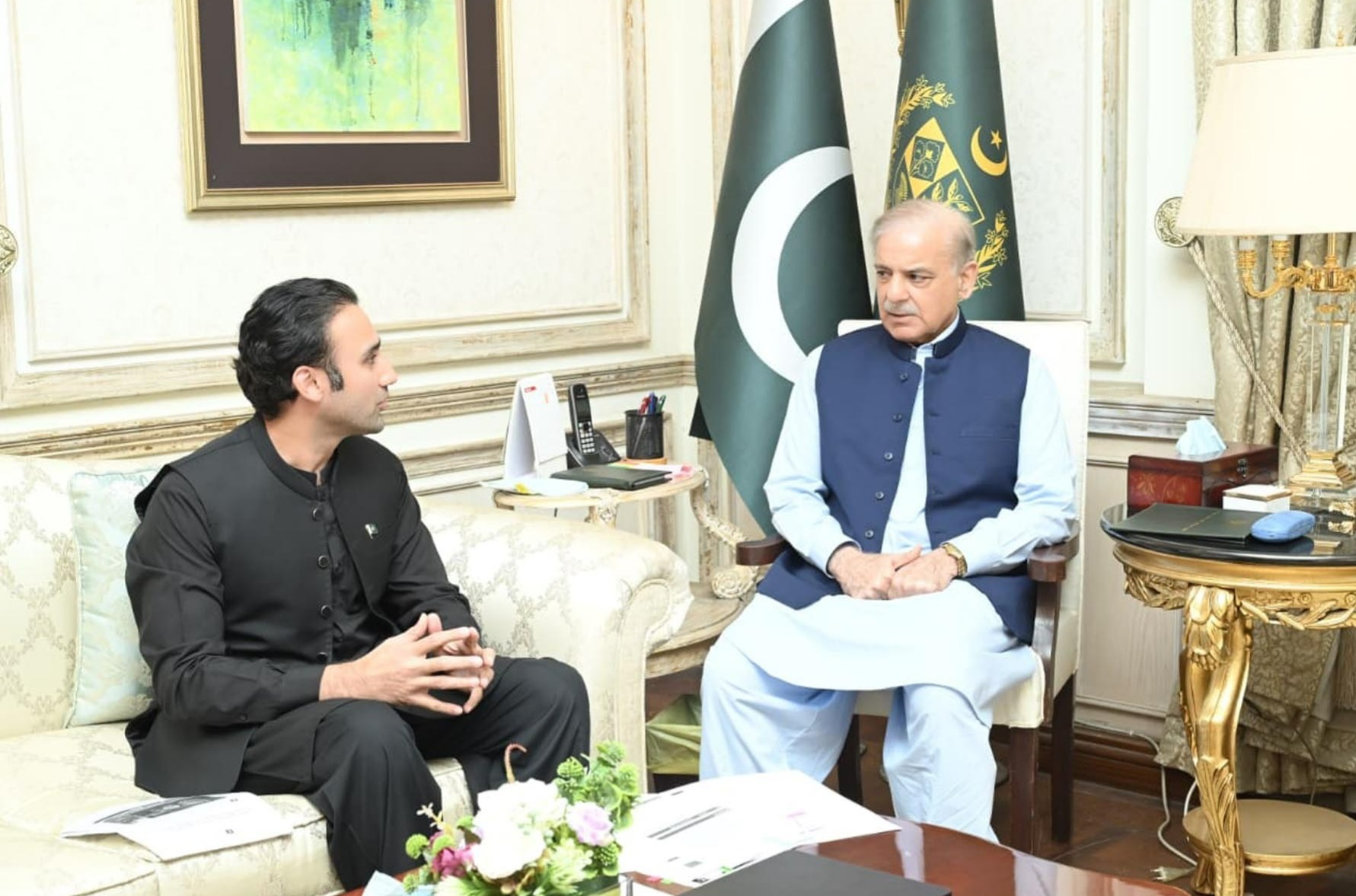
ISLAMABAD: Prime Minister Shehbaz Sharif on Friday said Pakistan was steadily advancing towards a full-scale digital revolution through transformative initiatives, strengthening its position as an emerging global information technology hub backed by IT parks, digital infrastructure, and a young, tech-driven workforce.
In his message on World Telecommunication and Information Society Day, the prime minister paid tribute to professionals, experts, institutions, partners and international stakeholders associated with Pakistan’s telecommunications sector for their continued contribution and commitment.
He said this year’s theme, “Digital Lifelines: Strengthening Resilience in a Connected World,” aligned closely with Pakistan’s national vision of Digital Nation Pakistan, which is based on three core pillars: digital economy, digital society, and digital government, under which comprehensive reforms and initiatives are underway.
The prime minister described the National AI Policy 2025 as a “revolutionary step” aimed at developing a robust artificial intelligence ecosystem in the country. He also termed the successful and transparent auction of the 5G spectrum a major milestone in Pakistan’s digital transformation journey, saying it had significantly aligned telecom and internet services with global standards. He noted that GSMA had recognised it as a model for emerging economies.
He said the spectrum allocated for cellular mobile operators had increased from 274 MHz to 754 MHz, adding that the government remained committed to the accelerated rollout of 5G, completion of the national fiberization policy, and promotion of local device manufacturing.
Shehbaz Sharif said the telecommunications sector was a key driver of Pakistan’s economy, contributing to foreign investment inflows, employment generation and rising revenues.
Highlighting infrastructure growth, he said Pakistan’s digital backbone now included more than 234,000 kilometres of fibre optic network, six submarine cables, around 58,000 cellular towers, and over 20 modern data centres, serving more than 205 million subscribers.
He said Pakistan was rapidly emerging as a regional digital hub in South and Central Asia, supported by strong submarine and terrestrial connectivity, and active participation in the CAREC Digital Corridor with regional partners.
He further noted the introduction of an MVNO framework to promote competition and attract foreign investment, adding that progress was also being made on satellite regulations and Fixed Satellite Services (FSS) licensing to improve connectivity in remote areas.
The prime minister said significant progress had been achieved in expanding voice and broadband services in underserved regions, along national highways and tourist destinations through the Universal Service Fund (USF).
He said Pakistan’s IT sector was witnessing strong growth, with annual IT exports reaching $3.8 billion, driven by proactive government policies, skill development programmes such as DigiSkills and INSPIRE (Semiconductor Human Resource Development Programme), and a strong network of National Incubation Centres (NICs).
He also highlighted Pakistan’s achievement of Tier-1 Role Model status in the ITU/UN Cyber Security Index, along with improved rankings in the UN’s 2024 e-Government Development Index (EGDI) and the 2026 Global Outsourcing Talent Index.
The prime minister said Pakistan was moving decisively towards a complete digital transformation, crediting the efforts of the Ministry of Information Technology and Telecommunication (MoITT), Pakistan Telecommunication Authority (PTA), telecom operators and all stakeholders involved in the sector.
He concluded by urging collective commitment toward accelerating digital transformation to achieve an empowered and prosperous Pakistan.
Comments
No comments yet. Be the first to join the discussion!